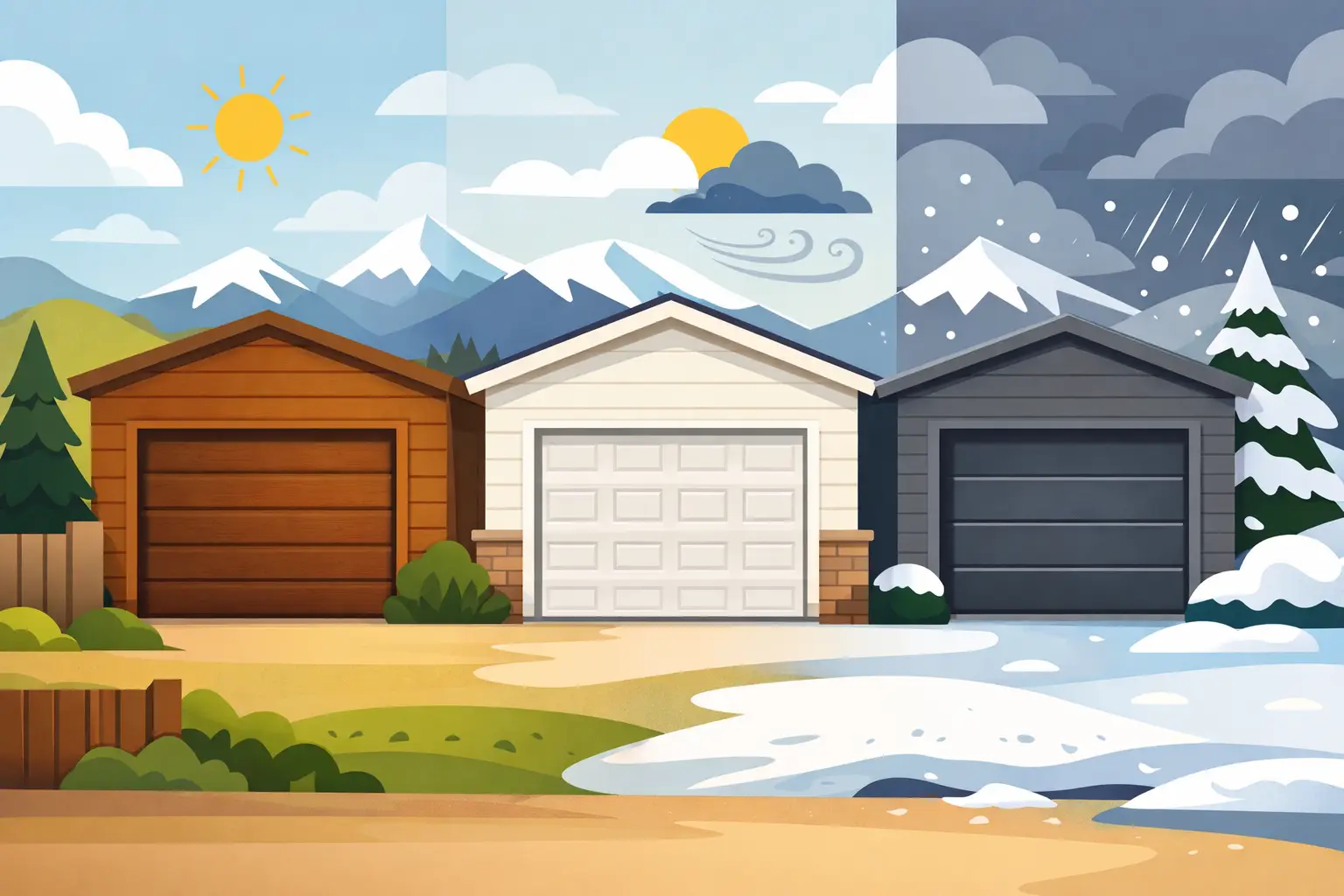
A garage door in Cheyenne has to do more than look good from the curb. It has to handle hard winter cold, wind-driven snow, spring hail, strong sun, and temperature swings that test every moving part. Choosing the best garage door materials for weather means matching the door to the conditions it will face, not simply picking the lowest upfront price.
For most local homes, an insulated steel garage door is the practical answer. But there are situations where wood, aluminum, fiberglass, or commercial-grade doors make sense. The right choice depends on your garage use, budget, exposure to wind and moisture, and how much maintenance you are willing to handle.
Why Weather Should Drive Your Garage Door Choice
Your garage door is the largest moving exterior surface on most homes. If it is thin, poorly sealed, warped, or damaged, cold air and wind can move into the garage quickly. That can make rooms next to or above the garage less comfortable, increase heating demand, and put more strain on the opener, springs, rollers, and tracks.
Cheyenne-area weather also creates a durability issue. Wind can flex a lightweight door. Hail can dent exposed panels. Moisture can lead to rust or rot when a door is not properly protected. A door that works well in a mild climate may require more repairs here than a material designed for tough conditions.
Material matters, but insulation, weather seals, hardware, and installation matter too. A high-quality door will not perform as intended if it is installed out of level, has gaps around the perimeter, or uses worn rollers and weak reinforcement.
Best Garage Door Materials for Weather Conditions
Insulated Steel: Best Overall for Cheyenne Homes
Steel is the most common choice for good reason. It is strong, widely available, cost-effective, and offered in styles ranging from traditional raised panels to modern flush designs and carriage-house looks. For local weather, insulated steel gives homeowners the best balance of durability, energy performance, and maintenance needs.
A two-layer steel door has a steel exterior with insulation behind it. A three-layer door adds a finished interior steel skin, which protects the insulation and makes the door stiffer and quieter. For an attached garage, a heated garage, or a garage with a room above it, the three-layer option is usually worth considering.
Look for polyurethane or polystyrene insulation. Polyurethane generally provides better insulating value in a thinner panel and adds structural strength. Polystyrene is still a solid option for many garages and can reduce the cost of the door. Either is a major improvement over a basic, uninsulated steel door.
The trade-off is that steel can dent from hail, vehicle contact, or heavy impacts. Quality paint and protective coatings also matter because chipped areas can eventually rust. Inspect the finish periodically and touch up damaged paint before moisture gets underneath it.
Wood: Classic Appearance, More Ongoing Work
Wood garage doors offer a look that other materials can imitate but rarely match completely. They work especially well on historic homes, custom builds, and properties where the garage door is a major part of the exterior design.
The downside is maintenance. Snow, rain, sun, and changing temperatures can make wood expand, contract, crack, fade, or warp. A wood door must be sealed, painted, or stained on schedule. If neglected, it can absorb moisture and become heavier, which places extra stress on springs and the opener.
Wood can be a good choice when appearance is the top priority and you are committed to upkeep. For a busy homeowner or property manager looking for a lower-maintenance door, insulated steel with a wood-grain finish often delivers a similar appearance with far fewer weather-related concerns.
Aluminum and Glass: Good for Modern Designs, Not Every Location
Aluminum doors are lightweight, rust-resistant, and popular on contemporary homes and commercial storefronts. Glass-panel designs bring natural light into the garage and can create a clean, modern look.
For weather exposure, however, aluminum has limitations. Thin aluminum can dent more easily than steel, and glass panels usually provide less insulation than a fully insulated steel door. A dark, glass-heavy door may also transfer more heat and cold than homeowners expect.
This material can work well for a detached garage, a mild-use workshop, or a home where design is the main priority. If you choose aluminum in a windy area, ask about reinforced framing, wind-rated options, insulated glass, and the door's overall construction. The light weight should not come at the expense of stability.
Fiberglass and Composite: Useful in Specific Situations
Fiberglass and composite garage doors are designed to resist moisture and can be molded to resemble real wood. They are useful where humidity, salt exposure, or wood rot are major concerns. Composite doors may also provide a premium appearance without the regular refinishing required by natural wood.
In Cheyenne, these materials are less common than steel, partly because local homeowners often get better value from insulated steel construction. Fiberglass can be more vulnerable to cracking under impact or severe cold, depending on the product. Composite quality varies widely, so it pays to look closely at the backing, insulation, warranty, and hardware rather than choosing based on appearance alone.
Commercial Steel: Built for Frequent Use and Bigger Openings
For warehouses, auto shops, storage buildings, agricultural buildings, and commercial properties, the best material is often heavy-duty steel. Sectional overhead doors and rolling steel doors are made for larger openings, repeated daily cycles, and higher security needs.
A commercial door should be selected around the building's use. An insulated door may be necessary for a heated shop, while a basic non-insulated model can make sense for a storage building. In either case, heavy-duty tracks, properly rated springs, and a commercial operator are just as important as the panels themselves. A door that cycles dozens of times a day needs equipment designed for that workload.
Insulation, Wind Resistance, and Seals Matter as Much as Material
When comparing doors, do not stop at the exterior material. Ask how the door is insulated, what R-value it provides, and whether the door includes a full perimeter weather seal. Bottom seals, side seals, and top seals reduce drafts, blowing snow, dust, and water intrusion.
Wind resistance deserves special attention on exposed properties. Strong gusts can bow a door inward, damage tracks, or cause it to come off track when hardware is already worn. Reinforcement struts, proper track attachment, and a correctly installed opener help keep the system stable. Local building requirements and the specific exposure of your property can affect what level of reinforcement makes sense.
The door should also have hardware that matches its weight. Insulated doors weigh more than basic single-layer models. Springs must be sized correctly, cables should be in good condition, and the opener must have enough lifting capacity. Installing a better door without upgrading worn or undersized components is an avoidable mistake.
Choosing the Right Material for Your Garage
Start with how you use the space. If the garage is attached to the home, insulated steel is usually the best all-around investment. If it is heated, used as a workspace, or has living space above it, prioritize a higher-insulation three-layer steel door and quality weather sealing.
If you want a high-end custom look, wood or composite can make sense, but plan for the maintenance cost. If you have a modern home and value daylight, aluminum and insulated glass may fit the design, provided the door is reinforced and suitable for your exposure. For a commercial building, focus first on cycle rating, security, insulation needs, and operator compatibility.
Price matters, but the least expensive door is not always the affordable choice over time. A thin, uninsulated door may cost less on installation day, then require more maintenance and make the garage uncomfortable through the winter. A properly selected and installed door can reduce those problems for years.
Protect Any Garage Door From Local Weather
Even the right material needs regular attention. Check the bottom seal before winter, especially if you see daylight at the floor or notice leaves and snow blowing inside. Keep tracks clear, inspect rollers and hinges, and watch for loose hardware, unusual noise, slow movement, or gaps when the door closes.
Do not try to adjust garage door springs or cables yourself. These parts are under extreme tension and can cause serious injury. If the door is heavy, crooked, off track, or will not open, stop using it and have it inspected.
Mike's Garage Door LLC helps homeowners and property managers choose, install, and maintain doors built for local conditions. When you are comparing materials, a clear on-site assessment can identify the right insulation level, hardware, and door construction for your building instead of leaving you to guess from a showroom sample.
A garage door should close tightly, open reliably, and stand up to the next Cheyenne storm. Choose the material that fits how you use the space, then keep the seals and moving parts in good shape before bad weather has a chance to find the weak point.