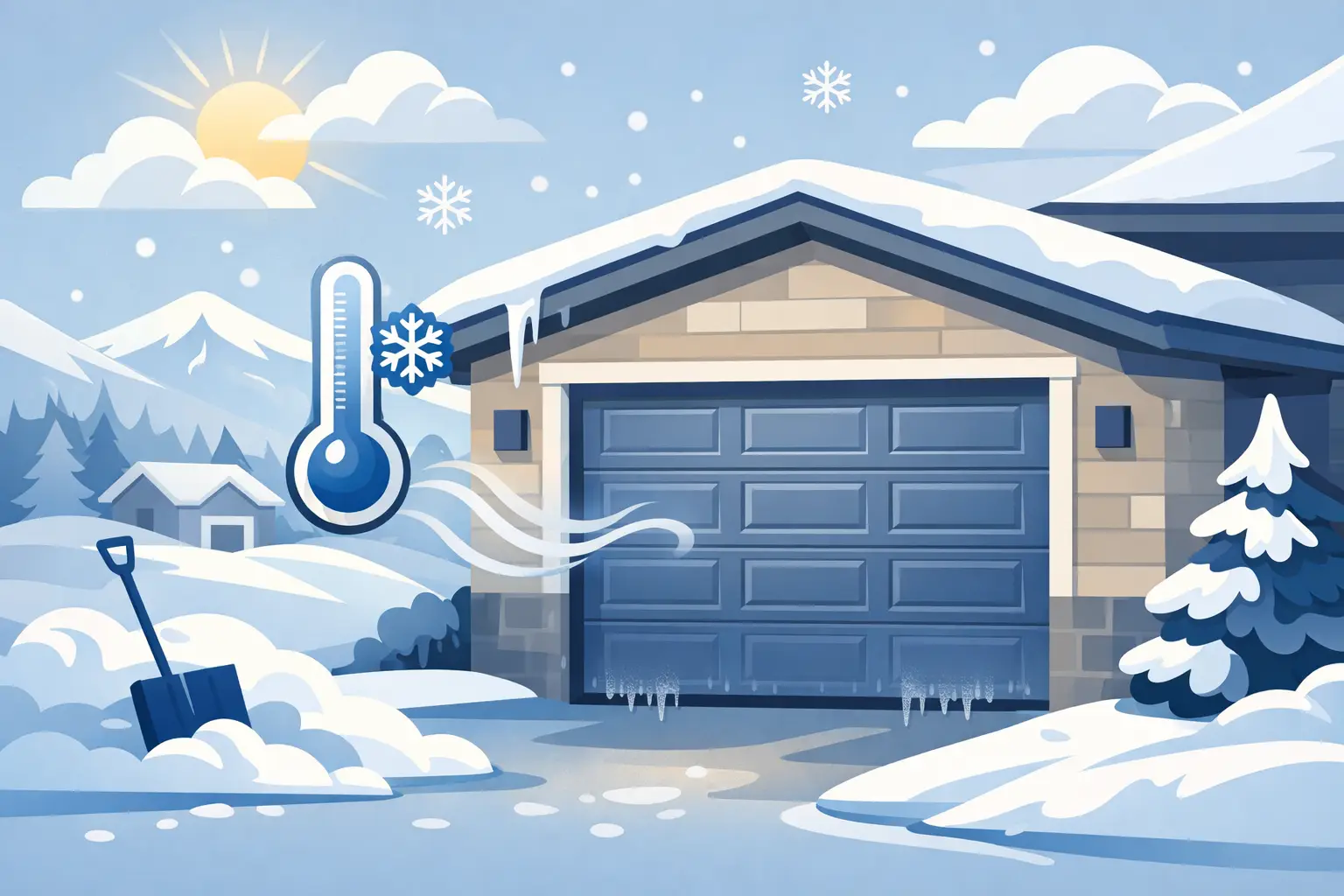
A Cheyenne winter can expose every weak point in a garage door. Cold air slips through worn seals, metal panels transfer outdoor temperatures inside, and an opener that worked fine in October can struggle when temperatures fall below freezing. The best garage doors for cold climates are not simply the thickest doors on the showroom floor. They are doors with the right insulation, durable materials, tight weather sealing, and hardware built to keep moving through real Wyoming weather.
If your garage is attached to your home, used as a workspace, or protects vehicles and equipment, the door deserves more consideration than appearance alone. A well-chosen insulated door can make the garage more comfortable, reduce drafts near adjoining rooms, and help prevent winter-related service problems.
Start With Insulation, Not Just Door Style
For cold climates, insulation is the first feature to compare. Garage doors are commonly rated by R-value, which measures resistance to heat transfer. A higher R-value generally means better insulation. That does not mean every home needs the highest available number, but it does mean an uninsulated door is usually a poor fit for Cheyenne-area winters.
For a detached garage used only for parking, a moderately insulated door may be enough. If the garage is attached to the home, has a room above it, contains plumbing, or doubles as a shop or gym, a higher-insulation door is usually worth the added cost. The door is a large moving wall. When it is poorly insulated, it can become the coldest surface in the garage.
Look beyond the R-value on the sales sheet. The type of insulation matters too. Polystyrene insulation is usually installed in rigid panels and provides a solid upgrade over an uninsulated door. Polyurethane insulation is injected between steel layers, where it expands and bonds to the panels. It typically offers a higher R-value for the thickness and helps make the door more rigid and quieter.
For most homeowners facing regular freezing temperatures and wind, a steel door with polyurethane insulation is one of the most practical choices. It balances durability, energy performance, cost, and low maintenance.
Choose a Material That Can Handle Winter Wear
The best material depends on your budget, the look of your home, and how much maintenance you are willing to do. In cold, dry, windy areas, durability matters as much as insulation.
Insulated steel is the practical standard
Insulated steel garage doors are a strong choice for most homes and many commercial properties. They resist everyday dents better than thinner, single-layer doors and require less upkeep than wood. A quality steel door with an interior backing layer protects the insulation and gives the door a finished appearance inside the garage.
Pay attention to the gauge and construction of the steel. Thicker steel generally holds up better against bumps, wind, and repeated use. The finish also matters. A durable factory coating helps protect against moisture, road salt residue, and normal weather exposure.
Wood offers curb appeal, but requires commitment
Wood garage doors can look excellent on historic homes, custom homes, and properties where appearance is the main priority. In a cold climate, however, wood needs regular inspection and refinishing. Moisture, sun exposure, and repeated freezing and thawing can affect the finish and eventually the panels if maintenance is ignored.
Wood can be insulated, but it is usually more expensive and heavier than steel. That added weight also places more demand on springs, cables, and the opener. It is a good option when appearance justifies the upkeep, not when low-maintenance performance is the goal.
Composite doors can deliver a wood look with less upkeep
Composite or faux-wood doors can be a good middle ground. Many provide the appearance of wood with an insulated steel core or more weather-resistant construction. Quality varies by manufacturer, so ask about insulation, panel construction, and warranty coverage rather than choosing based on appearance alone.
Weather Seals Matter More Than Most Homeowners Think
Even a highly insulated door will underperform if cold air can blow around it. In Cheyenne and surrounding communities, wind-driven drafts are often as noticeable as the outdoor temperature. Weather sealing should be part of the door selection and installation process, not an afterthought.
A complete sealing system includes a bottom seal, side weatherstripping, and a top seal where the door meets the header. The bottom seal is especially important because concrete floors are rarely perfectly level. It needs to flex enough to close small gaps without being crushed, torn, or brittle.
Check the condition of existing seals before winter. If you can see daylight around the door, feel a draft, or notice leaves and snow blowing inside, the seals likely need adjustment or replacement. Replacing worn weatherstripping is often an affordable repair that makes an immediate difference.
A properly installed door should also sit squarely in the opening. An off-track door, damaged roller, loose track, or bent panel can create gaps that new seals cannot solve. The door needs to operate correctly before sealing can work correctly.
Windows Are Fine, but Choose Them Carefully
Garage door windows bring in natural light and can improve the look of the home, but they are a weaker thermal point than insulated panels. That does not mean you have to avoid them. It means they should be selected with the climate in mind.
Choose insulated glass when possible, especially for an attached garage. Smaller window sections placed higher on the door limit heat loss while still bringing in daylight. If privacy or security is a concern, frosted glass, tinted glass, or window placement near the top of the door can help.
A full-view glass door may fit a modern home or heated showroom, but it is rarely the most efficient choice for an exposed garage in a cold, windy location. The trade-off is straightforward: more glass usually means more light and style, but less insulation.
Match the Opener and Hardware to a Heavier Insulated Door
A high-quality insulated door is often heavier than a basic single-layer door. That is normal, but the springs and opener must be correctly matched to the door’s actual weight. Springs do the lifting. The opener mainly guides the door and controls its travel.
When springs are properly sized and the door is balanced, you should be able to lift it manually with reasonable effort after disconnecting the opener. If the door feels extremely heavy, drops quickly, or will not stay partially open, do not keep using the opener to force it. A failing spring can strain the motor, damage other parts, and create a safety risk.
For cold-climate performance, a belt-drive opener is often a good residential option because it is quiet and reliable. A chain-drive opener remains a durable choice for heavier doors and frequent use. Features such as battery backup are especially useful during winter power outages, while a properly adjusted safety reversal system is essential year-round.
Do not try to replace garage door springs yourself. They are under high tension and should be handled by a trained technician with the right tools.
What Makes the Best Garage Doors for Cold Climates?
There is no single door that fits every property. Still, the strongest cold-weather setup for many homeowners is a multi-layer steel door with polyurethane insulation, durable perimeter weather seals, minimal or insulated windows, and springs sized specifically for the door.
For an attached, heated, or frequently used garage, prioritize insulation and sealing before decorative upgrades. For a detached garage that is not heated, a mid-range insulated steel door may provide the right value without paying for features you will not use. Commercial buildings should also consider usage cycles, opening size, wind exposure, and whether the door needs to support daily deliveries or vehicle access.
Installation quality is part of the product. A premium door installed out of level, with poor seals or incorrect spring tension, will not perform like it should. Accurate measurements, proper track alignment, and final balance testing are where long-term reliability begins.
Keep Your Door Ready for Winter
Before temperatures drop, test the door several times and listen for scraping, popping, grinding, or uneven movement. Inspect the bottom seal for cracks, check that photo-eye sensors are clean and aligned, and keep snow and ice from building up at the door’s bottom edge.
Avoid coating tracks with heavy grease. Tracks should stay clean so rollers can move freely. A garage-door-safe lubricant on moving metal parts, including rollers, hinges, and springs when appropriate, helps reduce friction. If the door binds, moves crookedly, or reverses unexpectedly, schedule service rather than waiting for a complete failure on the coldest morning of the year.
Mike's Garage Door LLC helps homeowners and property managers in Cheyenne and nearby communities choose, install, repair, and maintain doors that are ready for local conditions. The right door should close tightly, run smoothly, and keep doing its job when winter is at its worst. If yours is letting in cold air or showing signs of trouble, addressing it before the next hard freeze is usually the simplest and least stressful move.