A garage door can look perfectly normal right up until the moment it will not open. The most useful broken spring examples are not always dramatic - sometimes the only clue is a loud bang from the garage, a door that suddenly feels too heavy, or an opener that hums without lifting anything. Knowing what those signs mean can help you avoid damage to the door, opener, vehicles, and people nearby.
Garage door springs do the heavy lifting. They store tension and offset the weight of the door so it can move safely and smoothly. When a spring fails, the door may still be sitting in place, but it is no longer properly supported. That is why a broken spring is a repair to take seriously, not a problem to force through.
Broken Spring Examples Homeowners Commonly See
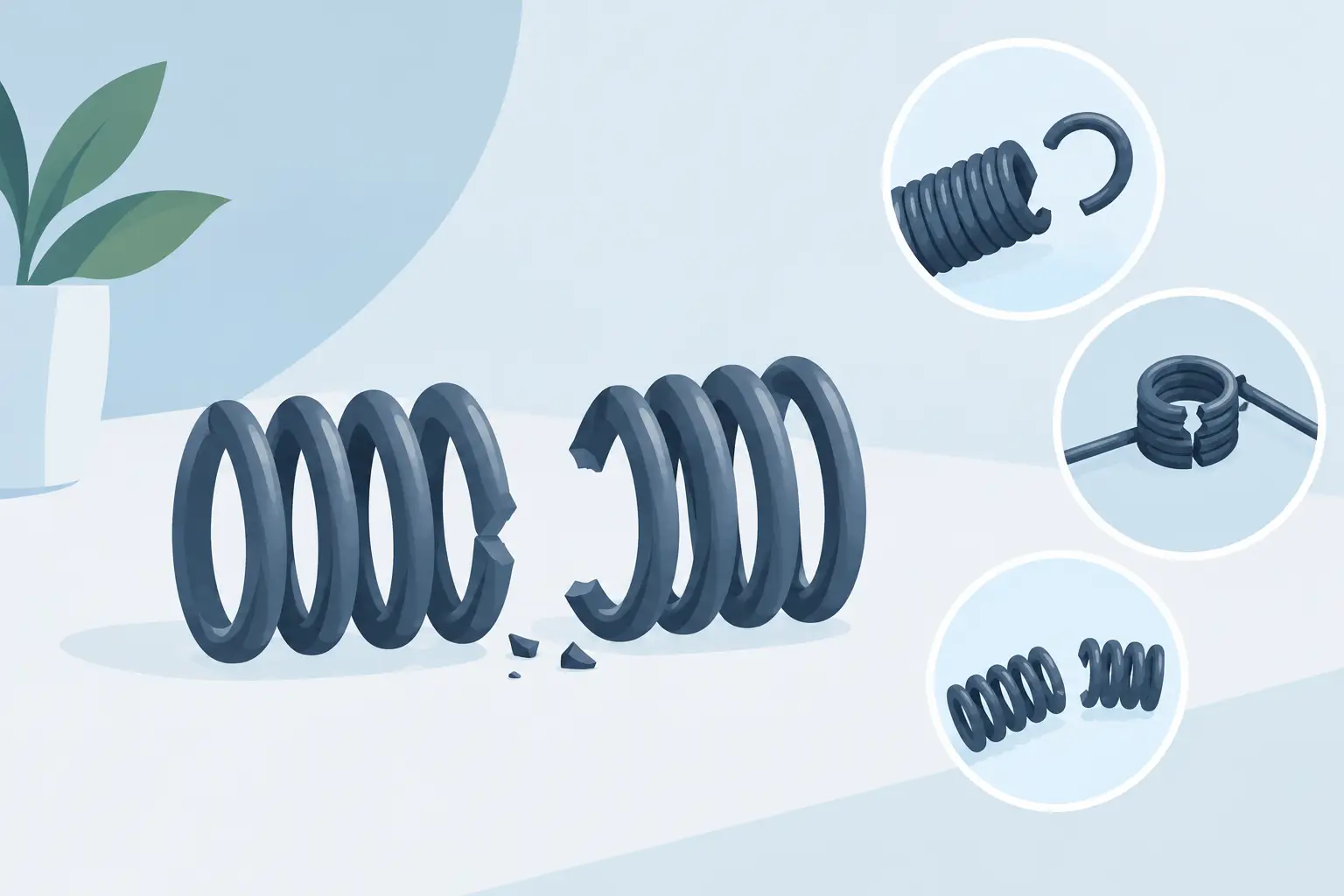
The clearest example is a torsion spring with a visible gap through the coil. Torsion springs sit on a metal shaft above the garage door opening. When one breaks, it often separates in the middle, leaving a gap of roughly two inches. You may also see a loose cable, a door that only lifts a few inches, or an opener that reverses because it cannot handle the door's full weight.
A second common example is an extension spring that is stretched out, hanging loose, or split apart along the horizontal track. Extension springs are typically found on older garage door systems, one on each side of the door. When one breaks, the door may lift unevenly, tilt to one side, or stop moving altogether. If the spring does not have a safety cable running through its center, it can become a serious hazard when it fails.
Another example is the door opening partway and then dropping back down. A customer may assume the opener is bad because the motor runs. In many cases, however, a broken spring has left the opener trying to lift far more weight than it was designed to handle. Continuing to run it can strip gears, bend the top section of the door, or pull the door off balance.
Then there is the loud-bang scenario. A torsion spring can break with a sharp crack that sounds like something hit the garage door or wall. This often happens when the door is closed, including overnight. By morning, the door will not open with the remote, and the manual release may reveal just how heavy it has become.
What a Broken Spring Looks and Feels Like
A garage door with a failed spring does not always show one obvious visual sign. The symptoms depend on the type of spring system, the weight of the door, and whether one or both springs are still working.
With a two-spring torsion system, one broken spring can leave the other spring carrying part of the load. The door may move a little, but it will feel heavy and may rise crookedly. With a single-spring system, the door usually will not open normally at all. Heavier insulated steel doors and wood doors are especially difficult to lift once spring tension is gone.
You may also notice that the top of the door bows when the opener tries to pull it upward. That is a warning to stop. The opener is designed to guide a balanced door, not act as a lifting crane. A working spring system should make the door feel manageable when disconnected from the opener. A broken spring system turns it into dead weight.
Cold Cheyenne weather can make the issue more noticeable. Springs are under constant tension, and cold temperatures can expose a spring that was already worn from years of use. The weather does not necessarily cause every failure, but a weakened spring is more likely to let go during a hard cold snap.
A Broken Spring Is Not the Same as a Bad Opener
A nonworking garage door opener and a broken spring can produce similar symptoms, but they need different repairs. If the opener light comes on, the motor runs, and the door barely moves or does not move at all, inspect the spring area from a safe distance. A visible gap in a torsion spring is a strong sign that the spring is the issue.
If the door is fully closed, do not pull the emergency release and attempt to lift it alone. A standard double garage door can weigh several hundred pounds. If the door is open or partially open when the spring breaks, keep people, pets, and vehicles clear of the opening. Do not stand or drive under the door.
Why Springs Break
Most garage door springs fail because they reach the end of their cycle life. One cycle is a full opening and closing of the door. A family that uses the garage as the main entrance may put several cycles on the springs every day, which adds up faster than most homeowners expect.
Corrosion, poor spring sizing, lack of maintenance, and an unbalanced door can also shorten spring life. A spring selected for a lightweight door will wear out early on a heavy insulated door. Likewise, a door with worn rollers, damaged cables, or misaligned tracks creates extra resistance that places more strain on the entire system.
Sometimes the spring itself is only part of the problem. When a spring breaks, cables can come loose from the drums, rollers can come out of the track, and the opener may have been strained before anyone realized what was happening. A proper repair checks the complete counterbalance system, not just the broken coil.
What to Do When You Suspect a Broken Spring
Start by leaving the door in its current position if possible. Do not keep pressing the wall button or remote to see if it will work on the next try. Repeated attempts can turn one repair into several.
Look for obvious signs from a safe distance: a gap in the torsion spring above the opening, a loose extension spring beside the track, hanging cables, or a crooked door. Take note of whether the door is closed, open, or stuck partway. That information helps a technician arrive prepared with the right parts and a clear picture of the urgency.
If your vehicle is trapped inside and the door is closed, it can be tempting to manually force the door open. That is risky. The door may be too heavy to control, and a cable or roller issue may be present along with the broken spring. If access is urgent, professional same-day service is the safer route.
Do not try to replace a torsion spring yourself. These springs are tightly wound under high tension and require the correct tools, measurements, and installation method. The wrong spring, incorrect winding, or a slipping winding bar can cause serious injury and leave the door unsafe even if it appears to operate afterward.
Should Both Springs Be Replaced?
It depends on the condition and age of the system. If a door has two torsion springs installed at the same time and one has broken from normal wear, the other is often close to the end of its service life. Replacing both at once can prevent another breakdown soon after and helps keep the door balanced evenly.
There are situations where only one spring needs replacement, such as when the second spring was replaced recently or has a different service history. An experienced technician should measure the door, verify the spring specifications, inspect the remaining hardware, and explain the options clearly. The best answer is based on the actual door, not a one-size-fits-all recommendation.
Preventing the Next Spring Failure
You cannot make a garage door spring last forever, but routine service can catch wear before it creates a no-access emergency. A tune-up should include checking spring balance, cables, rollers, hinges, tracks, mounting hardware, and opener force settings. Lubricating the correct moving parts can reduce friction, while a balance test confirms the springs are doing their share of the work.
Pay attention to changes in how the door sounds and moves. Squealing, jerking, uneven travel, a door that starts closing faster than usual, or an opener that suddenly seems to struggle are all reasons to schedule an inspection. Small adjustments are generally simpler than waiting for a full spring failure.
For homeowners, property managers, and commercial operators, a working overhead door is about more than convenience. It protects access, vehicles, tools, inventory, and daily routines. Mike's Garage Door LLC provides straightforward diagnosis and same-day repair options for broken springs throughout Cheyenne and nearby communities.
If your garage door has become heavy, crooked, or stuck, treat it like a balance problem until proven otherwise. Keep the area clear, stop operating the opener, and have the spring system inspected before a minor failure becomes a damaged door or an unsafe opening.