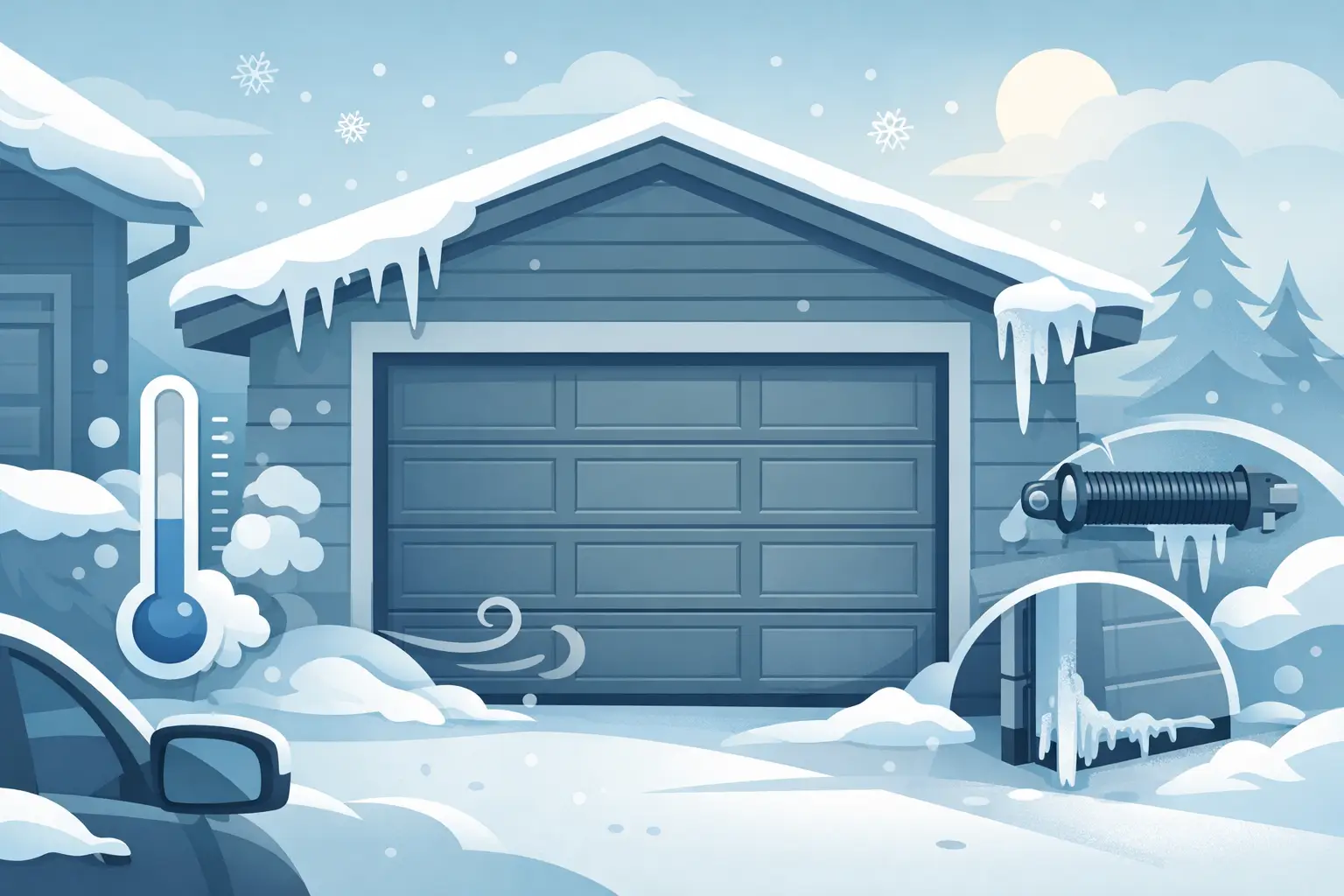
When the temperature drops in Cheyenne, garage doors tend to tell on themselves fast. A door that worked fine in October might start moving slower, making grinding noises, stopping halfway, or refusing to close all the way in January. If you have been wondering, can cold weather affect garage doors, the short answer is yes. Cold weather can change how metal parts move, how lubricants perform, how openers react, and how hard the whole system has to work.
That does not always mean you need a full replacement. In many cases, winter exposes smaller issues that were already developing, and a repair or tune-up solves the problem before it turns into a broken spring, an off-track door, or a stuck opener on the coldest day of the week.
Why cold weather affects garage doors
Garage doors are made of parts that rely on balance, alignment, and smooth movement. When temperatures fall, metal contracts. Springs, tracks, hinges, and rollers can all react to that change. The difference may be small, but garage door systems operate with tight tolerances. A little extra resistance in one part can put strain on the whole setup.
Lubrication is another common factor. The wrong lubricant can thicken in freezing weather and make rollers drag instead of glide. That can lead to jerky movement, loud operation, and extra stress on the opener. Weather seals can also stiffen or freeze to the concrete, especially when snow melts during the day and refreezes overnight.
For insulated doors and heavier commercial overhead doors, the extra weight already puts more demand on springs and openers. Add cold weather, and weak components often stop keeping up.
Can cold weather affect garage doors enough to cause damage?
Yes, and the level of damage depends on the condition of the door before winter started. Cold weather by itself does not usually ruin a healthy garage door system overnight. What it does is magnify wear. If a spring is already worn, a roller is already cracking, or the opener is already struggling, winter can be the season when that issue finally turns into a breakdown.
This is why one property owner notices a slightly noisy door while another ends up with a snapped spring and a door that will not open at all. The weather is the trigger, but the root problem is often ongoing wear.
That matters because the right fix is not always the same. Sometimes the answer is simple maintenance. Sometimes it is spring replacement, track adjustment, opener repair, or replacing damaged weather seal. A quick inspection usually tells the story.
The most common winter garage door problems
A garage door that feels heavy is one of the biggest warning signs. Springs do the lifting, not the opener. If cold weather pushes an aging spring over the edge, the door may suddenly feel much harder to raise by hand, or the opener may strain and stop. Broken springs are especially common in winter because metal fatigue shows up faster in low temperatures.
Rollers and hinges can also become noisy or sluggish. If your door squeals, chatters, or shudders as it moves, that is often a sign the moving parts need proper service. Nylon rollers can crack with age, and steel rollers can become loud when lubrication fails.
Frozen weather seal is another issue homeowners run into after snow or freezing rain. The bottom seal sticks to the ground, and then the opener tries to lift a door that is effectively glued shut. Sometimes the opener reverses. Sometimes it pulls hard enough to stress the system.
Sensors and opener settings can cause trouble too. Cold alone does not always damage electronics, but low temperatures can expose sensitivity issues. If the door closes partway and reverses, or if the opener seems inconsistent, the safety system or travel settings may need adjustment.
Signs your garage door is struggling in cold weather
The first sign is often slower movement. If the door takes longer than usual to open or close, do not ignore it. A healthy garage door should move smoothly and at a consistent pace.
Loud popping, grinding, scraping, or banging sounds are another red flag. Springs under strain, dry rollers, loose hardware, and track problems all tend to get louder in winter. Noise is not just annoying. It usually means friction, imbalance, or both.
You may also notice gaps along the sides or bottom of the door. That can mean the weather seal is worn, the door is not sitting level, or the tracks need attention. In Wyoming, those gaps matter. They let in cold air, snow, moisture, and debris, and they can make your garage harder to heat and protect.
If the opener is working harder than usual, that is worth checking right away. Lights dimming slightly, a humming motor, or repeated reversal cycles all point to a door that is not moving as freely as it should.
What homeowners can do before calling for service
There are a few safe things you can check on your own. Start by looking at the bottom of the door for ice buildup. If the seal is frozen to the ground, do not keep hitting the opener. That can damage the opener or pull on already worn parts. Gently clear ice around the base instead.
Next, look and listen while the door moves. If it is crooked, jerky, or unusually loud, stop using it until the problem is identified. Continuing to run a struggling door often turns a smaller repair into a bigger one.
You can also inspect the weather seal for cracking or stiffness and check whether snow, dirt, or debris is packed into the tracks. What you should not do is adjust springs or cables yourself. Those parts are under high tension and can cause serious injury.
A lot of winter service calls come from property owners who did the right thing early. They noticed the door sounded off, moved slower, or would not seal properly, and they got it checked before the system failed completely.
When cold weather garage door problems need a pro
If the spring breaks, the door comes off track, the cables look loose, or the opener is straining, it is time for professional service. The same goes for doors that only open a few inches, reverse without explanation, or feel unusually heavy. Those are not wait-and-see issues.
Commercial doors deserve the same urgency. When an overhead door at a shop, warehouse, or service building will not open correctly, it affects deliveries, security, and daily operations. In freezing weather, downtime gets expensive fast.
This is where a same-day repair company matters. A stocked service truck and experienced technician can usually spot the problem quickly, explain the repair clearly, and get the door back in working order without a long delay. For local property owners, that is often the difference between a minor interruption and a full day of disruption.
How to reduce winter garage door issues
Preventive maintenance goes a long way. A garage door system should be inspected, lubricated with the right products, and tested for balance before winter gets severe. That is especially true if the door is older, used multiple times a day, or already showing signs of wear.
Spring condition is a big one. Springs do not last forever, and replacing them before they fail can save you from getting stuck with a car trapped inside the garage or a business door that will not open for the workday.
Seal condition matters too. Good weather sealing helps keep out moisture and limits freezing at the base of the door. It also improves energy efficiency, which is useful if your garage shares walls with living space or stores temperature-sensitive equipment.
If your opener is older, winter may be when it starts showing its age. Sometimes a repair is enough. Other times, a new opener makes more sense, especially if the current one struggles with a properly balanced door.
Cold weather and garage doors in Wyoming
This issue is more than theoretical in places like Cheyenne and across Laramie County. Wind, snow, rapid temperature swings, and extended cold snaps put garage doors under real stress. A door that might limp through winter in a milder climate often needs more attention here.
That is why local experience matters. A technician who regularly works on garage doors in Wyoming knows what freezing conditions do to springs, rollers, seals, and opener systems. Mike's Garage Door LLC sees those patterns firsthand and can usually tell whether a door needs a quick adjustment, a part replacement, or a more serious repair.
If your garage door has started acting different since the weather turned cold, trust that signal. Small changes in movement, sound, or sealing are usually the system asking for help before something breaks completely. Getting ahead of it is almost always faster, safer, and less expensive than waiting for a no-open door in the middle of a winter morning rush.