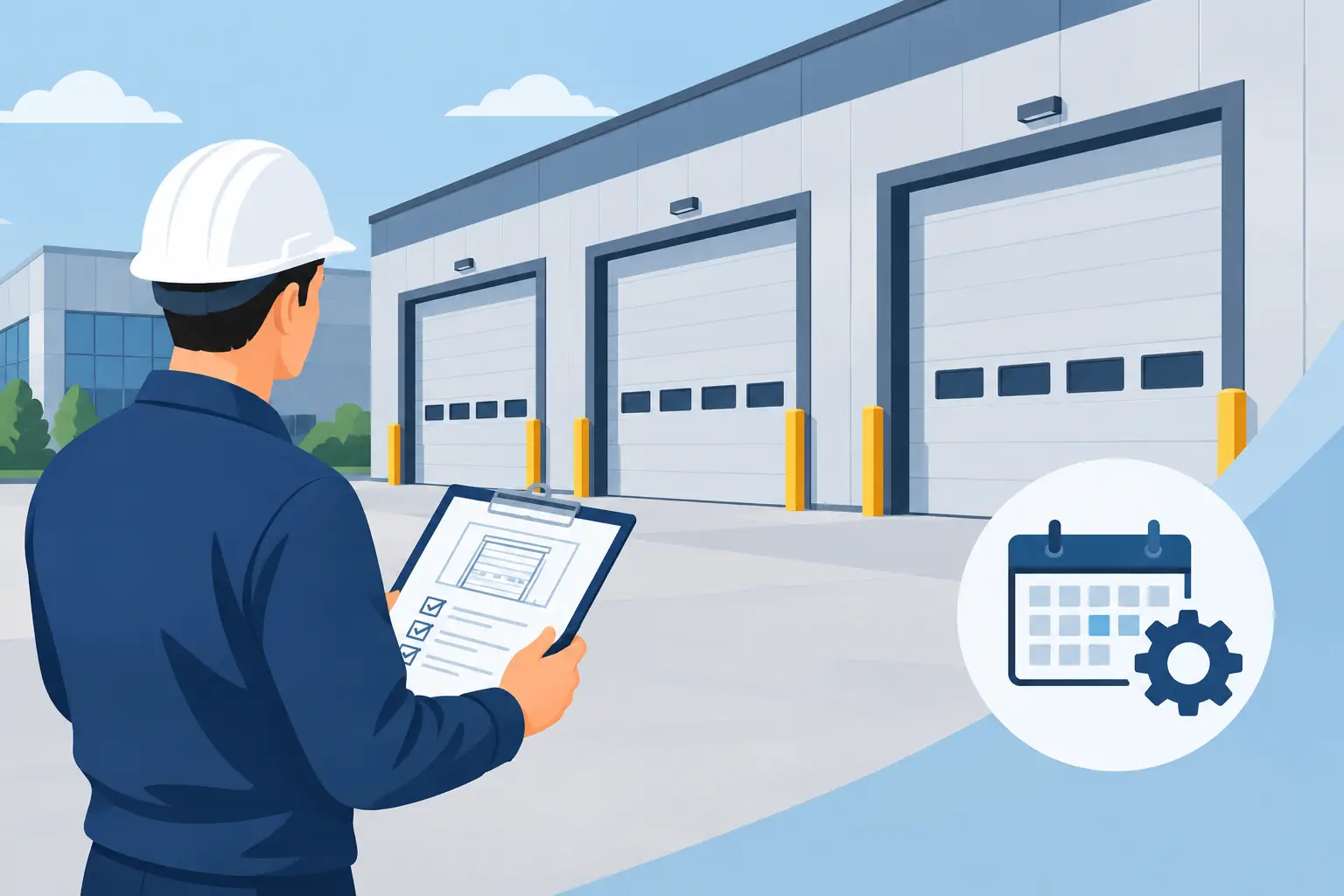
A commercial overhead door that will not open at 7 a.m. can stop deliveries, delay crews, block customer access, and put a full workday behind schedule. That is why commercial overhead door planning needs to happen before a door fails, not after a truck is backed up at the loading area or equipment is trapped inside.
For Cheyenne businesses, property managers, warehouses, auto shops, agricultural operations, and storage facilities, the right door plan starts with how the opening is used every day. Size and appearance matter, but reliability, safety, insulation, cycle rating, and repair access matter just as much. A door that looks right on installation day may still be the wrong choice if it cannot keep up with traffic, weather, or the weight of the work it supports.
Start Commercial Overhead Door Planning With the Job
The first question is simple: what does this door need to do? A service bay door that opens a few times each day has different demands than a warehouse door moving freight all shift. A heated shop in a Wyoming winter needs a different setup than an unheated equipment building. Planning around the actual job prevents spending money on features you do not need or, worse, installing a door that wears out too soon.
Consider traffic volume first. Commercial doors are rated by cycles, meaning one full opening and closing. A door used 10 times per day has very different spring and hardware needs than one used 50 times per day. Standard components may work for light-duty use, but high-cycle springs, heavy-duty rollers, reinforced tracks, and commercial-grade openers make sense when the door is part of the daily workflow.
Also consider who operates it. If multiple employees use the door, controls need to be simple and dependable. Push-button stations, keypads, vehicle remotes, photo eyes, warning devices, and monitored safety controls can all be part of the plan. The goal is not to add equipment for its own sake. It is to make routine access safer and reduce avoidable mistakes.
Measure the Building, Not Just the Opening
Door width and height are only the beginning. A proper site review should account for headroom above the opening, side room beside the tracks, ceiling obstructions, roof pitch, lights, sprinklers, ductwork, and equipment placement. These details determine which track system and lift type will work.
Standard lift is often a good fit where there is adequate headroom. Low-headroom systems can help in tighter buildings. High-lift and vertical-lift configurations may be needed in warehouses with tall ceilings or racking that requires the door to travel higher before it turns horizontal. Selecting the wrong lift type can create installation delays, reduce usable space, or leave the door operating poorly.
A commercial door should also clear the vehicles and equipment that will use it now and later. Measure the tallest work truck, forklift load, trailer, or machinery that needs to pass through. If future operations may change, allowing extra clearance during planning is often less expensive than rebuilding an opening later.
Choose a Door Built for Cheyenne Conditions
Cheyenne weather is not an afterthought. Wind, cold, snow, temperature swings, and blowing dust can all affect door performance. The right commercial door needs to fit the building and the local conditions it will face.
Insulated sectional steel doors are a practical choice for many heated shops, service bays, and commercial buildings. They help reduce heat loss, improve employee comfort near the opening, and can make the building quieter. The best insulation level depends on the building's use. A frequently used loading bay will still lose heat whenever the door is open, but an insulated door can make a real difference during closed hours.
For unheated storage buildings, a non-insulated door may be the more cost-effective option. The trade-off is less temperature control and more potential for condensation under certain conditions. A clear plan considers operating costs, not just the initial purchase price.
Wind load is another serious consideration. Commercial overhead doors need to be properly matched to the building location and exposure. A door on an open lot or a building facing prevailing winds may need stronger reinforcement than one protected by surrounding structures. Do not treat wind-rated hardware as an optional upgrade when the site calls for it. Damage from a wind event can take a working entrance out of service fast.
Plan the Opener and Safety System as One Package
A commercial opener should be selected based on door weight, size, frequency of use, and available space. It is not a one-size-fits-all decision. A light-duty operator may struggle with a heavy insulated door, while an oversized system can add unnecessary cost without improving performance.
Trolley operators are common for many sectional doors with standard tracks. Jackshaft operators mount beside the door and can be a good option when overhead space is limited or when the ceiling needs to remain clear. Hoist operators may be appropriate where controlled manual operation is needed. The correct choice depends on the door system, not simply the type of building.
Safety devices deserve the same attention as the operator. Photo eyes, reversing sensors, bottom seals, and properly adjusted force settings help protect employees, vehicles, customers, and equipment. In busier work areas, warning lights or audible alerts may be worthwhile. Safety equipment only helps when it is installed correctly, kept aligned, and tested regularly.
Do Not Overlook Emergency Access
Power outages, failed openers, and damaged components happen. Your plan should include a safe way to operate the door manually when necessary. That may involve an exterior emergency release, a manual hoist, a backup power option, or a documented process for authorized staff.
This is especially important for buildings that store fleet vehicles, emergency equipment, inventory, or tools needed for daily operations. A door that cannot be opened during an outage can become a major business interruption. Planning for that scenario is less expensive than dealing with it in the middle of a storm or after hours.
Budget for the Full Cost, Not Only the Door
Commercial door pricing depends on the opening size, material, insulation, track configuration, wind requirements, operator, controls, and installation conditions. A free estimate should clearly separate the major parts of the job so you understand what is being installed and why.
The lowest quote is not always the best operating cost. A lower-priced door with standard springs may need more frequent service in a high-use facility. A better-rated spring system or stronger hardware can cost more upfront but reduce unexpected downtime and replacement labor over time. The right decision depends on how heavily the door will be used and how costly it is when access is blocked.
It also helps to plan for site work that may be needed before installation. Damaged jambs, uneven floors, weak framing, electrical work for an operator, and poor drainage at the threshold can affect both price and performance. Addressing these issues during installation is usually cleaner than trying to correct them after the door is already in service.
Build Maintenance Into the Plan
Commercial doors do not need constant attention, but they do need regular service. Springs, cables, rollers, hinges, tracks, and operator components are under load every time the door moves. Small wear issues can quickly become a broken spring, off-track door, damaged panel, or opener failure if no one catches them early.
A practical maintenance schedule should reflect usage. A lightly used door may only need periodic inspection and tune-ups. A door with heavy daily traffic may need more frequent service. During a professional visit, a technician can inspect moving hardware, check spring balance, tighten components, test safety devices, lubricate approved parts, and identify wear before it causes a shutdown.
Staff should also know what not to do. Do not keep running a door that is crooked, dragging, making grinding noises, or reversing unexpectedly. Do not attempt to adjust commercial springs or cables. Those components carry dangerous tension and should be handled by an experienced technician.
Work With a Local Team Before the Door Becomes an Emergency
Commercial door planning works best when the installer understands both the building and the service reality after installation. You need someone who can recommend the right setup, install it correctly, and respond when a spring breaks, a cable comes loose, or an operator stops working.
Mike's Garage Door LLC helps commercial property owners and managers in Cheyenne and surrounding communities plan, install, maintain, and repair overhead door systems. Stocked service trucks and straightforward estimates help keep problems from turning into extended downtime.
Before you order a new commercial door or replace an aging one, walk the site with a qualified technician. Bring up traffic patterns, future equipment, winter conditions, employee safety, and the cost of a blocked opening. A well-planned door is not just another building component. It is a dependable part of how your business gets work done.