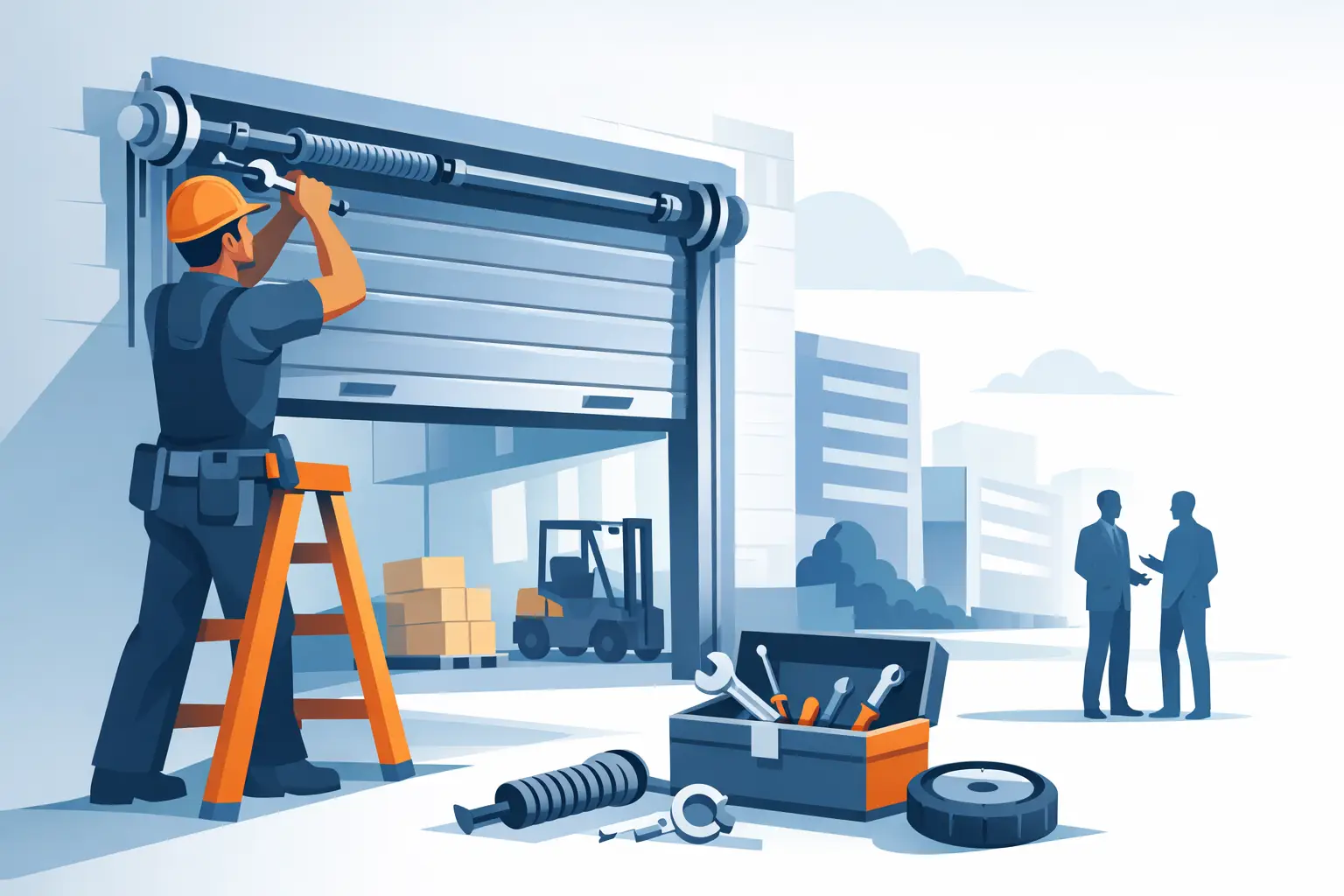
When a bay door stops halfway open at 6:45 a.m., the problem is not minor. Deliveries stack up, staff waits around, security is compromised, and your day starts behind schedule. That is why commercial overhead door repair needs to be handled quickly and correctly - not patched just enough to get through another week.
For commercial properties in Cheyenne and nearby communities, overhead doors take a beating. Daily cycles, wind, cold weather, vehicle traffic, and general wear all add up. A door that serves a warehouse, shop, storage facility, fire station, or service building works much harder than the average residential door. When something fails, the right repair is about more than convenience. It is about safety, access, and keeping business moving.
What usually goes wrong with a commercial overhead door
Most commercial door problems start with one worn part, then spread stress to the rest of the system. A spring loses tension, rollers wear down, a cable frays, or the track gets knocked slightly out of alignment. At first, the door may only sound rough or move slower than normal. Then one morning it sticks, jerks, or will not open at all.
Broken springs are one of the most common issues. Springs carry the weight of the door, and once one fails, the opener and hardware are forced to work harder than they should. In a commercial setting, that extra strain can lead to additional damage fast.
Cables are another frequent failure point. If a cable snaps or comes loose, the door can lift unevenly or come off track. That creates a safety issue right away, especially in busy facilities with forklifts, trucks, or employees moving in and out throughout the day.
Tracks and rollers also take regular abuse. Bent track sections, loose brackets, or worn rollers can make the door bind during travel. In some cases, a vehicle impact is the obvious cause. In others, it is just years of vibration and use catching up with the system.
Openers and control systems can also fail, but not every problem is electrical. A lot of doors get misdiagnosed as opener issues when the real cause is mechanical resistance somewhere else in the system. A good service call should identify the actual source of the problem before parts get replaced.
Why fast commercial overhead door repair matters
A malfunctioning door costs money even before the invoice shows up. If a door cannot close, your building is exposed. If it cannot open, your operation slows down or stops. If it moves unpredictably, you have a liability problem.
That is why speed matters, but so does doing the work right. A quick temporary fix can be useful in some situations, especially when a door must be secured after hours. But temporary is not the same as repaired. If the root problem is still there, you are likely looking at another failure soon, often at a worse time.
For property managers and business owners, the best repair approach depends on the condition of the full system. Sometimes replacing a spring or cable gets the door back to reliable service with no issue. Other times, several worn components have reached the end together, and fixing only one part does not make much sense. That is where honest diagnosis matters.
Commercial overhead door repair or full replacement?
This is where the answer is often, it depends. If the door sections are in good shape and the failure is limited to hardware, repair is usually the better value. Replacing springs, rollers, cables, hinges, drums, weather seal, or an opener can extend the life of a solid commercial door significantly.
If the door has major panel damage, repeated track problems, structural wear, or outdated components that are hard to source, replacement may be the smarter long-term move. The same goes for doors that have become unreliable enough to interrupt business more than once. Frequent repair calls add up, and downtime has a cost of its own.
Age matters, but age alone is not the whole story. Some older doors are worth repairing because the core structure is still sound. Some newer doors need replacement sooner because they were underbuilt for the job or have taken impact damage. A technician should look at usage, visible wear, safety, and repair history before making that call.
What a proper service visit should include
A real repair appointment should do more than swap a broken part. The technician should inspect the full operating system, test balance, review spring condition, check cable wear, inspect rollers and track alignment, and verify that safety devices and controls are functioning as they should.
That matters because commercial doors are interconnected systems. If one part failed from normal wear, another may be close behind. Catching those issues during the same visit can prevent another shutdown a few days later.
For busy commercial sites, stocked service trucks make a real difference. If common parts are already on hand, many repairs can be handled the same day instead of turning into a drawn-out job. That is especially important when the door protects inventory, vehicles, equipment, or restricted areas.
How much commercial overhead door repair costs
Repair cost depends on the size of the door, the type of hardware, the extent of the damage, and whether the issue is mechanical, structural, or electrical. A straightforward spring, cable, roller, or track repair will usually cost less than major section replacement or a full commercial opener repair.
Urgency can also affect price. After-hours emergency service is often worth it when a building cannot be secured or operations are blocked, but routine daytime appointments may be more cost-effective when the issue is not critical.
The important part is transparency. You should know what failed, what needs to be replaced now, what can wait, and what the total cost will be before the work starts. For most property owners and managers, that clear explanation matters just as much as the repair itself.
Signs you should call before the door fails completely
A lot of expensive repairs start as smaller warnings that get ignored because the door still technically works. If the door is getting louder, shaking during travel, closing unevenly, reversing unexpectedly, or moving slower than usual, those are signs something is off.
The same is true if you notice frayed cables, bent track, sagging sections, gaps in the seal, or an opener straining harder than normal. Commercial doors do not usually fix themselves. Waiting often turns a manageable repair into a larger and more disruptive one.
Preventive service is especially worthwhile for high-cycle doors. A tune-up can catch worn parts early, reduce strain on the opener, improve safety, and help avoid downtime during peak hours. For facilities that rely on daily door access, maintenance is often cheaper than one emergency shutdown.
Choosing a local company for commercial overhead door repair
Commercial work is not the same as standard residential garage door service. The doors are heavier, the hardware is different, and the stakes are higher when access to a business is blocked. You want a company that understands commercial systems, shows up with the right parts, and gives you a straight answer about repair versus replacement.
For businesses and property managers in Cheyenne, quick response matters. So does local credibility. If you are calling about a door that is stuck open, off track, or unsafe to use, you do not want vague scheduling or guesswork on price. You want experienced technicians, clear communication, and service that solves the problem on the first visit whenever possible.
That is exactly why many local customers call Mike's Garage Door LLC. Same-day availability, honest pricing, and stocked trucks are not just selling points - they are what keep a service call from turning into an all-day disruption.
When emergency service is the right call
Not every issue needs immediate dispatch, but some do. If the door is stuck open, will not close securely, has come off track, has a broken spring, or is creating a clear safety risk, it is time to call right away. The same goes for doors blocking deliveries, trapping vehicles, or preventing access to essential work areas.
In those cases, speed is not about convenience. It is about protecting people, property, and the workday. A dependable repair should restore safe operation and address the root cause, not just force the door into place and hope it holds.
A commercial overhead door does not have to be brand new to be dependable, but it does have to be maintained and repaired by people who know what they are looking at. If your door is making noise, slowing down, or showing signs of wear, getting it checked now is usually the easiest way to avoid a bigger problem later.