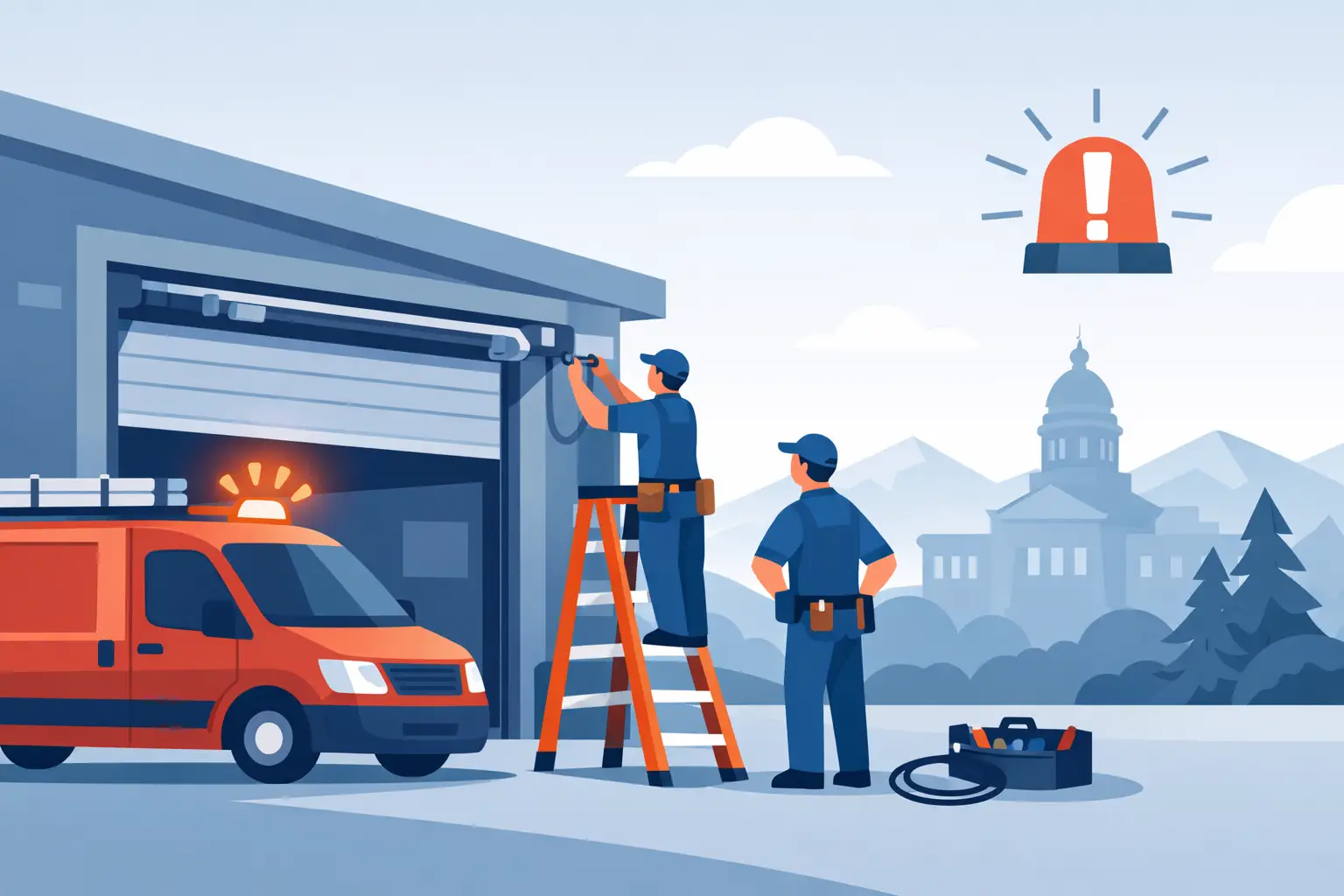
A garage or commercial door usually picks the worst possible time to fail - right before work, during a delivery, or after business hours when you need the building secured. That is exactly when emergency overhead door service matters. When a door will not open, will not close, or is hanging crooked on the track, the problem is no longer just inconvenient. It becomes a safety issue, a security risk, and in many cases a full stop to your day.
In Cheyenne and the surrounding area, fast response is not a luxury. It is part of the repair. A broken spring in winter, an opener that quits during a storm, or a commercial overhead door stuck halfway open can leave a home exposed or a business unable to operate normally. The right service call is about getting the door stable, diagnosing the cause correctly, and fixing it without wasting time.
What counts as emergency overhead door service?
Not every garage door problem is an emergency, but many are. If the door is off track, will not close securely, makes a loud snap and stops lifting, or starts sagging on one side, it needs prompt attention. The same goes for doors that reverse unexpectedly, bind in the tracks, or leave a property open overnight.
For homeowners, an emergency often means you cannot get your vehicle out, cannot get the door shut, or do not feel safe using it again. For property managers and commercial operators, the stakes can be even higher. A nonworking overhead door can interrupt tenant access, delay shipments, create liability concerns, or affect how secure the building is after hours.
The key difference between routine repair and urgent service is risk. If the problem affects safe operation, security, or access, waiting usually makes things worse.
Common problems that need same-day repair
Most urgent door failures come down to a short list of issues. Broken springs are one of the biggest. When a torsion or extension spring snaps, the door can suddenly feel extremely heavy or stop moving altogether. In some cases, the opener still tries to lift it, which can strain the motor and create a second repair.
Off-track doors are another common emergency. This can happen after a roller fails, hardware loosens, or the door is hit by a vehicle. A door that is crooked or partially out of the track should not be forced. It can fall further, damage panels, or injure someone nearby.
Opener failures also show up often in urgent calls. Sometimes the issue is electrical. Other times the motor, gears, sensors, or travel settings are the real cause. If the opener hums but the door does not move, or if the door starts down and reverses, a technician needs to sort out whether the problem is the opener itself or a mechanical issue in the door system.
Commercial properties also deal with worn rollers, bent tracks, damaged cables, and doors that will not seal properly. In a warehouse, shop, or service building, even a partial failure can disrupt the whole day.
Why quick service matters more than most people think
A lot of customers first think about convenience. That makes sense. Nobody wants to be stuck at home or locked out of a bay. But convenience is only part of it.
A damaged overhead door can turn into a safety hazard fast. Springs and cables are under high tension. Tracks can shift. Hinges and brackets can fail under load. Trying to force a stuck door open or closed may bend more parts and increase the repair cost.
There is also the issue of security. If the door will not shut all the way, your tools, inventory, vehicles, or household belongings may be exposed. For businesses, that can affect operations immediately. For homeowners, it can mean a long night worrying whether the property is protected.
Then there is weather. In Wyoming, wind and cold do not wait for a convenient repair window. An open or poorly sealed door can let in dirt, snow, and freezing air, especially when the garage is attached to the home or the building stores sensitive equipment.
What to expect from a professional emergency call
A good emergency service visit should start with a clear diagnosis, not guesswork. The technician should inspect the full system, identify what failed, and explain what needs to be repaired now versus what can wait. That matters because overhead doors work as connected systems. Replacing one broken part without checking the rest can lead to repeat problems.
In many cases, the best outcome is same-day repair with parts already on the truck. Stocked service vehicles make a real difference on urgent calls because the problem often comes down to standard springs, rollers, cables, hinges, drums, or opener components. If the technician has to leave and come back for common parts, the emergency drags on longer than it should.
You should also expect honest pricing. Emergency service does not have to mean vague answers or surprise charges. A straightforward contractor will tell you what failed, what it costs to fix, and whether repair or replacement makes more sense.
That last part depends on the door. If the issue is a broken spring on an otherwise solid system, repair is usually the right move. If the door has major panel damage, repeated track issues, failing hardware, and an aging opener, replacement may be the smarter long-term call.
Emergency overhead door service for homes and businesses
Residential and commercial service can overlap, but they are not the same job. A home garage door typically affects daily access, vehicle storage, and household security. Speed matters because families rely on that door every day, often multiple times a day.
Commercial overhead doors bring different pressures. The hardware is often larger and heavier. Cycles are more frequent. Downtime affects employees, customers, tenants, deliveries, and revenue. A door at a service shop or storage facility cannot sit unusable for long without causing larger operational headaches.
That is why experience matters. A contractor handling emergency overhead door service should be comfortable with both common residential repairs and commercial door systems, and should know when a temporary stabilization is safe versus when the door needs to stay out of service until fully repaired.
When not to use the door
One of the most common mistakes after a breakdown is continuing to run the door. If you hear a loud bang from the garage and the door suddenly feels heavy, stop using it. If the door is crooked, jerking, or hanging on one side, stop using it. If rollers are coming out of the track or cables look loose, stop using it.
This is especially true if you are tempted to pull the emergency release and lift the door yourself. Without spring support, the full weight of the door can come down hard. What looks manageable can get dangerous quickly.
A better move is to keep people clear of the area, secure the property as best you can, and call for service. That protects both the door and anyone around it.
How local response changes the experience
With urgent repairs, local matters. A company that already works in Cheyenne, Laramie County, and nearby communities is more likely to understand the common door setups in the area, the weather-related wear these systems take on, and the need for a faster turnaround.
It also means the service is built around real dispatch, not a call center promise that turns into a long wait. For many customers, that is the difference between getting the problem handled today and losing another day to delays.
This is where a company like Mike's Garage Door LLC stands out for local customers. Same-day service, stocked trucks, clear pricing, and strong local reviews all matter more when the door is stuck and you need an answer now, not next week.
The value of fixing the cause, not just the symptom
An emergency repair should solve the immediate problem, but it should also answer why the failure happened. Springs wear out over time. Rollers degrade. Tracks shift. Openers strain against doors that are no longer balanced correctly. If the root cause is missed, the same door may fail again soon.
That is why a proper service call often includes checking balance, hardware wear, safety sensors, opener settings, and the general condition of the moving parts. Sometimes the repair is simple. Sometimes the emergency is the last sign of a system that has been wearing down for months.
If your door has been noisy, slow, jerky, or unreliable before the breakdown, mention that during the call. Those details help point the technician toward the full issue.
When an overhead door fails, most people want one thing - a fast fix that is done right the first time. That is a reasonable expectation. Whether it is a home garage that will not open before work or a commercial door that is holding up the day, the best next step is to treat it seriously, avoid forcing the system, and get qualified help on site as quickly as possible.