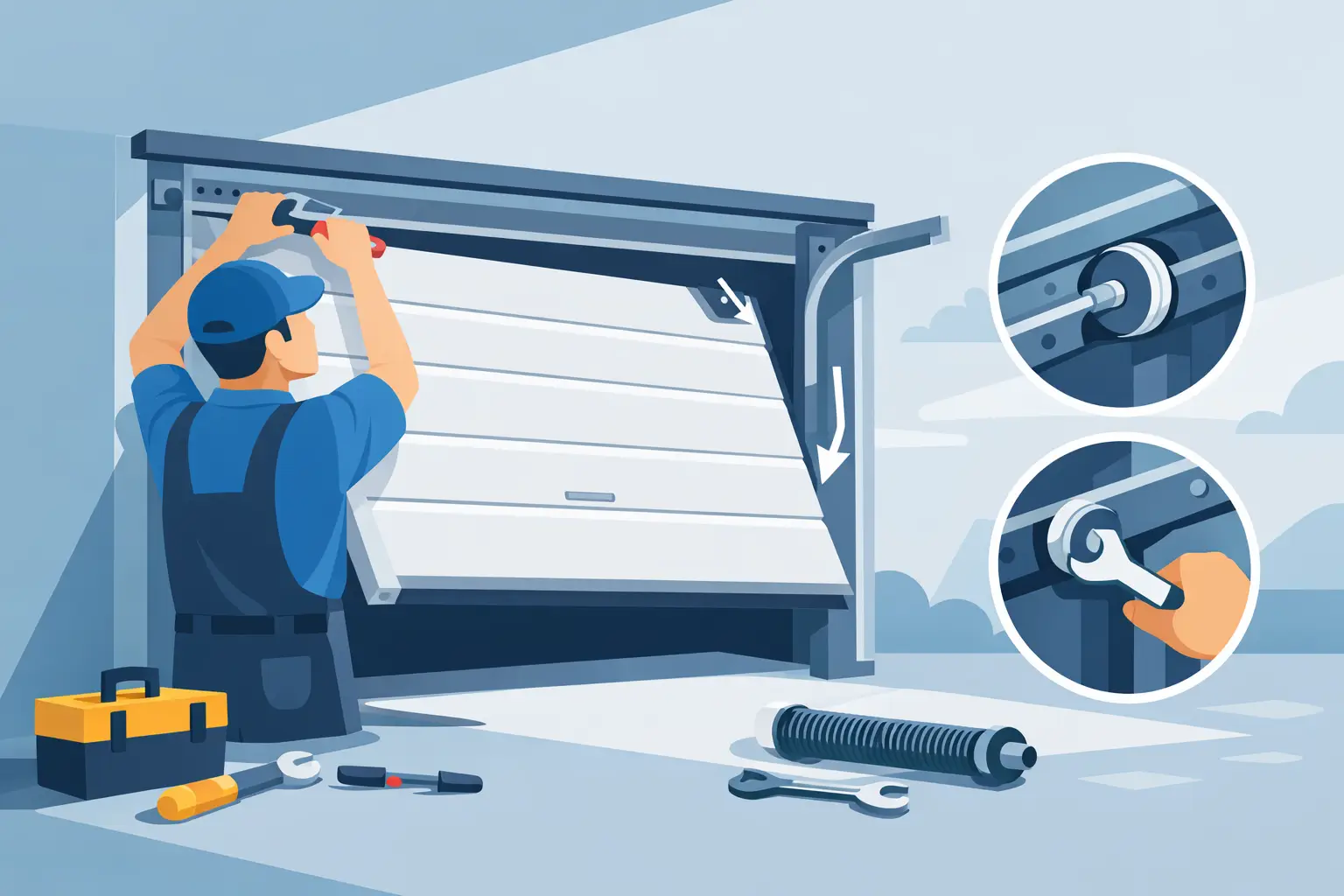
A garage door that jumps the track usually does not fail quietly. You hear a bang, the door looks crooked, one side hangs lower than the other, and suddenly your car, tools, or business access are stuck behind several hundred pounds of steel. If you need garage door off track repair, the first priority is safety. The second is getting the door inspected and corrected before the damage spreads to the rollers, cables, panels, or opener.
In Cheyenne and nearby areas, this problem shows up after all kinds of real-world situations. A vehicle taps the bottom section. A worn roller binds in cold weather. A cable loosens on one side. A spring starts failing and throws the balance off. Sometimes the issue looks minor from the driveway, but the force inside a garage door system can turn a small alignment problem into a dangerous repair fast.
What causes a garage door to go off track?
Most off-track doors do not happen for one random reason. They usually come from wear, impact, or a hardware failure that built up over time. The track itself may be bent, the rollers may be worn down, or the door may be trying to travel with uneven tension from side to side.
One of the most common causes is accidental impact. If the lower panel gets bumped by a vehicle, even lightly, the track can shift enough for the rollers to pop out. Another frequent cause is a broken or stretched cable. When one side of the door lifts differently than the other, the door twists under load and can leave the track.
Worn rollers also create trouble. A roller that drags, cracks, or seizes can stop moving smoothly inside the track. That extra friction stresses the brackets, hinges, and opener. If the opener keeps pulling, the roller may climb out or the track may spread just enough to let it slip.
Poor maintenance is often part of the story too. Loose bolts, dirty tracks, and neglected tune-ups may not seem urgent until the door suddenly jams halfway open. Commercial overhead doors can have the same problems, but heavier use usually makes the damage happen faster.
Signs you need garage door off track repair right away
An off-track door is usually obvious, but not always. Some doors still move a little, which leads people to keep trying the wall button or remote. That is where extra damage happens.
Watch for a door that looks uneven when opening or closing, rollers that are visible outside the track, grinding or popping noises, gaps between the rollers and track, hanging cables, or a door that stops partway and reverses. If the opener strains or the top section leans, stop using it.
A garage door is not like a closet door that just needs a gentle push back into place. The springs and cables are under serious tension, and that tension changes as the door moves. If one part is already out of line, forcing operation can bend the track further, crack hinges, strip opener gears, or drop the door unexpectedly.
What to do before help arrives
The safest move is simple. Stop using the door. Do not keep testing it, and do not pull the emergency release unless you understand exactly how much weight is still being supported. On a damaged system, disconnecting the opener at the wrong time can let the door slam shut.
Keep people, pets, and vehicles away from the opening. If the door is stuck open and the property is exposed, stay clear of the travel path and call for service as soon as possible. If the door is crooked but partially down, leave it alone. Trying to muscle it closed by hand can make the situation worse.
If you can safely see obvious damage from a distance, take note of whether the track is bent, whether a cable is loose, and whether a roller has come out. That helps speed up diagnosis once a technician is on site. Beyond that, this is not the repair to experiment with.
Can you fix an off-track garage door yourself?
Sometimes people search garage door off track repair hoping this is a quick DIY adjustment. In most cases, it is not. A minor track alignment on a lightweight system is one thing. A full off-track condition involving cables, springs, or a jammed roller is another.
The trade-off is cost versus risk. DIY may seem cheaper at first, but one wrong move can turn a repairable issue into a new track, new rollers, panel damage, or an opener replacement. More importantly, there is injury risk. Garage doors are heavy, and spring systems are unforgiving.
A trained technician does more than pop a roller back in. The real job is finding out why the door came off track in the first place. If the root cause is a failing cable drum, a bent vertical track, a damaged hinge, or a spring imbalance, the problem will return unless that issue is corrected.
How professional garage door off track repair works
A proper repair starts with stabilizing the door so it cannot shift or fall during service. Then the technician checks the full system, not just the area where the roller came out. That includes the track alignment, roller condition, hinges, cables, drums, springs, brackets, and opener settings.
If the track is bent but salvageable, it may be realigned and secured. If it is badly twisted or spread, replacement is often the better option. Rollers that are cracked or worn should be replaced rather than reused. If a cable has frayed or slipped, it needs to be reset or replaced with the door properly balanced.
This is where experience matters. An off-track problem can be a symptom, not the whole repair. A door may need spring adjustment, bracket tightening, new rollers, or opener limit corrections so the system runs smoothly again. On commercial doors, heavier hardware and frequent cycles make a full inspection even more important.
What affects repair cost?
Cost depends on what failed and how far the damage spread before the door was stopped. If the issue is limited to a minor track adjustment and roller reset, the repair is usually more straightforward. If the door kept running while crooked, the bill can grow because the opener, panels, cables, and track may all be involved.
The biggest cost factors are track damage, roller replacement, cable issues, spring problems, panel damage, and labor time. Emergency service timing can matter too, especially after hours. That said, fast service often saves money overall because it prevents a simple off-track door from turning into a full system rebuild.
For homeowners and property managers, the practical question is not just price. It is whether the repair restores safe, dependable operation. Cheap partial fixes tend to come back as repeat service calls.
Why same-day service matters
An off-track garage door is rarely a wait-until-next-week problem. If it is your main entry point, your vehicle may be trapped. If it is a rental or commercial property, security and daily access are on the line. A stuck or crooked overhead door also becomes a safety issue for anyone nearby.
That is why local same-day service matters. A stocked truck, the right replacement parts, and a technician who sees these failures every day can make the difference between one visit and several. For customers in Cheyenne, Laramie County, and nearby communities, fast response is not just convenient. It is often the safest and most cost-effective option.
Mike's Garage Door LLC handles these calls with the kind of straightforward approach people want in a stressful situation - inspect the problem, explain what failed, give honest pricing, and get the door working correctly again.
How to reduce the chances of it happening again
Not every off-track door is preventable, especially after impact, but regular maintenance lowers the odds. Rollers wear out. Bolts loosen. Tracks get bumped. Springs lose tension over time. Those are normal service issues, and catching them early is far easier than dealing with a jammed door in bad weather or before a workday starts.
A tune-up helps spot uneven movement, roller wear, loose hardware, and track alignment problems before they become a breakdown. If your door has been louder than usual, hesitates during travel, or looks slightly uneven, that is a good time to have it checked. Waiting rarely makes garage door repairs cheaper.
If your door is already off track, the main thing to remember is this: stop using it and get it diagnosed properly. The longer it operates in a damaged position, the more likely you are to add cost, downtime, and risk. A quick, professional repair now usually beats a larger repair later, and it gets your home or property back to normal faster.