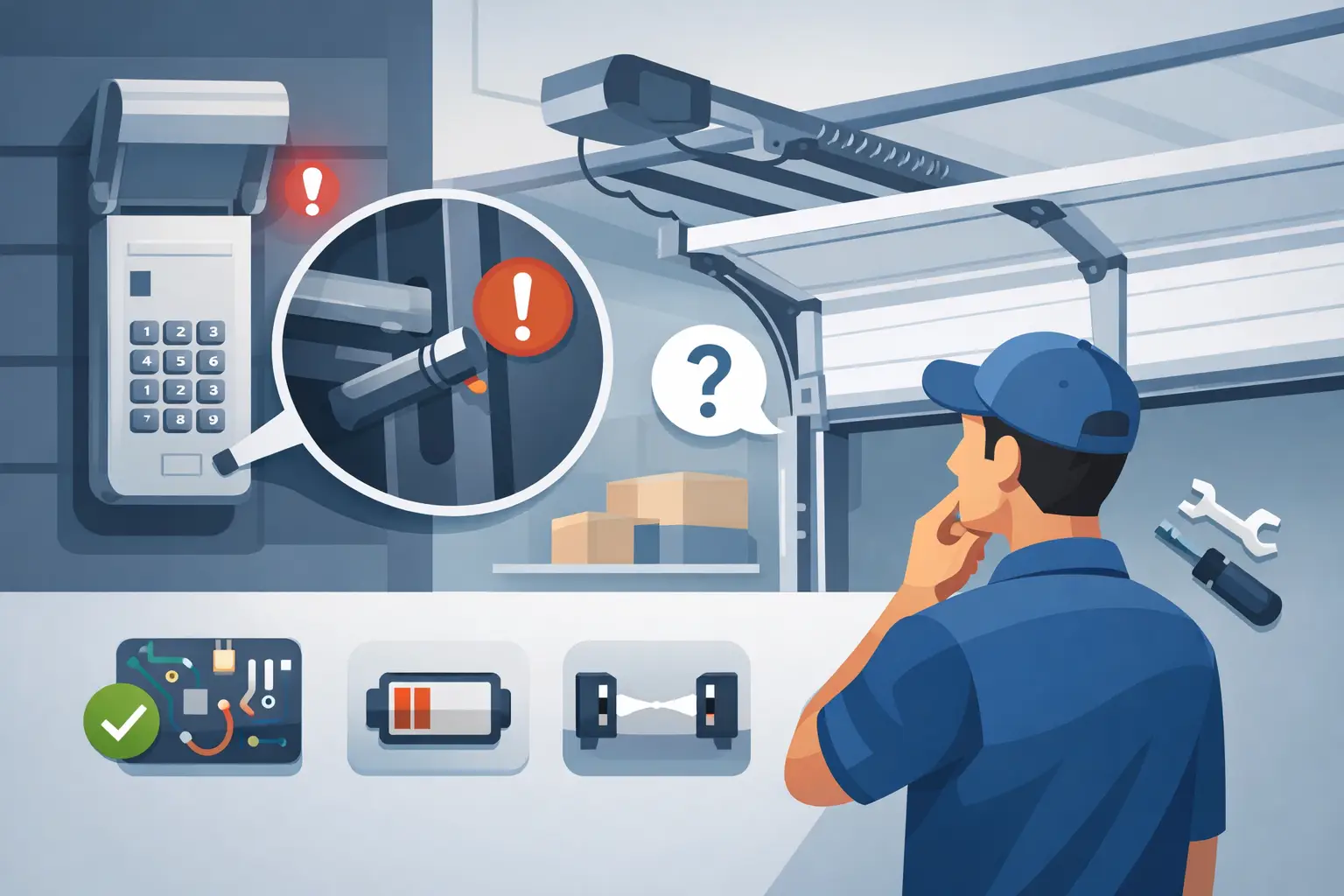
When a garage door pin is not working, the problem usually shows up at the worst time - when you are trying to leave for work, close up for the night, or get a tenant or delivery vehicle through the opening. In most cases, the issue is not just the pin itself. It is often tied to alignment, wear, tension, or a damaged part nearby. The good news is that some causes are simple to identify. The bad news is that garage doors have heavy moving parts, and forcing the wrong fix can turn a small repair into a bigger one.
The word pin can mean a few different parts on a garage door system. Some homeowners are talking about the emergency release pin or locking pin. Others mean a hinge pin, clevis pin, cotter pin, or the pin that helps secure a roller bracket or arm connection. On older doors or certain commercial setups, the pin may be part of a manual lock assembly. That is why the first step is figuring out which pin is giving you trouble and what the door is doing because of it.
What a garage door pin not working usually means
If the pin will not slide into place, keeps slipping out, looks bent, or will not release when you need it to, that points to a mechanical issue nearby. Pins are simple parts, but they depend on everything around them lining up correctly. If the bracket is twisted, the door section is sagging, the lock bars are off-center, or the opener arm is pulling at the wrong angle, the pin may seem like the problem when it is really the symptom.
A stuck pin can also be caused by rust, paint buildup, dirt, or an old part that has worn down from years of use. In Wyoming, temperature swings do not help. Cold weather can tighten metal tolerances, dry out moving parts, and make a pin feel frozen in place. Wind, dust, and moisture can also speed up corrosion on exposed hardware.
Start with the safest checks first
Before touching anything, stop using force. If you have to yank, pry, hammer, or over-muscle a pin to make it move, you can damage the bracket, crack a panel, or put yourself in a bad spot if the door shifts suddenly.
Start with a visual check while the door is fully closed. Look at the area around the pin and ask a few simple questions. Is the pin bent? Does the hole it goes through look misaligned? Is there obvious rust or debris? Did the door recently get hit by a vehicle, go off track, or start making new noises? Those details matter because they usually point to whether this is basic hardware wear or part of a larger door problem.
If the pin is part of a manual slide lock, make sure the door is sitting evenly on the floor. If the door is slightly crooked or under side pressure, the lock bars may not line up with the track holes. In that case, the pin or lock may not engage even though the hardware itself is still good.
If the pin is connected to the opener arm or release mechanism, disconnecting parts without understanding spring tension and door balance can create a safety risk. A door that is poorly balanced can drop fast once the opener is disengaged.
Common reasons the pin will not engage or release
The most common cause is misalignment. Garage doors move through a lot of cycles, and hardware loosens over time. Hinges shift, brackets flex, and track position changes slightly. A small shift is enough to keep a pin from lining up cleanly.
Rust is another frequent issue, especially on older doors or doors that have not had regular maintenance. A rusted pin may bind in the hole or seize in place. Sometimes people spray the wrong lubricant on it, which attracts dirt and creates even more buildup.
Wear is also a factor. Pins, clips, and the holes they pass through can oval out over time. Once that happens, the pin may wobble, fall out, or fail to hold securely. If you notice a retaining clip missing, that is not something to ignore. Even a small missing fastener can lead to larger movement in the system.
Impact damage is common too. If the bottom of the door was bumped by a car or the track took a hit, the hardware near that area may no longer line up. Property managers see this a lot in multi-tenant garages and service buildings where repeated use takes a toll.
Then there is the issue nobody wants to hear - the pin may be fine, but another high-tension component may be failing. A door with a bad spring, worn cables, or a bent track can pull unevenly, and that side load can make a simple pin problem look like the main failure.
When this is a quick fix and when it is not
Sometimes the solution is straightforward. If the pin is dirty but otherwise intact, cleaning the area and applying the correct garage-door-safe lubricant may restore movement. If a retaining clip came off, replacing that clip with the correct size can solve the issue. If a lock bar is just slightly off, minor adjustment may bring it back into alignment.
But there is a line between a minor hardware issue and a repair call. If the pin is attached to a bottom bracket, cable connection, spring system, or opener arm under load, this is not a casual DIY job. The same goes for doors that are crooked, heavy to lift, partially stuck, or making grinding sounds. In those cases, the pin is only one part of a bigger mechanical problem.
That is where experience matters. A technician can tell quickly whether the fix is replacing a worn pin, straightening a bracket, adjusting the lock, or addressing a more serious balance issue before it causes more damage.
Garage door pin not working on a manual lock
A manual lock pin or slide bar that will not move is often tied to door position. If the door is not perfectly settled, the lock bar may hit the track instead of entering the slot. You may also have a bent guide, worn lock handle, or internal lock rod that has shifted.
This type of problem can feel small, but it affects security. If the lock will not engage, the garage may not be secure. If it will not release, you may be locked out of using the door the way you need to. For homeowners, that is an inconvenience. For a commercial property, it can interrupt daily operations fast.
Garage door pin not working on the opener connection
If you are talking about a pin at the opener arm, trolley connection, or emergency release area, be careful. Those parts work together to move the door through a fixed path. If a pin will not go back in, keeps backing out, or does not hold the arm in place, the opener may run incorrectly or stop moving the door altogether.
Sometimes the cause is as simple as a worn clevis pin or missing cotter pin. Other times, the opener bracket has loosened, the arm is bent, or the door is out of balance and putting strain on the connection. Replacing the wrong part without checking the overall setup can lead to repeat failure.
What to avoid
Do not substitute random bolts, nails, or hardware-store pins just because they fit through the hole. Garage door parts are sized for specific movement and load. Using the wrong replacement can create slop, binding, or a failure point.
Do not force a jammed pin with excessive pressure. If the system is under tension or out of alignment, forcing it can bend connected parts or cause sudden movement.
And do not keep cycling the opener to see if it fixes itself. If a pin-related issue is affecting alignment, repeated operation can damage the opener, the top section, or the arm connection.
When it makes sense to call for service
If the door is stuck, uneven, loud, off track, hard to lock, or disconnected from the opener, it is time to have it inspected. The same applies if the pin keeps failing after you put it back in place. Repeat pin problems usually mean the surrounding hardware is moving more than it should.
For local property owners, speed matters. A garage door issue can affect home security, vehicle access, tenant convenience, and business operations. Mike's Garage Door LLC handles the kind of on-site diagnosis that gets to the real cause quickly, with stocked trucks and same-day service when available. That matters when you do not want to guess wrong on a door that is already acting up.
A good repair is not just about getting the pin back where it belongs. It is about making sure the door runs safely, the hardware is secure, and the problem does not come right back next week.
If your garage door pin is not working, treat it like a warning sign, not just an annoyance. Small hardware issues have a way of pointing to bigger wear in the system, and catching that early is usually the fastest and least expensive path forward.