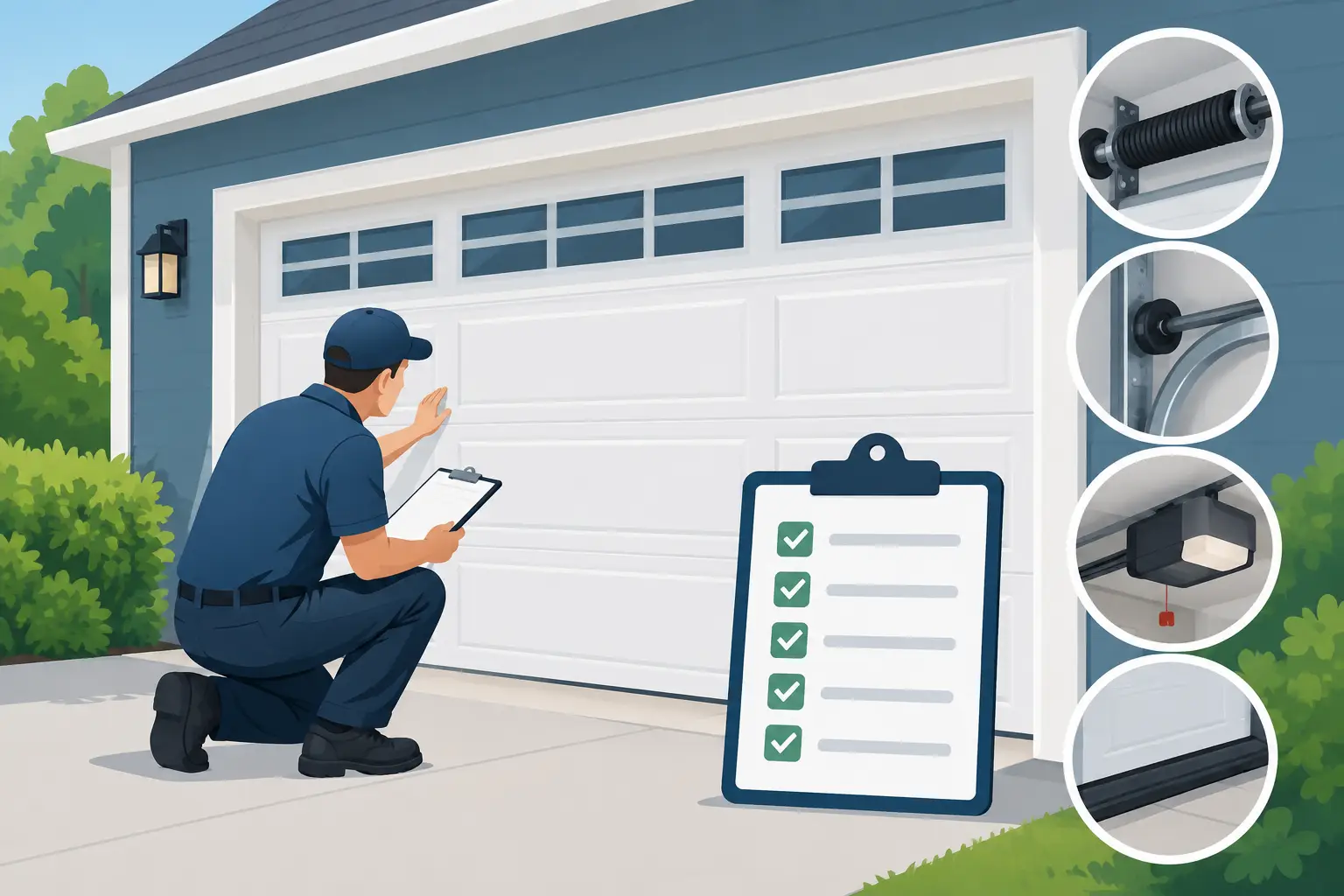
A garage door safety inspection is one of the simplest ways to prevent a heavy, moving door from becoming a safety problem. Your garage door may open and close several times a day, often without a second thought. But when springs wear out, cables fray, rollers bind, or safety sensors fail, the risk goes far beyond inconvenience.
For homeowners, property managers, and business owners in Cheyenne and surrounding communities, a basic inspection can catch warning signs before a door gets stuck, comes off track, or fails when you need access most. Some checks are safe to handle from the ground. Others, especially anything involving springs, cables, or bottom brackets, need a trained garage door technician.
Why garage door safety checks matter
A typical residential garage door can weigh well over 100 pounds. Larger insulated doors and commercial overhead doors weigh considerably more. Springs and cables carry much of that weight under high tension, while the opener, tracks, rollers, hinges, and sensors all need to work together correctly.
When one part starts failing, the door may become noisy, uneven, slow, or unreliable. In more serious cases, it can drop unexpectedly, bind in the tracks, reverse for no clear reason, or refuse to close. A safety inspection helps identify small problems while repairs are usually faster and less expensive.
Cheyenne weather can add wear to garage door systems. Cold temperatures can affect lubrication and opener performance, while wind, dust, and normal seasonal movement can expose weak hardware or misaligned tracks. A door that worked fine last fall may need attention after a hard Wyoming winter.
What to check during a garage door safety inspection
Plan to inspect your door at least twice a year. Spring and fall are practical times because they help you prepare for temperature changes. If your door is used heavily, serves a rental property, or protects a commercial space, more frequent checks make sense.
Start with a visual check
With the door closed, stand inside the garage and look over the full system. Check the panels for cracks, dents, rust, loose hardware, or damage around the hinges. Look at the tracks for bends, gaps, loose mounting brackets, or obvious debris.
Inspect the rollers as the door moves. Worn rollers may wobble, squeal, stick, or leave black residue around the track. Hinges should be secure and free of cracking. If the door shakes heavily or moves unevenly, do not assume it only needs lubricant. Uneven movement can point to a balance issue, worn rollers, damaged tracks, or spring trouble.
Also look at the lift cables on both sides of the door. They should appear evenly seated on the drums and should not be frayed, loose, or hanging. Keep your hands away from cables, drums, bottom brackets, and springs. Those parts are under extreme tension and are not safe for DIY adjustment.
Listen to the door while it operates
Open and close the door with the opener while standing clear of its path. A properly working door will make some normal operating sound, but loud popping, grinding, scraping, banging, or repeated squealing deserves attention.
A single loud bang from the garage is often a broken torsion spring. If that happens, the door may not open, or the opener may strain and stop. Do not keep pressing the opener button or try to force the door up. A trained technician should replace the spring and inspect the rest of the system.
Noise can sometimes come from dry rollers or hinges, but lubrication is not a cure-all. If the door is jerking, dragging, or getting louder over time, have it diagnosed before a minor part failure damages the opener or sends the door off track.
Test the photo-eye safety sensors
Modern garage door openers use photo-eye sensors near the bottom of the tracks. These sensors send an invisible beam across the opening. If something breaks that beam while the door is closing, the opener should stop and reverse.
Make sure both sensor lenses are clean and facing each other. Check that the mounting brackets are not bent and that the sensor lights are on as expected. Leaves, cobwebs, dirt, snow, stored items, or a bumped sensor can interfere with the beam.
To test the sensors, start closing the door and pass an object through the sensor beam without putting yourself in the doorway. The door should reverse promptly. If it keeps closing, stop using the automatic function until the safety system is repaired. Never bypass or disconnect the photo-eyes to make a door close.
Test the opener's reversing function
The photo-eyes are only one part of the safety system. Most openers also have a contact reversal feature designed to reverse the door when it touches an object.
Place a flat 2-by-4 board on the floor directly under the center of the garage door. Close the door using the wall control or remote. When the bottom of the door contacts the board, it should reverse within about two seconds.
If the door presses down on the board and does not reverse, the opener may need adjustment, repair, or replacement. Do not simply increase or decrease force settings without understanding the problem. Incorrect settings can create a real injury risk and may hide a mechanical issue with the door itself.
Check the door's balance carefully
An opener is designed to guide a balanced door, not lift all of its weight. A door that is too heavy can wear out an opener quickly and may be unsafe to operate.
To perform a basic balance check, start with the door fully closed. Disconnect the opener using the emergency release only if you can do so safely and understand how your specific opener works. Lift the door manually to about halfway open, then let go while staying clear of the door's path.
A balanced door should remain near that position. If it shoots upward, falls downward, or feels extremely heavy, stop the test. The springs may be improperly adjusted, worn, or broken. Reconnect the opener only after the door is secure, and schedule professional service. Never attempt to adjust torsion or extension springs yourself.
Warning signs that should not wait
Some garage door issues are not maintenance items. They need prompt repair, especially if the door is the main entrance to your home or protects a business, vehicle, tools, or inventory.
Call for service if you notice any of the following:
- A broken spring, loose cable, or visible cable fraying
- A door that is off track, crooked, hanging unevenly, or stuck halfway
- A door that closes on an object or fails either reversal test
- Grinding, popping, or severe shaking during operation
- An opener that runs but will not move the door
- A damaged bottom bracket, bent track, or loose mounting hardware
Do not walk or drive under a door that is partially open and unstable. If a commercial overhead door is damaged, keep employees, customers, and equipment away from the opening until it has been inspected.
What homeowners can maintain and what to leave to a pro
Homeowners can keep tracks clear, wipe sensor lenses, check visible hardware, and use a garage-door-approved lubricant on moving metal parts such as hinges, rollers, and springs when appropriate. Avoid heavy grease on the tracks. Grease collects dirt and can make roller movement worse over time.
You can also replace remote batteries, keep the door weather seal clear of debris, and make sure stored items do not block the sensors. These small tasks help, but they do not replace a professional tune-up.
Leave spring adjustment, cable repair, track straightening, bottom bracket work, and opener force adjustments to a qualified technician. Those jobs involve stored energy, door weight, and precise alignment. The lowest-cost repair is not a good deal if it creates a bigger safety problem later.
Professional inspections for homes and businesses
A professional garage door safety inspection goes beyond a quick visual check. A technician can evaluate spring tension, cable condition, roller wear, track alignment, bearing plates, opener settings, limit switches, sensor operation, and overall door balance. They can also identify parts approaching failure before they stop your day.
For commercial properties, inspections are particularly valuable because overhead doors often operate more frequently and protect busy loading areas, shops, storage facilities, and fleet access. Downtime can delay deliveries, restrict access, and create safety concerns for staff.
Mike's Garage Door LLC provides practical inspections, repairs, and tune-ups for residential and commercial doors in the Cheyenne area. With stocked service trucks and same-day service for many urgent problems, the goal is straightforward: find the issue, explain the repair clearly, and get the door operating safely again.
If your door is louder than usual, reversing unexpectedly, moving unevenly, or showing any sign of cable or spring trouble, do not wait for a complete failure. A timely inspection can protect the people who use the door every day and help you avoid being stuck outside, inside, or unable to secure your property.