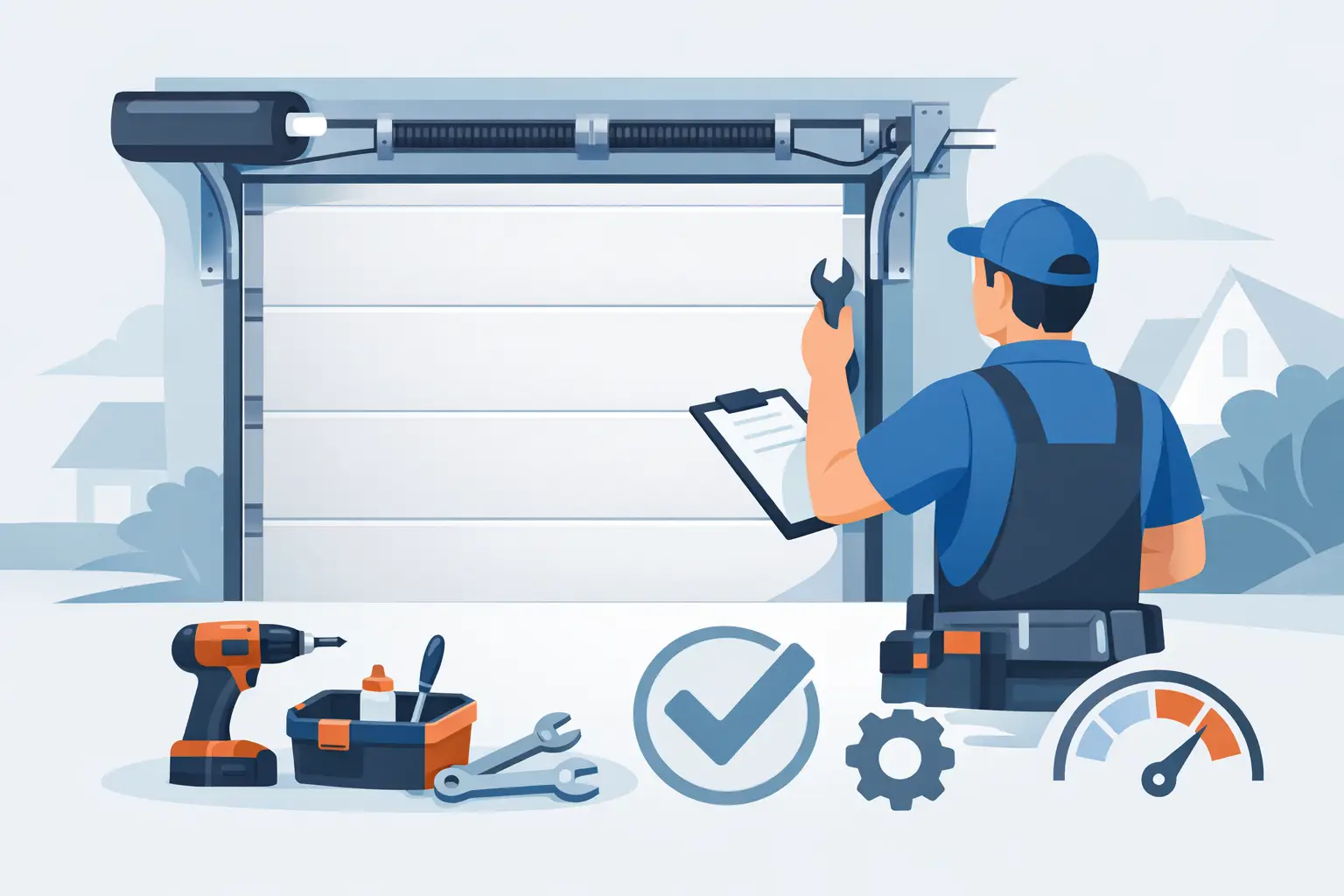
That loud shudder when the garage door starts moving is usually the warning homeowners ignore until the door stops halfway, the opener strains, or a spring gives out at the worst time. A garage door tune up service is meant to catch those problems early, before they turn into an urgent repair call or a door that will not open when you need to leave for work.
In Cheyenne and surrounding areas, garage doors deal with wind, cold, dust, and daily wear that add up faster than most people expect. A door may still open and close, but that does not mean it is operating safely or putting the right amount of strain on the springs, rollers, hinges, and opener. Routine service keeps the system working the way it should and gives you a clear picture of what is wearing out before it fails.
What a garage door tune up service actually includes
A proper garage door tune up service is more than spraying lubricant on a few moving parts and calling it done. The point is to inspect the full system, make adjustments where needed, and spot early signs of failure in parts that carry the load every day.
The service usually starts with a visual inspection of the door sections, track, rollers, hinges, cables, springs, and mounting hardware. Even small issues matter here. A loose bolt, bent hinge, frayed cable, or worn roller can put extra stress on the rest of the system. Catching that early often means a smaller repair bill and less chance of the door going off track.
Balance testing is another key part of maintenance. If the springs are not counterbalancing the weight of the door correctly, the opener ends up doing too much work. That can shorten the life of the opener motor, chain, belt, or drive components. A technician will check how the door moves by hand, whether it stays in place when partially open, and whether spring tension appears correct.
Lubrication is part of the job, but it is not the whole job. The right lubricant on rollers, hinges, bearings, and spring coils can reduce noise and wear. At the same time, over-lubricating or using the wrong product can attract dirt and create other problems. That is why tune-ups are about both inspection and adjustment, not just maintenance spray.
The opener should also be checked. That includes force settings, travel limits, safety sensors, and overall performance. If the door reverses for no reason, closes unevenly, or fails to respond consistently, the issue may be with the opener settings, the photo eyes, or the door itself. A tune-up helps narrow that down before it becomes a full failure.
Why tune-ups matter more than most people think
Garage doors are heavy systems with high-tension parts. When they are out of adjustment, the problem rarely stays small for long. A roller that drags today can become track damage later. A door that is slightly out of balance can wear out the opener faster than expected. A loose hinge can cause uneven movement that spreads stress across the entire door.
There is also the safety side. Springs, cables, and hardware are under load. If one part fails, it can create a dangerous situation for anyone nearby. That matters for families, rental properties, shops, and commercial buildings where the door gets frequent use and dependable access is not optional.
For property owners trying to control costs, maintenance is usually cheaper than waiting for a breakdown. Not every worn part needs immediate replacement, and that is where an honest service provider matters. Sometimes a door only needs adjustment and lubrication. Sometimes the tune-up reveals a part that should be replaced soon, even if the door is still running. The value is in knowing the difference.
Signs you should schedule a garage door tune up service
Some doors clearly need attention. Others show smaller warning signs that are easy to put off. If the door has gotten louder, moves unevenly, jerks during travel, or feels heavier than usual when operated manually, it is time for service.
You should also pay attention if the opener seems to struggle, the remote response is inconsistent, or the safety sensors act up. These are not always major repairs, but they are signs the system is no longer operating cleanly.
Age matters too. If your garage door has not been professionally serviced in a year or more, a tune-up is a smart move even if nothing seems obviously wrong. That is especially true for homes with attached garages, rental properties with multiple users, and commercial doors that open and close throughout the day.
Seasonal changes can make a difference in Wyoming. Cold temperatures can affect lubrication, metal contraction, and opener performance. Wind and dust can also wear on tracks and moving hardware. A door that worked fine last season may need adjustment now.
What tune-ups can fix and what they cannot
A tune-up can improve operation, reduce noise, tighten hardware, correct minor alignment issues, and catch developing problems early. In many cases, it can make a door feel smoother and more reliable the same day.
What it cannot do is reverse serious wear or safely patch over broken high-tension parts. If a spring is cracked, a cable is frayed, a roller has failed, or the track is bent badly enough to affect movement, repair or replacement may be necessary. The same goes for openers with failing motors or stripped drive components.
That is why the best service calls are straightforward. You want a technician who can tell you whether the door needs simple maintenance, a targeted repair, or a larger fix that should not be delayed. There is no benefit in overselling a full overhaul when an adjustment will do. There is also no benefit in pretending a failing spring can wait if it is close to breaking.
Residential and commercial tune-up needs are not the same
Homeowners usually want a door that is quiet, safe, and dependable every day. A residential tune-up focuses on wear from regular use, opener performance, and safety features that protect people and vehicles.
Commercial and overhead doors often face a different level of use. More cycles mean faster wear on rollers, hinges, bearings, and spring systems. The cost of downtime is also higher. If a shop door will not open, deliveries, service calls, and daily operations can be affected immediately.
For that reason, commercial property operators should take maintenance seriously and schedule it on a regular basis instead of waiting for a failure. Preventive service is not just about avoiding repairs. It is about keeping access, security, and workflow intact.
Choosing the right service company
Not every company handles tune-ups with the same level of care. Some treat maintenance like a quick add-on. Others use it as a real inspection and service appointment that helps customers avoid surprise failures.
Look for a local company that can explain what was checked, what was adjusted, and whether any parts are wearing out. Transparent pricing matters. So does response time. If the tune-up turns up a broken spring, failing roller, or opener issue, you do not want to start over with another appointment a week later.
That is one reason local customers often prefer a company with stocked service trucks and same-day availability. If a routine visit turns into a repair, the right parts may already be on hand. For homeowners and property managers in this area, that kind of practical service matters more than polished sales talk.
Mike's Garage Door LLC has built its reputation around that approach - straightforward service, honest pricing, and quick help when a minor issue turns out to be more urgent than expected.
When to schedule service
For most residential doors, once a year is a solid baseline. If the door gets heavy daily use, has older hardware, or has already had spring or opener issues in the past, twice a year may make more sense. Commercial doors often need a tighter schedule because they cycle more often and carry a higher consequence when they fail.
The best time to schedule is before the door starts acting up. Once you hear grinding, see crooked movement, or notice the opener straining, the system may already be wearing unevenly. A tune-up still helps, but earlier is better.
If you are unsure whether your door needs maintenance or repair, that is normal. Most property owners are not expected to diagnose spring tension, track alignment, or opener settings on their own. What matters is acting on the warning signs before a small problem becomes a broken door and a disrupted day.
A garage door should open when you need it, close securely when you leave, and do both without drama. If yours is getting louder, slower, or less predictable, a tune-up is not just routine maintenance. It is a practical way to stay ahead of bigger problems while the fix is still simple.