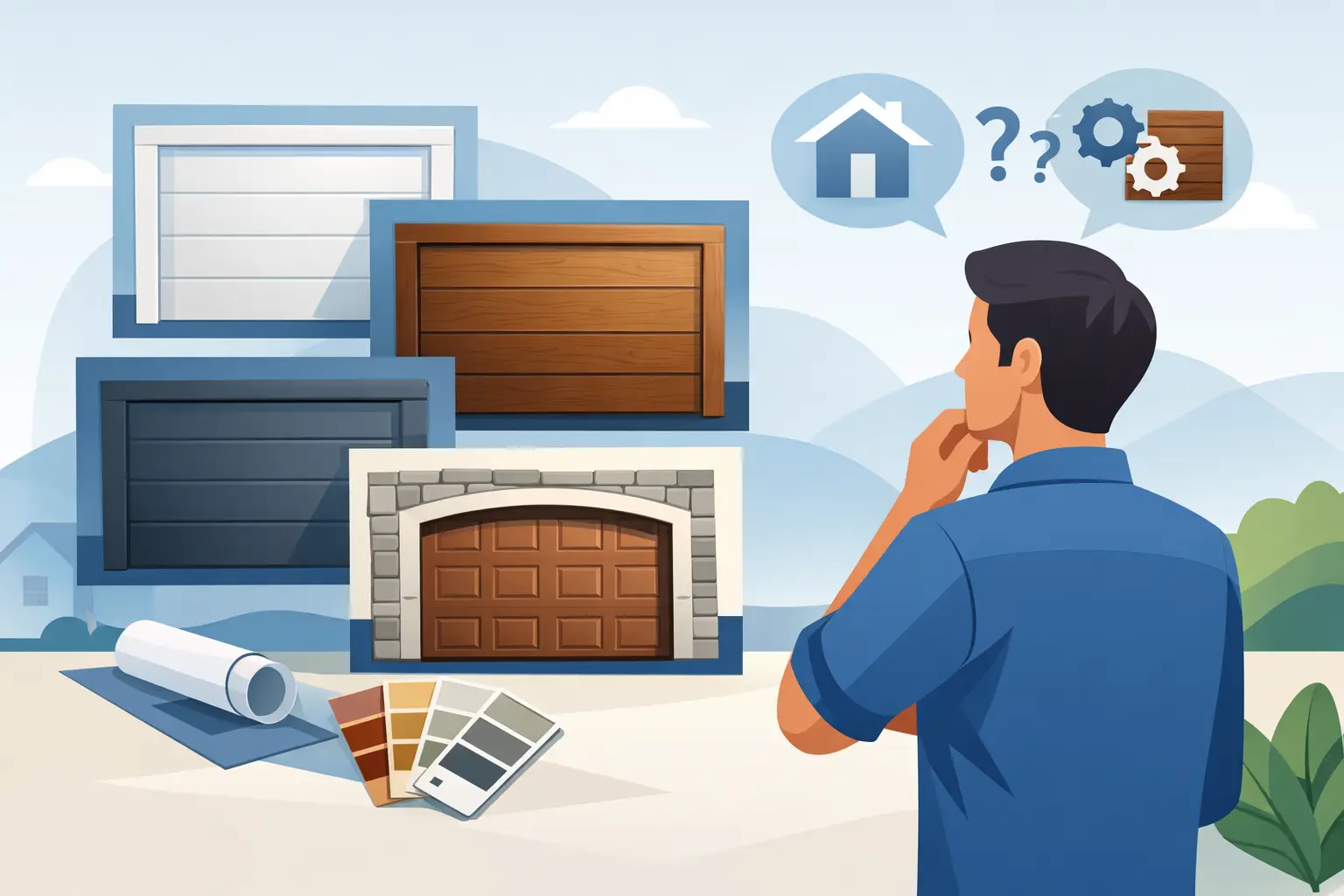
A garage door can look great in a showroom and still be the wrong fit for your home in Cheyenne. Between wind, cold snaps, daily use, and budget, the best choice usually comes down to how the door will actually perform once it is installed. If you are wondering how to choose garage door material, start with the factors that affect your day-to-day life, not just the color or panel design.
For most property owners, the real question is not which material is best overall. It is which material makes the most sense for your garage, your budget, and how much maintenance you want to deal with over the next several years. That is where a practical comparison helps.
How to choose garage door material for your property
The right garage door material depends on five things: durability, insulation, maintenance, appearance, and cost. If your garage is attached to the house, insulation usually matters more. If you want the lowest upfront price, steel is often the first material people consider. If curb appeal is a top priority, wood or wood-look options may be worth a closer look.
It also matters how the door gets used. A homeowner opening and closing the door a few times a day has different needs than a commercial property with frequent traffic. Heavy use puts more stress on panels, hardware, and openers, so material choice should match the workload.
In Wyoming, weather should be part of the decision from the start. Temperature swings, wind, snow, and moisture can all affect how a garage door performs and how much upkeep it needs. A material that works fine in a mild climate may not be the smartest long-term option here.
Steel garage doors
Steel is the most common choice for a reason. It is strong, widely available, and usually offers the best mix of price and performance. For many homes, it checks the biggest boxes without pushing the budget too far.
A basic steel door is often the most affordable option, but not all steel doors are the same. Thin single-layer doors cost less upfront, though they tend to dent more easily and offer little insulation. Heavier-gauge steel and multi-layer insulated doors cost more, but they hold up better and perform better in cold weather.
Maintenance is fairly simple. Steel does not warp or crack like wood, but it can rust if the finish gets damaged and exposed metal is left untreated. Dents are another trade-off, especially in busy households where bikes, tools, or vehicles may bump the door.
For attached garages, insulated steel is often the practical sweet spot. It keeps the door more stable, helps with energy efficiency, and reduces noise during operation.
Aluminum garage doors
Aluminum is lighter than steel and naturally resists rust, which makes it appealing in certain settings. It is also commonly used for modern full-view doors with glass panels, so homeowners looking for a clean, contemporary style often end up here.
The downside is strength. Aluminum dents more easily than steel, and that matters if the garage sees hard use. For a low-traffic property where appearance matters most, aluminum can be a strong choice. For a busy family garage or work building, it may show wear sooner than you want.
Insulation varies by model. Some aluminum doors are built more for looks than thermal performance, so it is worth checking the construction before making a decision.
Wood garage doors
Wood still delivers a look that other materials try to copy. If the goal is warmth, character, and a high-end appearance, real wood stands out. It can work especially well on custom homes or older properties where a standard steel door would look out of place.
The trade-off is maintenance. Wood needs regular attention to protect it from moisture, sun exposure, and seasonal weather. Depending on the finish and exposure, that may mean repainting or refinishing more often than many homeowners expect.
Wood doors also tend to be heavier and more expensive. That can affect the opener, springs, and long-term service needs. If you choose wood, it helps to go in with a clear understanding that you are paying for appearance and accepting more upkeep in return.
Faux wood and composite garage doors
Faux wood and composite doors are popular for people who like the look of wood but do not want the same maintenance. These doors are designed to mimic natural wood grain while using materials that better resist moisture, cracking, and routine wear.
This category can be a smart middle ground. You get more curb appeal than a plain steel door, but usually with less upkeep than real wood. The quality can vary a lot by manufacturer, though, so the finish and construction matter.
Price is often higher than standard steel but lower than premium custom wood. For many homeowners, that balance is exactly the point.
Fiberglass and vinyl garage doors
Fiberglass and vinyl are less common, but they do have their place. Both materials resist moisture well, which can be helpful in certain environments. Vinyl is known for being tough against dents and lower on maintenance, while fiberglass can be formed into convincing wood-look finishes.
Still, these materials are not always the top choice for every climate or every application. Some fiberglass products can become brittle over time in harsh conditions. Vinyl performs well in many cases, but style options may be more limited than with steel or wood-look doors.
If you are considering one of these, it is worth focusing on product quality rather than just the material label.
Insulation matters more than many people think
When people ask how to choose garage door material, they often focus on the outside surface and overlook what is inside the door. That is a mistake, especially for attached garages, workshops, and buildings where temperature control matters.
An insulated garage door helps reduce heat loss, improves comfort, and can make the door quieter during operation. It also usually adds stiffness to the panels, which can help with durability. In cold and windy areas, that extra performance is not just a luxury.
If your garage is detached and mainly used for parking, insulation may be less important. If there is living space next to or above the garage, it moves much higher on the priority list.
Match the material to the job
For most homeowners, steel works because it handles daily use, gives you plenty of style choices, and keeps costs under control. If you want the best balance of value and performance, that is usually where the conversation starts.
If appearance is the top concern and budget is more flexible, wood or a high-quality faux wood door may make more sense. If you want a modern look with glass, aluminum is worth a look. If low maintenance is the main goal, insulated steel, vinyl, or composite options tend to be stronger candidates.
Commercial properties should think even more about workload and durability. A door that opens repeatedly throughout the day needs to be chosen as part of a system, not just as a panel material. Weight, hardware, track setup, and opener capacity all matter.
Cost now versus cost later
The cheapest door is not always the least expensive choice over time. A lower-cost material may need more repairs, show damage faster, or fall short on insulation. A more expensive door may save money later if it lasts longer and requires less upkeep.
That does not mean everyone should buy the premium option. It means you should compare total value, not just the estimate. A door that fits your climate, your usage, and your maintenance expectations usually pays off better than one picked only on price.
This is also where honest advice matters. A good installer should explain what you are getting, where the trade-offs are, and whether the extra cost of an upgraded material actually makes sense for your property.
A few practical questions to ask before you choose
Before making a final decision, ask yourself how much maintenance you are willing to do, whether the garage is attached, how important insulation is, and how likely the door is to take bumps or abuse. Think about whether you want a simple replacement or a long-term curb appeal upgrade.
It also helps to ask what happens after installation. Some materials are easier to repair, some are easier to clean, and some put more strain on the operating system because of their weight. A door is not just a design choice. It is a working part of the property.
At Mike's Garage Door LLC, this is usually the point where a quick on-site estimate helps most. Seeing the opening, the usage, and the condition of the garage makes it easier to recommend a material that fits the building instead of giving a one-size-fits-all answer.
The best garage door material is the one that holds up in your weather, fits your budget, and does not turn into a maintenance headache six months after install. If you choose with that in mind, you will usually end up with a door that looks right and works the way it should.