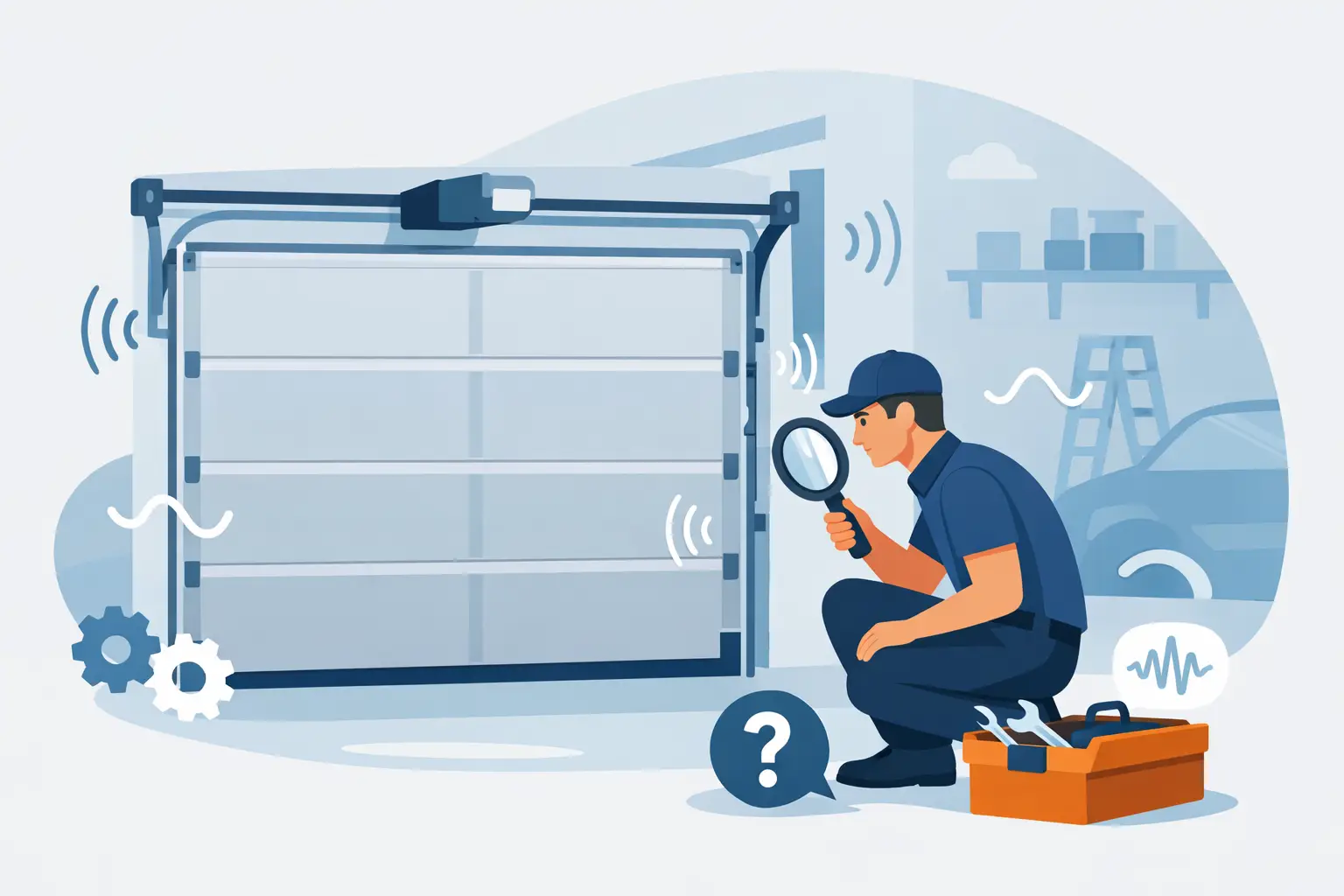
That new grinding, squealing, or popping sound usually starts small. Then one morning the garage door hesitates, jerks, or stops halfway, and now you are dealing with more than noise. If you are wondering how to diagnose garage door noises, the key is to pay attention to what the door is doing at the exact moment the sound happens.
Garage doors are heavy systems with a lot of moving parts working together. Rollers travel in metal tracks, hinges flex, springs carry tension, cables help lift the weight, and the opener coordinates the movement. When one part wears down or falls out of adjustment, the sound often shows up before a full breakdown does. That is the good news. The not-so-good news is that different problems can sound similar, so a quick guess is not always enough.
How to diagnose garage door noises by when they happen
Start with timing. Does the noise happen when the door begins to open, halfway through travel, near the floor, or only when closing? That detail narrows things down faster than most people expect.
If the sound happens right at startup, the issue may be related to spring tension, the opener, or a door that is binding before it gets moving. A loud pop at the beginning of travel can point to a spring problem, especially if the door suddenly feels heavier than usual. A buzzing sound with little movement often suggests the opener is trying to work against resistance.
If the noise shows up during travel, rollers, hinges, and tracks move higher on the suspect list. A steady rattling or grinding as the door moves up and down can mean worn rollers, loose hardware, or debris in the track. If the sound appears at one specific point every time, there may be a bent track section, damaged roller, or panel alignment issue in that exact area.
If the door is noisy only near the floor, the bottom section, bottom rollers, or track alignment may be involved. In Wyoming, dirt, windblown debris, and temperature swings can make lower track areas especially vulnerable to buildup and wear.
Match the sound to the likely problem
The sound itself matters, but it should never be the only clue. You want to pair the noise with what the door is physically doing.
Squealing or screeching
A high-pitched squeal usually points to friction. Dry rollers, hinges, or bearings are common causes. In some cases, the opener rail or chain may need attention. If the door still moves smoothly and the sound is more annoying than severe, lubrication and routine maintenance may solve it. If the squeal comes with jerky movement, worn parts are more likely than simple dryness.
Grinding
Grinding is a more serious sound. Metal-on-metal contact, worn rollers, damaged bearings, or opener gear issues can all create it. If you hear grinding and the door shudders, slows down, or strains, stop using it until the system is checked. Continuing to run the door can turn a repair into a larger job.
Rattling or vibrating
A rattling garage door often means loose nuts, bolts, hinge fasteners, or track brackets. Sometimes the opener itself is mounted securely enough to work, but not tightly enough to stay quiet. Rattling can also come from sections of the door vibrating because rollers are worn or the door is out of balance.
Banging or popping
A single loud bang can be a broken spring. That is one of the most common urgent garage door repairs, and it should be treated seriously. Popping sounds can also happen when door sections flex, tracks shift, or hinges bind under pressure. The difference is usually in what happens next. If the door suddenly becomes hard to lift or will not open properly, a spring issue moves to the top of the list.
Clicking or humming
Clicking without movement may involve the opener, safety sensors, or control board. A humming motor that does not lift the door can mean the opener is getting power but cannot move the load. That can happen because of a stripped gear, a stuck door, or a broken spring that leaves the opener trying to lift too much weight.
Inspect the obvious areas safely
If you want a basic idea of what is going on, start with a visual check from a safe distance. Do not put hands near springs, cables, or roller assemblies while the system is under tension.
Look at the tracks first. If they are bent, pulled away from the wall, or packed with debris, that can create scraping, grinding, and uneven movement. Minor dirt can sometimes be cleaned out, but bent track sections usually need adjustment or replacement.
Next, check the rollers. Nylon rollers often get noisy when they wear out or lose lubrication. Steel rollers can get louder over time, especially if bearings are failing. If one roller looks chipped, cracked, or visibly off-angle, that may be the source of the sound.
Check hinges and brackets for loose fasteners. A surprising number of garage door noises come down to hardware that has worked loose from vibration over time. Still, tightening random components is not always the right move if the door is already misaligned. If the track or door sections look uneven, it is better to stop there.
Then look at the spring area without touching anything. Extension springs run along the horizontal track area, while torsion springs mount above the door opening. If a spring is visibly separated, stretched oddly, or broken, the door should not be operated until it is repaired.
Balance tells you a lot
One of the best clues in how to diagnose garage door noises is whether the door is balanced. A properly balanced door should lift with controlled resistance and not feel extremely heavy. If the opener struggles, the door slams, or one side moves differently than the other, the noise may be a symptom of a balance problem rather than the root issue itself.
An unbalanced door puts extra strain on everything else. Rollers wear faster, hinges flex harder, opener components strain, and tracks take more abuse. That is why a squeak or rattle sometimes comes back quickly after lubrication. The system is still working out of balance.
Homeowners can notice the signs of poor balance, but actual spring adjustment is not a DIY job. Torsion and extension spring systems store enough force to cause serious injury if handled the wrong way.
When the opener is the problem and when it is not
People often assume the opener is to blame because it is the powered part of the system. Sometimes that is true, but a noisy opener can also be reacting to a door problem.
If the motor hums, the chain slaps, or the rail vibrates, the opener may need service. If the opener sounds strained because the door is too heavy or binding in the track, replacing the opener alone will not fix the real issue. In fact, that can shorten the life of the new unit.
This is where a practical diagnosis matters. A chain-drive opener will naturally make more noise than a belt-drive model, so some sound is normal. Sudden new sound is what matters. A garage door that has always had a low mechanical hum but now has grinding, jerking, or hard stops needs attention.
Signs the noise means you should stop using the door
Some garage door noises are maintenance issues. Others are warning signs that you should leave the door alone until it is inspected.
Stop using the door if you hear a loud bang followed by poor lifting, if cables look loose or uneven, if the door is off track, if one side rises faster than the other, or if the opener runs but the door barely moves. Those are not wait-and-see problems.
This is especially true for rental properties, commercial sites, and homes where the garage is a main access point. Waiting can leave you with a stuck vehicle, a security problem, or a more expensive repair later. For Cheyenne-area property owners dealing with urgent door issues, same-day service is often the difference between a manageable repair and a full interruption to the day.
What you can do yourself and what should be left to a pro
Basic maintenance is reasonable. You can listen closely, note when the sound happens, inspect tracks for visible debris, and use the correct garage door lubricant on appropriate moving parts if the system is otherwise in good shape. You can also watch for patterns, such as noise during cold mornings or after heavy use.
What you should not do is adjust springs, loosen cable hardware, force a door that is binding, or keep cycling a door that sounds worse every time it moves. Garage door systems are heavy, and the hazardous parts are not always the loudest ones.
If you want a fast answer without guessing, a technician can usually tell a lot within a few minutes of hearing the door run and inspecting the high-stress components. That is where an experienced local company like Mike's Garage Door LLC can save time. A proper diagnosis is often the fastest path to an honest repair instead of replacing parts that were never the real problem.
A noisy garage door is not always an emergency, but it is rarely nothing. If the sound is new, getting worse, or paired with jerky movement, uneven travel, or extra strain, trust what the door is telling you and deal with it before it turns into a bigger repair.