A garage door opener usually picks the worst possible time to stop cooperating - when you're late for work, coming home after dark, or trying to open up a shop for the day. If you're searching for how to reset garage opener systems, the good news is that many opener problems can be solved with a basic reset. The bad news is that not every opener issue is really a reset issue.
That distinction matters. A true reset can clear a glitch, restore remote programming, or reconnect the opener after a power interruption. But if the door is heavy, crooked, noisy, or refusing to move at all, the opener may not be the real problem. Springs, sensors, tracks, and travel settings can all create symptoms that look like an opener failure.
How to Reset Garage Opener Systems
The exact reset process depends on the brand and age of your opener, but most follow the same basic pattern. Start with safety. Make sure the doorway is clear, keep kids and pets away from the door, and do not stand directly under it while testing anything. If the door has been acting unstable or slamming shut, stop there and get it checked before you touch the opener.
First, check whether the opener still has power. If the ceiling unit has no lights and no response, test the outlet, breaker, and GFCI reset if one is tied into the garage circuit. A lot of "dead opener" calls turn out to be a tripped outlet or breaker, especially after storms or power flickers.
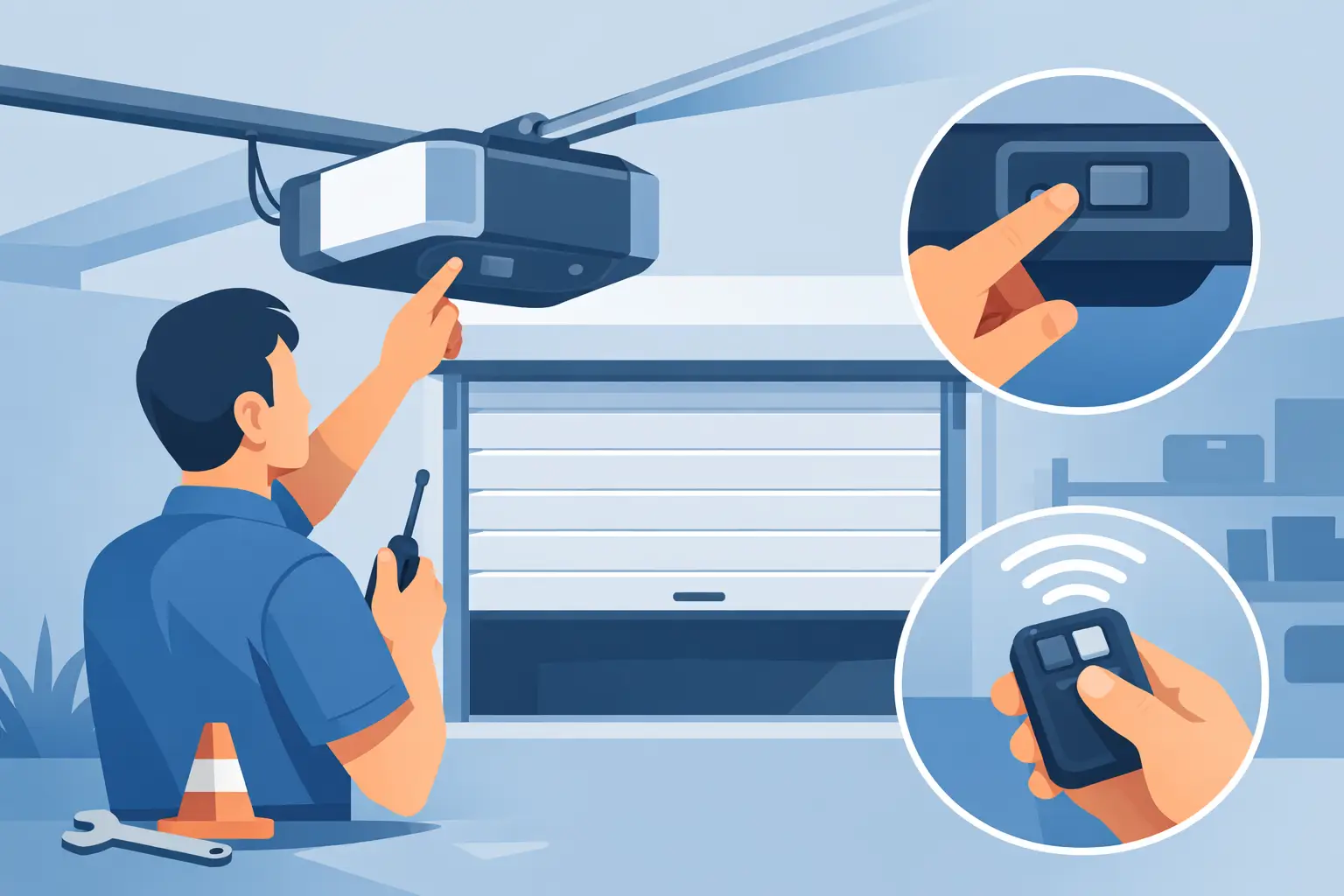
If power is good, unplug the opener for about 30 to 60 seconds and plug it back in. This simple power cycle is often the first real reset. On newer units, it can clear temporary electronic errors. Wait for the opener lights to come back on, then test the wall button before trying remotes.
If the wall button works but the remote does not, the opener may need to relearn the remote. Look for the Learn, Program, or Smart button on the motor head. Press it once, then press the remote button you want to program. Many openers will flash a light or click to confirm. If you hold the learn button too long, though, you may erase all paired remotes and keypads, so use a quick press unless your manual says otherwise.
When a Reset Actually Helps
A reset makes sense in a few common situations. One is after a power outage, when the opener electronics lose settings or stop responding normally. Another is when you've replaced the remote battery and the remote still will not connect. A reset can also help after replacing the wall console, changing keypad access, or clearing old remote access from a property you just bought.
It can also be useful if the opener lights blink and the unit seems confused, but the door itself moves freely by hand. That last part is important. If the door is hard to lift manually, don't keep resetting the opener and hoping it fixes things. The opener is only meant to guide the door, not force a damaged or heavy door open.
Resetting the Remote and Keypad
Sometimes homeowners say they need to reset the opener when what they really need is to reprogram the accessories. That's a little different.
If your car remote, visor remote, or keypad stopped working, start with the simple stuff. Replace the battery, clean the button contacts if accessible, and make sure the lock feature on the wall console is not turned on. That lock feature disables remote signals on many systems and causes a lot of unnecessary frustration.
If the keypad is the issue, enter the current code if you know it. Then use the opener's learn button and follow the keypad programming sequence for that brand. If you've moved into a new home or taken over a commercial property, it's smart to erase all old devices first and then reprogram only the remotes and keypads you control now.
That said, erasing memory has a trade-off. It's more secure, but you'll need to reconnect every remote, keypad, and sometimes vehicle-integrated control afterward. If you manage multiple users or service vehicles, make sure everyone who needs access is available for reprogramming.
How to Know It's Not Just an Opener Reset Problem
This is where people lose time. The opener hums, clicks, or blinks, so it seems like the motor is the problem. But often the opener is reacting to another issue.
If the safety sensors are blocked or misaligned, the door may start down and reverse immediately. If the torsion spring is broken, the opener may strain, stop, or refuse to lift the door. If the door is off track, one side may bind and trigger the opener's force settings. If the travel limits are off, the opener may think the floor is higher than it is or believe the door hit an obstruction.
A quick manual test can help. Pull the emergency release only when the door is fully closed, if possible. Then lift the door by hand. It should move smoothly and stay relatively balanced. If it feels extremely heavy, drops fast, sticks halfway, or looks uneven, the issue is with the door system, not a simple opener reset.
Common Mistakes During a Garage Opener Reset
The biggest mistake is continuing to run the opener when the door is mechanically compromised. That's how worn gears strip out, rails bend, and small repairs turn into bigger ones.
Another common mistake is pressing and holding the learn button without knowing what it does. On many units, that erases all programmed devices. Not a disaster, but it creates more work and confusion.
People also reset travel or force settings when they really shouldn't. Those controls affect how far the door moves and how much resistance the opener allows before stopping or reversing. If they're adjusted incorrectly, the door may not close fully or may push too hard against the floor. That's not something to guess at.
And finally, don't try to "help" a stuck opener by pulling on the door while the motor is running. If the door is binding, you can throw it further out of alignment or damage the opener arm.
Brand Differences Matter
Not every opener resets the same way. LiftMaster, Chamberlain, Craftsman, Genie, and older screw-drive or chain-drive units all have their own programming steps. Newer Wi-Fi-connected openers may also involve an app reset or network reconnect process.
That's why the basic approach is best: verify power, power cycle the unit, test the wall button, check the lock setting, inspect the sensors, and then reprogram remotes if needed. Once you get beyond that, it depends on the opener model and the symptoms.
If the opener is older, a reset may only be a temporary fix. Aging circuit boards, worn drive components, and outdated safety systems can create repeat problems. In those cases, repair may still be possible, but replacement sometimes makes more sense long term, especially for busy households and commercial properties that rely on daily access.
When to Stop and Call for Service
There are times when resetting is reasonable, and there are times when it wastes valuable time. If the opener has power but the door is crooked, unusually heavy, grinding, or stuck halfway, don't keep troubleshooting from the wall button. If a spring is broken, a cable is loose, or the rollers are out of the track, the safest move is professional service.
The same goes for repeated resets. If the opener works for a day and then fails again, that points to an underlying issue. It could be a failing logic board, bad sensors, damaged wiring, or a door that's putting too much strain on the opener. A proper diagnosis saves time and usually saves money compared with replacing parts at random.
For property owners in Cheyenne and nearby communities, fast help matters because a garage door problem affects security, weather protection, vehicle access, and business operations. That's why companies like Mike's Garage Door LLC focus on same-day service, stocked trucks, and straightforward pricing instead of making customers wait around for answers.
A Reset Is a Tool, Not a Cure-All
Knowing how to reset garage opener equipment is useful, and in some cases it's all you need. But a reset is just one troubleshooting step. If the opener comes back to life and the door runs smoothly, great. If the problem keeps coming back or the door itself seems off, it's time to treat it like a door system issue, not just an opener issue.
The best closing thought is simple: if your garage door feels unsafe, sounds wrong, or won't move normally by hand, trust what you're seeing and stop forcing it. A quick reset can fix a glitch. It won't fix a broken door.