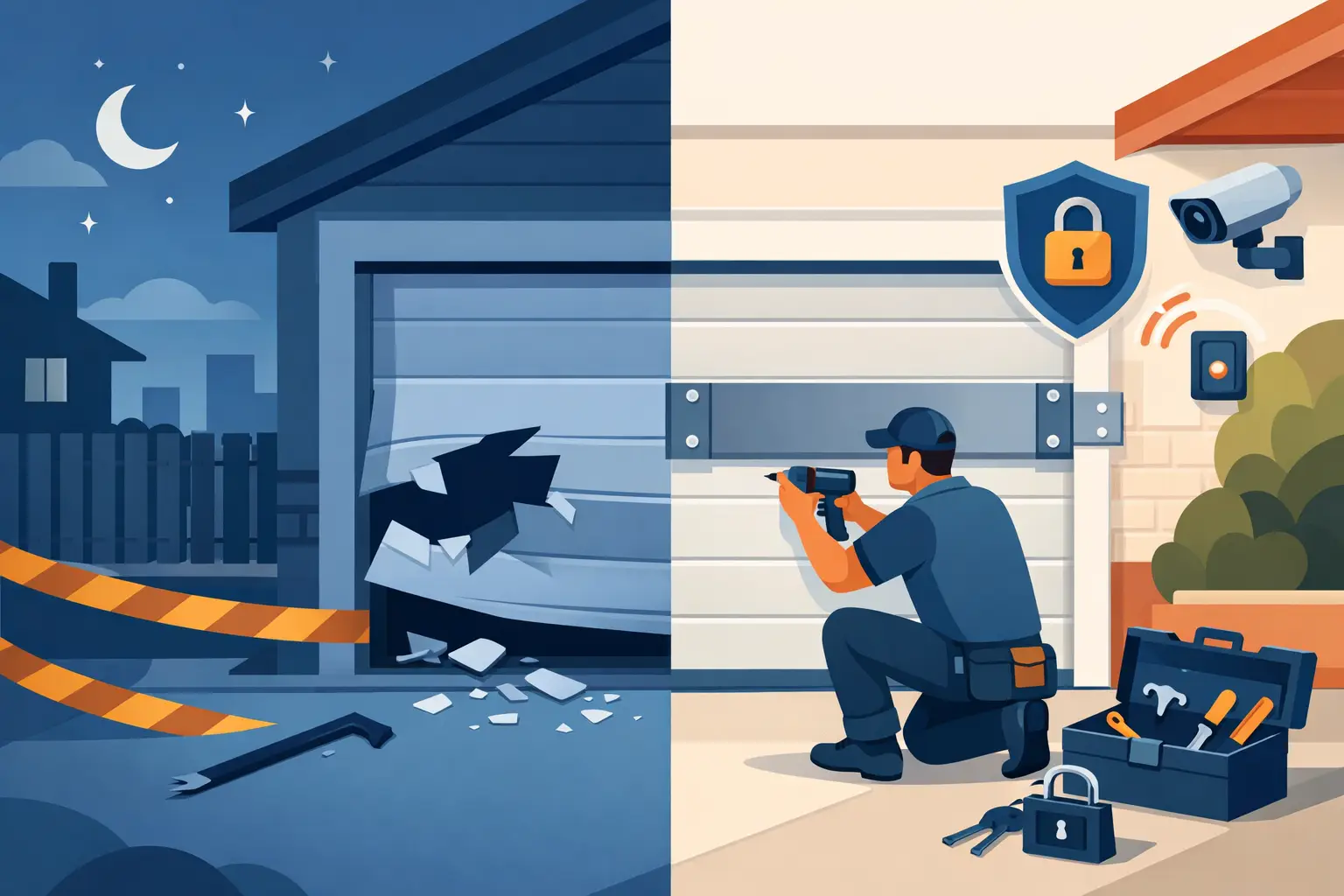
A garage break-in leaves you with two problems at once - the damage you can see, and the risk you cannot. If you are searching for how to secure garage door after break-in, the priority is simple: make the opening safe, keep anyone from getting back in, and avoid making the damage worse while you wait for a full repair.
In Cheyenne and nearby areas, this often happens after forced entry at the bottom panel, side lock, opener arm, or service door. Sometimes the door still moves but is no longer secure. Other times it is hanging crooked, off track, or will not close at all. The right response depends on the condition of the door, but the first few steps are usually the same.
How to Secure Garage Door After Break-In Right Away
Start by checking whether the intruder may still be on the property. If there is any doubt, call law enforcement first and stay outside the garage until the scene is safe. Once that is handled, disconnect garage access to the house if possible and keep people away from the damaged door, especially if the panels are bent or the tracks are twisted.
If the garage door opener is still plugged in, do not assume it is safe to use. A damaged door can bind, fall, or pull harder against broken hardware. Unplug the opener to stop anyone from cycling the door remotely, and if your system has battery backup, shut that off too. This matters more than many people realize. After a break-in, the opener itself may not be the problem, but continued use can turn a repairable issue into a larger one.
Next, lock down any other entry points. If the break-in damaged the overhead door but left the side entry door untouched, deadbolt that door and check the frame. If there are windows in the garage, cover broken glass with plywood or a heavy temporary panel from the inside if you can do it safely. The goal is not to make everything perfect in one hour. The goal is to deny easy access tonight.
Check What Was Actually Damaged
Not every forced garage entry creates the same weak points. A kicked-in lower panel is different from a broken lock bar, and both are different from a door that has been forced off its track. Take a careful look without trying to straighten, lift, or force anything.
Pay attention to the panels first. If one or more sections are cracked, folded, or split at the seams, the door may no longer carry weight properly. Even if it still closes, it may bow under tension or leave gaps along the floor or sides. On steel doors, damage around the struts and hinges is especially important. On wood doors, splitting around fasteners can weaken the entire section.
Then look at the tracks, rollers, and hinges. If the track is bent inward, a roller has popped out, or the hinges have been torn loose, the door should not be operated. A lot of homeowners try one more cycle to see if it will seat itself. That usually makes the problem worse.
Also inspect the opener arm, emergency release, and locking mechanism. A thief may pull the release from outside if the opener carriage was accessible. If that happened, the opener can no longer be counted on as a security device until it is reset and inspected.
Temporary Ways to Secure a Damaged Garage Door
If the door can still be brought fully closed and the frame is intact, you may be able to secure it temporarily until a technician arrives. The safest temporary fix is usually a manual one. Slide the door closed, unplug the opener, and use the manual lock if the door has one and it still works. If that lock was damaged, a pair of locking pliers clamped onto the track just above one of the rollers can keep the door from being lifted. This only works if the track itself is still solid.
For a door with panel damage but no major structural shift, reinforcing the inside with a sheet of plywood screwed into framing members can help block the opening. That said, this depends on where the damage is. If the panel is crushed near hinges or load points, fastening into damaged metal may not hold well. In that case, boarding the opening itself from the inside may be the better move.
If the door will not close all the way, do not try to pull it down with the opener. Instead, secure the opening from inside the garage with plywood across the opening or use temporary bracing anchored to solid framing. This is where many homeowners hit a limit, especially on double-wide doors or commercial overhead doors. At that point, emergency garage door service is usually the fastest and safest answer.
When Not to Touch the Door
There are situations where trying to secure the door yourself is the wrong call. If a spring is broken, the cable is loose, the door is hanging unevenly, or one side is off track, do not keep working on it. Garage doors are heavy even when they look still, and the stored tension in springs and cables is not forgiving.
The same applies if the top section is bowed or the opener rail has been pulled loose from the ceiling. Those are signs the force of entry or attempted operation has shifted more than just a panel. In those cases, securing the garage often means stabilizing the door first so it does not collapse or drop.
For property managers and commercial operators, there is another concern: liability. If a damaged overhead door is in a tenant area, delivery access point, or shared facility, temporary DIY fixes can create a bigger problem if someone gets hurt. A documented emergency repair is usually the cleaner option.
Don’t Forget the Opener and Remote Access
A lot of people focus only on the visible damage and miss the electronic side. After a break-in, reset the opener code and any keypad entry code if your system has one. If remotes were stolen from a vehicle or taken from the garage, erase all programmed remotes from the opener memory and reprogram only the ones you still control.
If your opener is older, this may also be the time to consider replacement. A door can be repaired, but if the opener has inconsistent safety sensors, weak force settings, or poor security features, it can still leave the property exposed. Newer openers generally offer better rolling-code protection and better control over who can access the garage.
Also check the emergency release cord. In some setups, especially where the top of the door has a gap, that release can be hooked from outside. A simple shield or repositioning fix can reduce that risk, but it needs to be done correctly so the release still works in an emergency.
How to Prevent Another Garage Break-In
Once the immediate damage is handled, think beyond the repair. The best long-term fix depends on how the intruder got in. If they forced the bottom panel, the next step may be reinforcing vulnerable sections or replacing a badly weakened door. If they defeated a side lock, the fix may involve upgraded locking hardware and a better frame condition. If they exploited opener access, code resets and opener upgrades may matter more than the panel repair itself.
Lighting helps, but it is not a complete answer. Cameras help too, but they do not stop a weak door from being forced. Real security usually comes from a combination of a sound door, a properly adjusted opener, secure side access, and hardware that is in good condition.
This is also a good time for an honest inspection of the full system. A garage door that already had worn rollers, loose hinges, sagging sections, or an opener that struggled to close was easier to attack than a door in solid shape. Break-ins often expose maintenance issues that were already there.
When to Call for Emergency Garage Door Service
If the garage is the main access point to your home, if the door cannot be secured shut, or if the damage involves springs, cables, tracks, or opener mounting, call for emergency service right away. The faster the opening is stabilized and secured, the lower the chance of a second entry or further damage from wind, weather, or attempted use.
For local property owners, speed matters. A same-day response can mean the difference between a temporary board-up and a real repair that lets you lock the building normally again. That is especially true in Wyoming weather, where an unsecured garage can turn into a bigger property problem fast.
A good technician should be able to tell you what can be repaired, what should be replaced, and what can be done immediately to secure the opening before parts arrive. At Mike's Garage Door LLC, that kind of call is treated like what it is - urgent, practical, and worth fixing correctly the first time.
After a break-in, you do not need a complicated plan. You need the opening made safe, the weak point closed off, and a repair that restores both function and security so you can get back to normal.