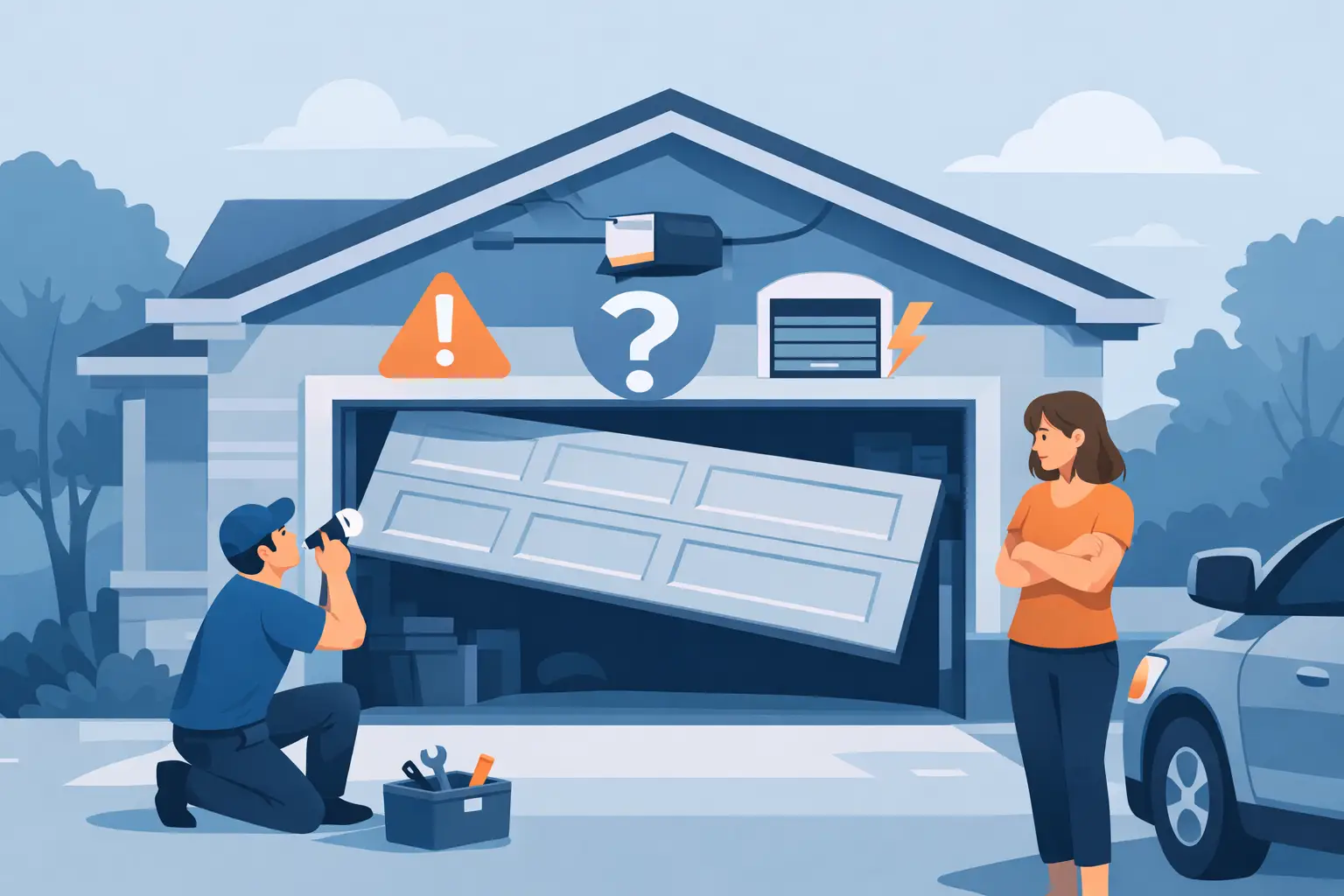
When an old garage door won't open, it usually happens at the worst possible time - when you're trying to leave for work, get the truck inside before weather hits, or open up a commercial space for the day. In Cheyenne and surrounding areas, cold, wind, dust, and plain old wear can turn a minor issue into a door that will not move at all. The good news is that some causes are simple. The bad news is that others involve heavy parts under tension, and those are not worth guessing on.
A garage door system is only as reliable as its most worn-out part. On older doors, that weak point might be the opener, the springs, the rollers, the track, or the door sections themselves. You can do a few safe checks on your own, but the goal is not to force the door open. The goal is to figure out whether this is a quick fix, a repair call, or a sign the whole system is near the end of its service life.
Why an old garage door won't open
Age matters with garage doors because every cycle adds wear. Springs lose tension, cables fray, rollers flatten out, hinges loosen, and opener parts wear down. Even if the door worked yesterday, one worn component can finally give out today.
The most common cause is a broken spring. If the door suddenly feels extremely heavy or the opener hums but the door barely moves, the spring may have failed. Torsion and extension springs do the lifting. Without them, the opener is trying to move far more weight than it was built to handle.
Another frequent issue is an opener problem. That could mean a dead remote battery, a misaligned safety sensor, a stripped gear inside the motor unit, or a logic board problem. If the opener clicks but nothing happens, or the lights flash and the door reverses, the issue may be in the opener rather than the door itself.
Track and roller problems are common on older systems too. Bent track, rust buildup, loose brackets, and worn rollers can keep the door from moving smoothly. In some cases, the door is technically trying to open, but it binds halfway or jerks unevenly because the hardware is no longer tracking correctly.
There is also the lock. It sounds obvious, but manual slide locks on older garage doors still catch people off guard. If the handle turns or the opener strains but the door will not lift, make sure it was not accidentally locked.
What you can safely check first
Start simple. Make sure the opener has power. If the outlet is dead, check the breaker or GFCI. If the wall button works but the remote does not, replace the battery in the remote before assuming the opener failed.
Next, look at the photo-eye sensors near the bottom of the door tracks. If they are dirty, bumped out of alignment, or blocked by debris, the opener may refuse to close or may behave unpredictably. Wipe the lenses and make sure both sides are facing each other.
Then step back and look at the door itself. Do you see a gap in the torsion spring above the door? Do the cables look loose or off the drum? Is one side of the door higher than the other? Those are signs of a spring or cable problem. Do not try to operate the door if you see them.
If your old garage door won't open and you suspect the opener, pull the emergency release cord only when the door is fully closed. That disconnects the door from the opener so you can test whether the door moves manually. If the door is hard to lift, slams shut, or feels uneven, the problem is likely in the springs or hardware, not the opener.
What not to do when the door is stuck
Do not keep hitting the opener button. Repeated attempts can burn out the opener motor, strip internal gears, or worsen the damage. One failed cycle is enough to tell you something is wrong.
Do not force the door open with a pry bar, truck, or a couple of extra hands. If a spring is broken or a cable is off, forcing the door can bend panels, twist the track, or send the door off track completely.
Do not loosen springs, bottom brackets, or cable hardware on your own. Those parts carry serious tension. A repair that looks simple from the floor can turn dangerous fast.
Signs the problem is bigger than a quick fix
Sometimes an older garage door is not dealing with one bad part. It is dealing with years of deferred wear. If the door is loud, slow, shaky, and frequently sticks, repair may still be possible, but the system probably needs more than a minor adjustment.
Watch for sagging sections, cracked hinges, rusted track, repeated spring failures, and openers that struggle even after basic service. Wood doors can swell and bind. Older steel doors can develop panel fatigue or damage around hinge points. On commercial or heavy residential doors, that extra weight makes every worn part more noticeable.
If the door has already come off track, hangs crooked, or has loose cables, stop using it. That is no longer a convenience problem. It is a safety issue.
Repair or replace an old garage door?
It depends on the condition of the door, not just its age. If the issue is a spring, opener, sensor, or roller set, repair is often the most practical option. A good technician can replace the failed part, tune the system, and tell you honestly whether the rest of the door is still worth keeping.
Replacement makes more sense when the door has multiple failing components, structural damage, or poor reliability that keeps interrupting your day. It can also make sense when parts are obsolete or when repair costs are stacking up close to the cost of a new system.
For homeowners, a replacement may improve security, quieter operation, and curb appeal. For property managers and commercial operators, reliability matters just as much as appearance. A door that traps vehicles or delays access costs time and creates risk.
Why older doors fail more often in Wyoming weather
Cheyenne weather is hard on moving parts. Cold temperatures can stiffen grease, shrink metal slightly, and expose weak springs that were already near failure. Wind-driven dust can build up in tracks and rollers. Temperature swings also affect weather seals and older opener components.
That does not mean every stuck door needs replacement after one cold snap. It does mean older systems need periodic adjustment and lubrication more than people think. What works fine in mild conditions may stop working when weather adds extra resistance.
When to call for same-day service
Call for professional help if the spring is broken, the cables are loose, the door is crooked, the opener hums without lifting, or the door will not move by hand. Those problems usually need tools, parts, and experience on site.
This is especially true if your vehicle is trapped inside, your business cannot open, or the garage is your main point of entry. In those situations, fast diagnosis matters. A stocked service truck can make the difference between a same-day fix and a drawn-out problem.
For local property owners, that is where a company like Mike's Garage Door LLC fits best - quick response, honest pricing, and technicians who can tell you whether this is a repair worth making or a system worth replacing.
How to reduce the chance it happens again
Older doors need maintenance before they need rescue. A basic tune-up can catch worn rollers, loose hardware, weak springs, and opener settings that are drifting out of spec. It can also keep small issues from turning into an emergency call.
You do not need to overcomplicate it. Keep the tracks clear, watch for changes in noise or balance, and pay attention when the door starts moving slower than usual. Those early warnings matter. Garage doors rarely fail without giving some kind of sign first.
If your old garage door won't open today, start with the safe checks and stop short of force. A stuck door is frustrating, but it is also a system telling you something wore out, shifted, or broke. The right next step is the one that gets the door working again without turning a repair into a bigger bill.