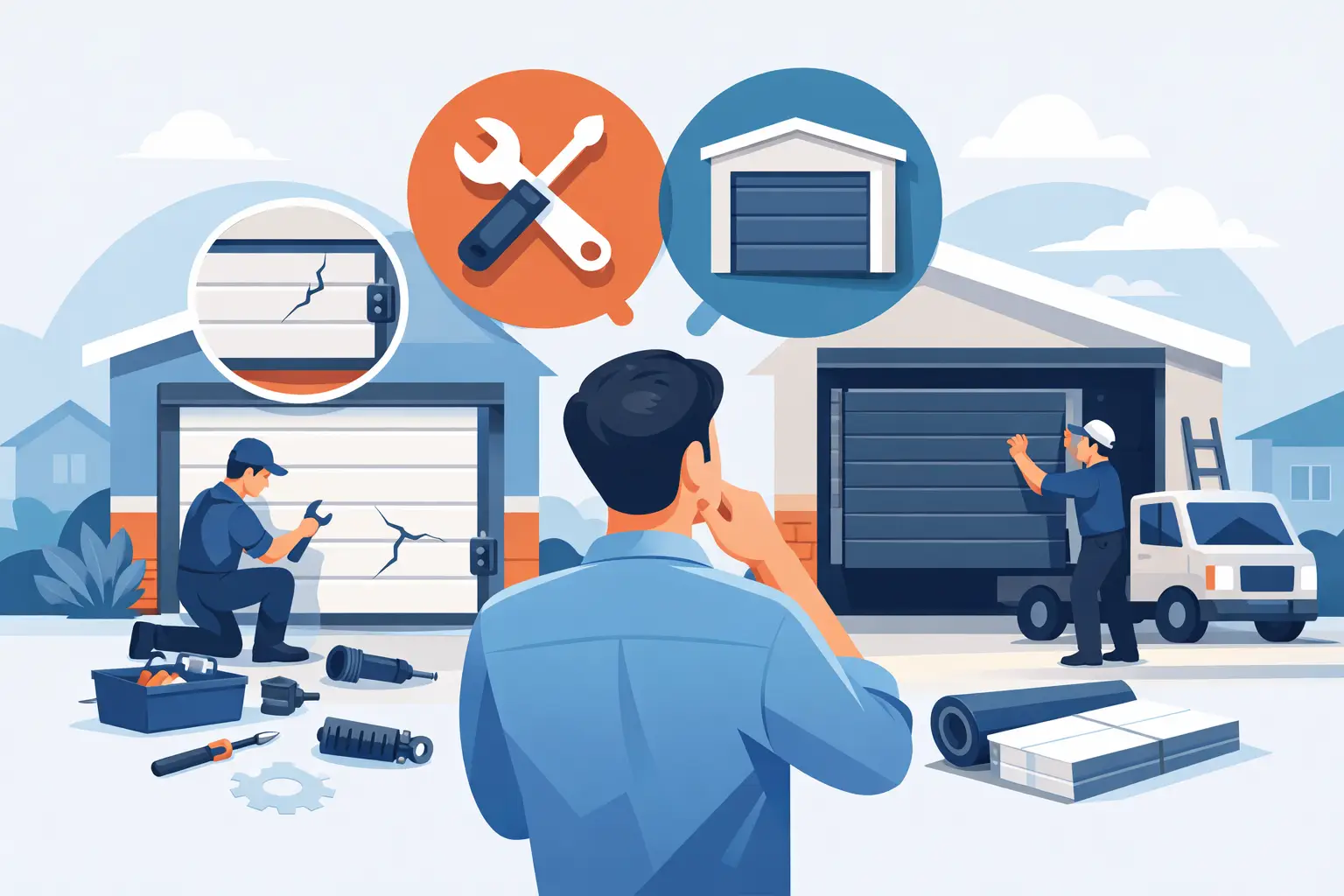
A garage door usually makes the decision for you. One day it opens a little slower than normal. The next day it jerks, bangs, or stops halfway, and now you are stuck wondering whether to repair or replace garage door trouble before it gets worse. For homeowners and property managers in Cheyenne, that choice usually comes down to three things - safety, cost, and how much life the door system has left.
The right answer is not always the cheapest one today. A quick repair can absolutely make sense when the problem is isolated and the rest of the system is in good shape. But when failures start stacking up, replacement often saves money, downtime, and frustration.
When repair is the smart move
If the issue is limited to one part and the door itself is structurally sound, repair is often the practical call. A broken spring, worn rollers, frayed cables, misaligned sensors, or a malfunctioning opener can usually be fixed without replacing the full door.
This is especially true when the door panels are in good condition, the tracks are not bent, and the system has been maintained reasonably well. Many garage door problems look major from the outside but are actually routine service calls for an experienced technician with the right parts on the truck.
A good example is a door that will not open because of a broken torsion spring. That can feel like a full-system failure, but it is usually a targeted repair. The same goes for doors that are noisy, shaky, or reversing unexpectedly because of worn hardware or sensor issues.
Repair also tends to make sense when the door is newer. If your garage door is only a few years old and the damage is not severe, replacement can be overkill. In that case, fixing the failed component is usually the best value.
When replacing the garage door makes more sense
There is a point where continued repair stops being practical. If the door has major panel damage, significant rust, track damage, sagging sections, or repeated failures across multiple parts, replacement is often the better investment.
Age matters too. Most garage doors can last a long time with proper maintenance, but older systems naturally start wearing out. Springs, rollers, cables, hinges, and openers all have service lives. Once several of those parts are nearing the end at the same time, repairs can turn into a cycle.
If you are paying for one fix now and another in a few months, it may be time to step back and look at the full picture. Replacing the door can give you a reset - new hardware, smoother operation, better safety features, and fewer surprise breakdowns.
A replacement is also worth considering when curb appeal and efficiency matter. A dented, outdated garage door can drag down the look of the property. For homeowners planning to sell, and for commercial properties that depend on reliable access, a new door can improve both appearance and function.
Repair or replace garage door based on cost
Cost is usually the first question, and that is fair. In many cases, repair costs less upfront. If the issue is a spring, opener part, sensor, roller set, or cable problem, repair can restore safe operation without the larger expense of a new installation.
But upfront cost is only part of the decision. If the door is older and has already needed several repairs, the lower price of one more fix can be misleading. What matters is total cost over the next few years, not just the invoice from today.
Here is a practical way to look at it. If the repair addresses one clear problem and the rest of the system is in solid shape, repair is usually the economical option. If the repair is expensive and the door still has aging panels, worn hardware, or unreliable operation, replacement may be the better value.
Property managers know this well. A cheaper repair that leads to more service calls, tenant complaints, or interrupted access is not really the cheaper option. The same goes for small businesses with overhead doors. Downtime costs money.
Safety should carry real weight
Garage doors are heavy systems under high tension. Springs and cables are not minor parts. When they fail, they can create serious safety risks. A door that is off track, slamming shut, or refusing to stay open should not be treated as a wait-and-see situation.
If the damage is limited and the safety systems can be restored properly, repair is often enough. But if the door frame is compromised, the sections are unstable, or the opener and door are no longer working together the way they should, replacement may be the safer route.
This is one area where trying to squeeze more life out of an old system can backfire. A garage door that works inconsistently is not just inconvenient. It can become a hazard for your family, tenants, employees, or vehicles.
Signs you can probably repair it
A repair is often the right move when the problem is specific and the door still has good structural integrity. Common signs include one broken spring, noisy rollers, a failing opener, sensor problems, a snapped cable, or minor track alignment issues.
Cosmetic dents can sometimes be repaired as well, depending on the material and the location of the damage. If the panel damage does not affect balance, movement, or security, you may not need a full replacement.
The key is that the issue should be isolated. If one component failed but the rest of the door is dependable, repair usually makes sense.
Signs replacement is probably the better call
If your door has multiple damaged panels, heavy rust, wood rot, major warping, or repeated breakdowns, replacing it is often the more dependable choice. The same is true when replacement parts are hard to source or when the opener is incompatible with modern safety standards.
Another sign is frequent service history. If the garage door has become a regular problem, that is your system telling you it is wearing out. Repairing one part at a time can keep it going temporarily, but it may not give you reliable performance.
Noise can be another clue. Some noise is normal. But loud grinding, popping, scraping, or shaking after repeated tune-ups often points to deeper wear across the system.
Cheyenne weather changes the equation
In southeast Wyoming, weather is part of the decision. Wind, cold temperatures, and seasonal wear can be hard on garage door systems. Metal components contract, lubrication thickens, seals wear down, and older doors can struggle more in winter.
That does not mean every weather-related issue requires replacement. A tune-up, seal replacement, spring repair, or opener adjustment may be all you need. But if your current door already has age-related problems, Cheyenne conditions can make those weaknesses show up faster.
For insulated doors, replacement can also improve comfort and energy performance, especially when the garage is attached to the home or used as a workspace.
Why a professional inspection matters
The trouble with deciding to repair or replace garage door systems is that the obvious problem is not always the only problem. A door may look like it just needs a spring, but the rollers, bearing plates, cables, and opener strain may tell a different story.
A proper inspection should look at balance, spring life, track condition, panel integrity, opener performance, and safety features. That gives you a real answer instead of a guess.
This is where working with a local company matters. An experienced technician who handles these problems every day can tell you whether the repair will actually hold up or whether you are better off putting that money toward replacement. Mike's Garage Door LLC serves Cheyenne-area customers with same-day service, honest pricing, and the kind of practical diagnosis that helps people make the right call without pressure.
Make the decision based on the full picture
If your garage door is newer, the issue is isolated, and the structure is sound, repair is often the right move. If the door is aging, damaged in multiple places, or creating ongoing reliability and safety problems, replacement usually makes more sense.
The goal is not to get the cheapest fix for today. It is to restore safe, dependable operation without wasting money on short-term patches that do not last.
If you are unsure, trust the condition of the whole system more than the symptom that finally got your attention. A garage door should open smoothly, close safely, and stay out of your way. When it stops doing that, getting a clear answer quickly is the smartest next step.