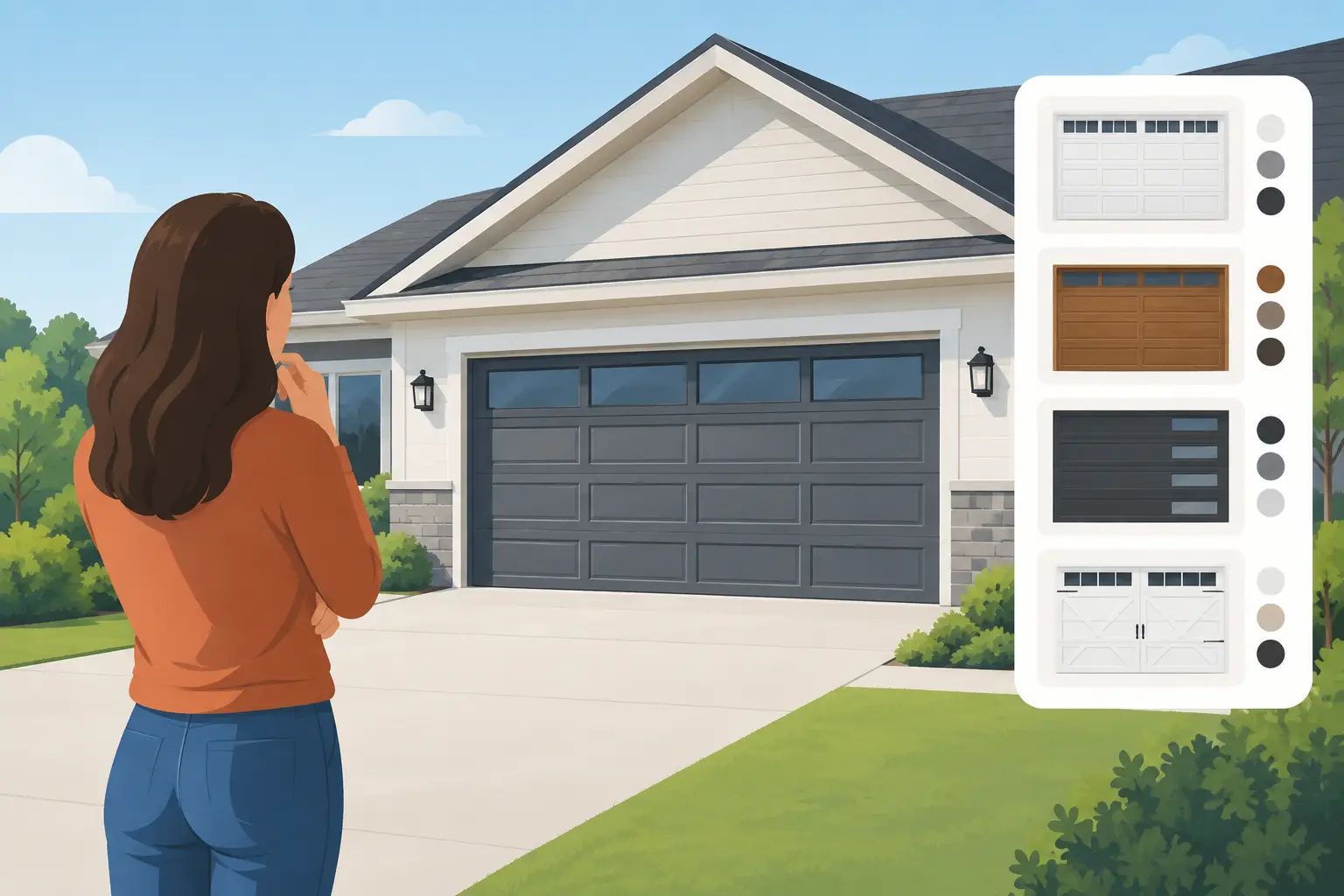
A garage door can take up a large share of your home’s front exterior, but its job goes far beyond curb appeal. It has to open reliably in wind, snow, freezing temperatures, and the daily rush to get vehicles, tools, and equipment in or out. This residential overhead door buying guide helps Cheyenne-area homeowners choose a door that fits the house, handles local weather, and stays within a realistic budget.
A new door is a long-term purchase. The lowest initial price is not always the best value if the door is lightly built, poorly insulated, or installed without the right springs, tracks, and safety setup. Start with how you use the garage, then narrow down the material, insulation, style, and hardware that make sense for your property.
Residential Overhead Door Buying Guide: Start With How You Use the Garage
Before comparing colors or window designs, consider what happens inside the garage. A garage used only for parking has different needs than one that doubles as a workshop, storage area, gym, or entry point to the home.
If there is a finished room above the garage or a living space beside it, insulation should be a higher priority. An insulated door can help reduce drafts and outside noise, especially when the garage faces strong Wyoming winds. It will not heat an unheated garage by itself, but it can make the space less affected by outdoor temperature swings.
Also consider how often the door operates. A busy family garage door may open several times a day. Property managers may need a dependable setup that can handle frequent tenant use. In either case, quality springs, rollers, hinges, and an opener sized for the door matter just as much as the door panels.
Measure the opening, headroom, side room, and driveway clearance before making final decisions. An experienced installer should confirm these measurements on-site. Doors that look similar in a showroom can require different track systems or clearance requirements at your home.
Choose a Material That Matches the Home and the Weather
Most residential overhead doors are made from steel, aluminum, wood, wood composite, or fiberglass. Each has a place, but there are trade-offs in cost, maintenance, durability, and appearance.
| Material | Best For | Consider Before Buying | |---|---|---| | Steel | Most homes, durability, value | Can dent, and lower-priced models may have limited insulation | | Aluminum | Modern designs and wide glass sections | Lighter material can dent more easily | | Wood | Traditional or custom home designs | Requires regular maintenance and costs more | | Wood composite | Wood-look appearance with less upkeep | Quality and finish can vary by manufacturer | | Fiberglass | Moisture resistance and specialty looks | Fewer style options and can be less common locally |
Steel is the practical choice for many Cheyenne homeowners. It is available in a wide range of colors, panel profiles, and insulation levels. A properly finished steel door holds up well, and replacement parts are generally easier to source than parts for more specialized doors.
Wood brings warmth and character, particularly on older homes or custom properties. The trade-off is maintenance. Sun, temperature changes, and moisture exposure mean a wood door needs periodic attention to protect its finish. If you want the look of wood without the same maintenance schedule, a high-quality composite or steel door with a wood-grain finish may be worth considering.
Insulation Is About More Than the R-Value
Door insulation is often described by R-value, which measures resistance to heat flow. A higher R-value generally provides better insulation, but do not compare that number alone. Panel thickness, weather seals, construction quality, and whether the door has thermal breaks all affect performance.
For an attached garage, an insulated door is usually a smart investment. It can help protect rooms near the garage from cold air and make the garage more comfortable when loading groceries, working on projects, or getting children in and out of the car. Insulation also tends to make the door feel sturdier and operate more quietly.
For a detached garage used strictly for vehicle storage, a non-insulated door may be enough. That depends on your budget, the direction the garage faces, and whether you plan to heat or spend time in the space later. Choosing insulation now can be less expensive than replacing an entry-level door a few years down the road.
Do not overlook the perimeter seal at the bottom and sides of the door. A good door with worn or missing weatherstripping still lets in dust, wind, moisture, and cold air. Ask whether new seals are included with installation.
Pick a Style That Works With the House
The door should complement the home rather than compete with it. Raised-panel steel doors work well with many traditional homes. Flush-panel and full-view glass designs fit more modern architecture. Carriage-house doors add decorative hardware and a classic look without requiring the swing-out operation of a true carriage door.
Windows can improve curb appeal and bring daylight into the garage, but placement matters. High windows preserve privacy while still adding light. If the garage faces a street or walkway, consider whether clear glass exposes stored items. Frosted, tinted, or obscure glass can be a better fit.
Color is another practical decision. A dark door can look sharp, but it may show dust and absorb more heat in direct sun. Choose a factory finish when possible. It is generally more consistent and durable than an on-site paint job.
Do Not Treat Springs and Hardware as Add-Ons
The door panels get attention because they are visible. The springs, cables, rollers, brackets, tracks, and opener are what make the system safe and dependable.
Torsion springs are mounted above the door opening and are commonly used on residential doors. They are designed to counterbalance the weight of the door, making it possible to lift by hand or with an opener. Spring life is measured in cycles. A standard spring may be suitable for normal use, while a higher-cycle spring can make sense for households that use the garage as the main entrance.
Ask what spring system and roller quality are included in the quote. Upgrading from basic plastic rollers to quality nylon rollers can reduce noise. Heavier doors may require specific springs and reinforcement. These details are not where you want an installer guessing.
Never try to replace a broken spring or adjust high-tension cables yourself. These parts are under serious tension and can cause injury or property damage when handled incorrectly.
Select an Opener for the Door, Not Just the Price Tag
A garage door opener should have enough lifting capability for the size and weight of the door, along with the features your household will actually use. Belt-drive openers are typically quieter, making them a good option when a bedroom or living area is above the garage. Chain-drive units are often a solid value for detached garages or locations where operating noise is less of a concern.
Battery backup is worth serious consideration in this area. A power outage should not leave you unable to get a vehicle out of the garage. Smart controls can also be useful for checking door status or opening the door for a family member, but they should not replace basic safety habits.
Every new opener should include photo-eye safety sensors and an auto-reverse function. The sensors need to be installed correctly, aligned, and tested. If your current door closes and immediately reverses, or will not close unless you hold down the wall button, the sensors may be blocked, misaligned, or damaged.
Get a Complete Installation Quote Before Ordering
A clear quote protects you from surprises. It should identify the door model, size, insulation level, color, window options, spring system, opener if included, removal of the old door, haul-away, weather seals, labor, and warranty coverage. If a price seems unusually low, ask what is not included.
Installation quality matters as much as the door itself. A door that is out of balance, set on uneven tracks, or paired with the wrong springs can wear out components early. Once installed, the door should move smoothly, seal properly, and reverse when its safety system is tested.
For homeowners in Cheyenne and nearby communities, Mike's Garage Door LLC can provide a free estimate and help match the right residential door to the property, budget, and daily use. A local technician can also inspect the existing opening and identify whether tracks, framing, an opener, or other components need attention before installation day.
Before you commit to a particular door, stand back from the estimate and ask one practical question: will this door still fit the way you use your garage five or ten years from now? Spending a little more on insulation, dependable hardware, or a better spring system can be the decision that keeps the door working when you need it most.