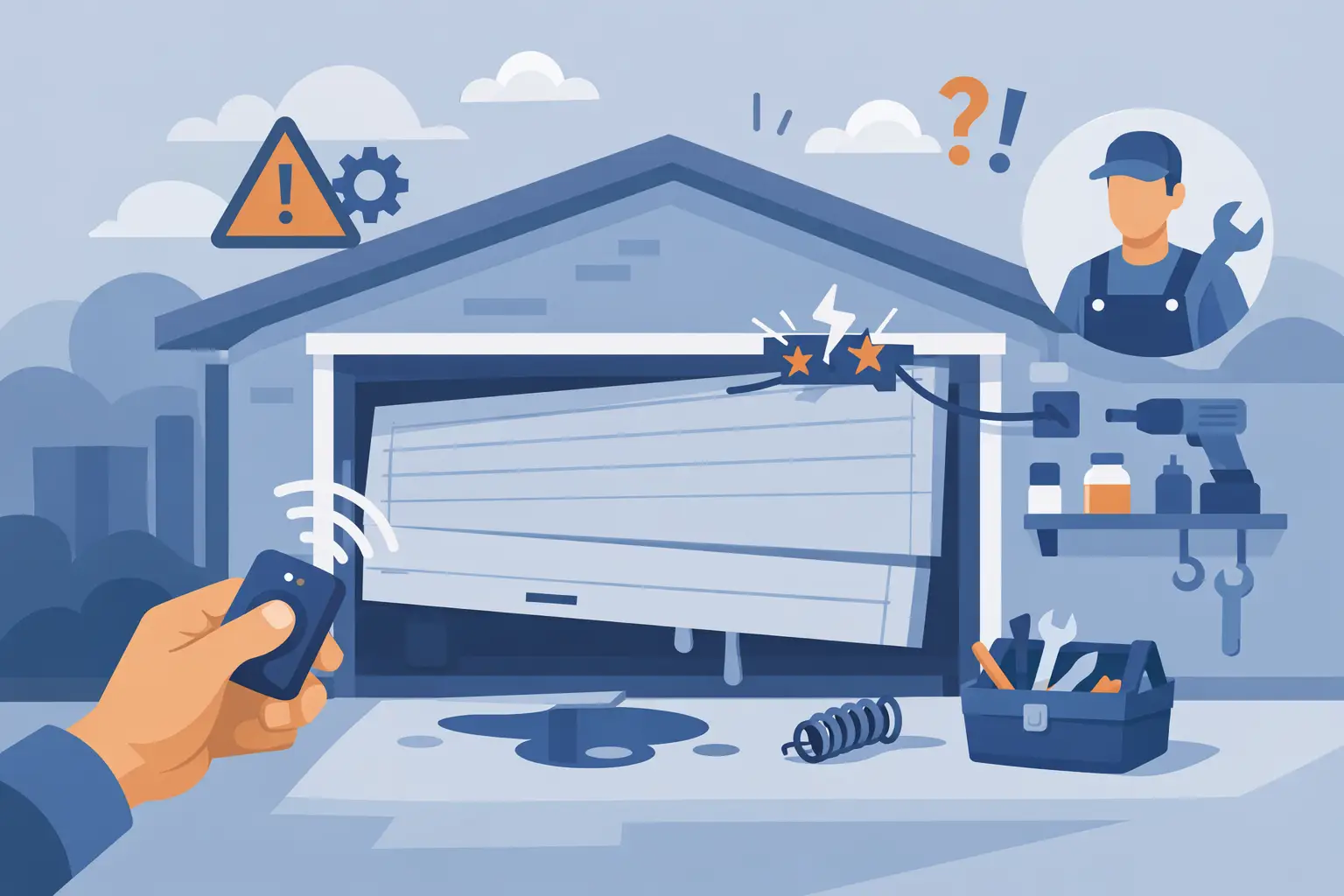
That loud bang from the garage usually is not something that fixes itself by morning. In many cases, the top signs your garage door needs service show up days or even weeks before a full breakdown. The trick is knowing what is normal, what is not, and when a small issue is about to turn into an expensive one.
For homeowners and property managers in Cheyenne and nearby areas, garage door problems are more than an inconvenience. A door that will not close securely affects safety. A door that will not open on time can throw off your whole day or stop business operations cold. Here is what to watch for before a worn part turns into an urgent repair.
Top signs your garage door needs service right away
Some garage door issues can wait a day or two for a scheduled visit. Others should be treated like a priority because they can damage the door system further or create a safety risk.
If the door is crooked, jammed, or hanging unevenly, stop using it. That often points to a cable problem, a spring issue, or rollers that are no longer moving properly in the track. Continuing to force it open with the opener can strain the motor and bend hardware that might otherwise have been a straightforward repair.
A door that drops faster than usual is another serious warning sign. Garage doors are heavy, and the spring system is what helps control that weight. When a spring weakens or breaks, the door can become unstable. If the opener suddenly sounds like it is struggling to lift the door, or the door feels unusually heavy when operated manually, service should not be delayed.
You should also take a stuck door seriously if your garage is your main point of entry. That is especially true during Wyoming weather when you do not want to be dealing with a door that refuses to move in wind, snow, or freezing temperatures.
Unusual noises are often the first clue
Garage doors are not silent, but they should not grind, screech, pop, or bang every time they move. Noise changes usually mean friction, wear, or a part starting to fail.
A squealing sound may come from dry rollers, hinges, or bearings. That could be resolved with maintenance if caught early. A grinding sound is more concerning because it can point to worn rollers, misalignment, or opener issues. A sharp bang from the garage often means a spring has broken, and that is not a DIY situation.
One important detail here is timing. If the noise happens only at the start of movement, the spring or opener may be under strain. If it happens through the full open-close cycle, worn rollers, loose hardware, or track issues are more likely. Either way, a new sound is worth checking before it gets worse.
Slow movement and hesitation
A healthy garage door should move with steady, consistent motion. If it starts moving slower than usual, pauses halfway, or hesitates before responding to the opener, something is off.
Sometimes the issue is simple, like sensor interference or an opener setting that needs adjustment. Other times, slow movement points to aging springs, a tired opener, or rollers dragging in the track. The reason this matters is that slow operation usually means the system is working harder than it should. When that extra strain continues, you can end up with a motor burnout or a door that stops moving altogether.
For commercial properties, this matters even more. A sluggish overhead door can delay deliveries, disrupt traffic flow, and create safety concerns for staff. What starts as a minor slowdown can quickly become downtime.
The opener works, but the door does not
If you hear the opener running but the door barely moves or does not move at all, that is a strong sign the problem is mechanical, not just electrical. Broken springs, a disengaged trolley, damaged gears, or a door off track can all cause this.
This is one of those situations where forcing a second or third attempt usually makes things worse. The opener is designed to guide the door, not drag a dead weight system into motion. If the motor sounds active but the door is not responding normally, service is the safer next step.
The door looks uneven or off track
A garage door should sit level when closed and move smoothly along both tracks when opening. If one side rises faster than the other, if there are visible gaps along the bottom seal, or if the rollers appear to be pulling away from the track, the door likely needs professional attention.
This kind of problem can come from frayed cables, bent tracks, worn rollers, or impact damage. Even backing lightly into a door can throw things out of alignment. The trouble is that once a door starts running unevenly, stress spreads to other parts of the system. What could have been a track adjustment or hardware replacement can turn into a much larger repair if the door keeps being used.
An off-track door is especially urgent. It can jam suddenly, fall unevenly, or damage panels and hardware. If you notice this, stop operating it until it has been inspected.
It reverses for no clear reason
Automatic garage doors are designed to reverse when they detect an obstruction. That is a good safety feature, but if your door starts reversing when nothing is in the way, it usually means something needs attention.
In some cases, the photo-eye sensors are dirty, blocked, or slightly out of alignment. That is a common fix. But random reversing can also point to travel limit issues, track resistance, or opener problems. The key is not to ignore it. A door that will not close reliably is not just annoying. It can leave your home or building unsecured.
Remote, wall switch, or keypad problems
Not every service call starts with a broken spring. Sometimes the first sign is that the remote works only sometimes, the wall button is inconsistent, or the keypad suddenly stops responding.
There are simple possibilities, including dead batteries or signal interference. But recurring control issues can also mean wiring trouble, logic board problems, or an opener that is reaching the end of its service life. If basic troubleshooting does not solve it, it is worth having the system checked before you get locked in or locked out at the wrong time.
Sagging sections and visible wear
With older doors, especially wood doors or large insulated doors, sagging sections can become noticeable over time. You might see warping, cracked panels, loose brackets, frayed cables, rusted components, or rollers that do not sit cleanly in the track.
Visible wear does not always mean full replacement is required. Sometimes targeted repairs and a tune-up are enough to restore safe operation. But it depends on where the wear is. Cosmetic panel damage is one thing. Structural wear around hinges, brackets, springs, and tracks is another.
If you are managing rental property or a commercial building, this is where routine inspection pays off. A door can still be operating while major parts are nearing failure. Catching those parts early helps avoid emergency calls later.
Higher energy bills or poor sealing
Service is not always about movement alone. If the garage door no longer seals properly against the ground or along the sides, outside air, dust, and moisture can get in. In attached garages, that can affect indoor comfort and energy use.
A worn bottom seal, shifted track, or door that no longer closes evenly can all cause gaps. In Cheyenne, where weather can change fast, those gaps matter. Wind and cold air can get into the garage, and moisture can create additional wear on metal parts. If the door is no longer closing tight, it is worth addressing before the problem spreads.
When repair makes sense and when it does not
Not every garage door problem calls for a full replacement. In many cases, springs, rollers, cables, sensors, and opener components can be repaired or replaced without changing the whole system. That is usually the most cost-effective route when the door itself is in solid shape.
But there are cases where replacement is the better long-term decision. If the door has repeated breakdowns, significant structural damage, outdated safety features, or multiple failing components at once, continued repair can become more expensive than installing a new door. The right answer depends on the age of the system, the condition of the panels and hardware, and how the door is used day to day.
That is why a clear diagnosis matters. A dependable service company should be able to explain what is wrong, what can be repaired, and whether replacement is actually the smarter investment.
Do not wait for a full breakdown
Most major garage door failures start with smaller warning signs: extra noise, slower movement, uneven travel, or controls that work only when they feel like it. If you catch those problems early, repairs are usually simpler, faster, and less disruptive.
For local property owners, that is often the difference between a routine service call and an urgent same-day repair. Mike's Garage Door LLC sees that pattern all the time. A little attention at the right moment can keep your door working safely, protect the opener, and spare you the hassle of being stuck with a door that will not move when you need it most.
If your garage door has been acting different lately, trust that instinct. Mechanical systems usually give you a warning before they quit.