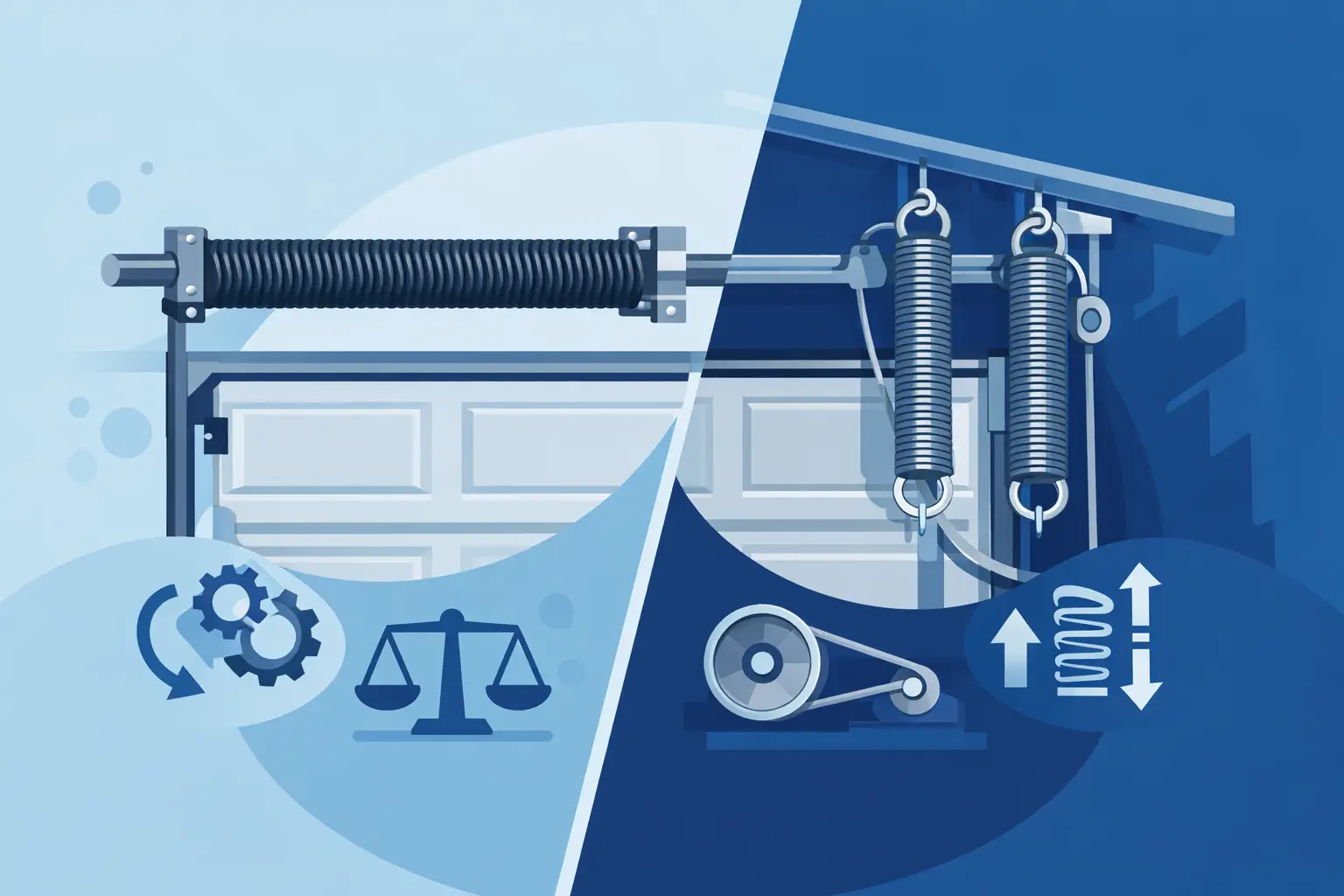
A garage door that suddenly feels heavy, jerks on the way up, or slams shut is usually telling you the spring system is wearing out. When people start comparing torsion vs extension spring systems, they are usually trying to answer a practical question fast - which one is safer, which one lasts longer, and which one makes the most sense for their property.
For most homes and many commercial setups, the answer is not complicated once you understand how each system works. Both types are designed to counterbalance the weight of the door. The difference is where the springs are mounted, how they store energy, and how they behave as they age or fail.
How torsion and extension spring systems work
A torsion spring system mounts above the garage door opening on a metal shaft. As the door closes, the springs wind up and store torque. When the door opens, that stored force helps lift the door in a controlled way. This is why torsion systems usually feel smoother and more balanced during operation.
An extension spring system uses springs mounted along the horizontal tracks on each side of the door. As the door closes, those springs stretch. When the door opens, the stretched springs contract and help lift the door. It is a simpler design, and you will often see it on older garage doors or lower-cost installations.
Both systems can do the job. The real difference shows up in safety, wear, maintenance, and how the door performs over time.
Torsion vs extension spring systems: the biggest differences
If you are comparing torsion vs extension spring systems for a replacement or new installation, torsion is generally the better system for long-term performance. It gives you better balance, quieter movement, and more consistent lifting force across the full travel of the door.
Extension systems are usually less expensive up front, but they tend to have more moving parts involved in the lift process, including pulleys and cables that can wear down. They also place stress on the door in a different way, which can lead to less stable operation if parts get out of adjustment.
That does not mean extension springs are automatically wrong for every property. In some cases, headroom limitations or budget concerns make them the practical choice. But if you are looking at overall value instead of just the lowest initial cost, torsion usually comes out ahead.
Safety matters more than most people realize
Spring safety is one of the biggest reasons many property owners move toward torsion systems. A torsion spring is mounted on a shaft, which helps contain its motion if it breaks. It can still fail with serious force, but the system is generally more controlled.
An extension spring stretches and contracts along the track. If it breaks and does not have a proper safety cable running through it, the spring can whip loose with enough force to damage property or injure someone nearby. Modern extension setups should include safety cables, but not every older door has them, and that is where risk goes up.
If your garage door setup is older and you are not sure whether those safety components are in place, that is worth checking sooner rather than later.
Lifespan and daily wear
Torsion springs usually last longer than extension springs. A standard spring life is measured in cycles, with one cycle being one full open and close. Many standard torsion springs are rated around 10,000 cycles, and higher-cycle options are available. Extension springs are also available in similar ratings, but in real-world use, torsion systems often hold adjustment better and wear more evenly.
That matters if your garage door gets used several times a day. A household with multiple drivers, deliveries, kids coming and going, or a shop door that sees regular traffic will put a lot of cycles on the system. In those situations, smoother force distribution and fewer weak points usually mean fewer headaches.
Noise and door performance
Most people notice the performance difference before they understand the hardware difference. Torsion systems tend to open more smoothly and with less bounce. The door tracks straighter, the movement is more controlled, and the opener does not have to fight an uneven load as often.
Extension spring systems can be noisier, especially as pulleys, rollers, and springs age. If a door rattles, shakes, or looks slightly uneven during travel, the spring setup may be part of the issue. Sometimes the fix is a repair and tune-up. Sometimes it is a sign the whole spring system is due for replacement.
Which spring system costs more?
Torsion systems usually cost more at installation or conversion. The hardware is different, the setup is more precise, and the work has to be done correctly to match the door weight, height, and track configuration.
Extension spring systems are often cheaper up front, which is why they have been common on budget-conscious residential installations. But lower upfront cost does not always mean lower ownership cost. If the system wears faster, needs more adjustments, or creates added strain on other parts, the savings can disappear over time.
For property managers and business owners, downtime matters too. A cheaper spring setup is not much of a bargain if the door goes out at the wrong time and blocks access, deliveries, or tenant use.
When torsion springs usually make the most sense
Torsion springs are usually the right choice when you want better durability, smoother operation, and stronger long-term value. They are especially common on newer doors, heavier insulated doors, and larger residential or commercial overhead doors.
They also make sense if your current door is used heavily or if you are already dealing with repeat issues like uneven lifting, noisy operation, worn pulleys, or opener strain. In many cases, converting from extension to torsion is a worthwhile upgrade if the door and framing allow it.
This is particularly true in places like Cheyenne, where garage doors get used in real weather and cannot afford to be unreliable when temperatures drop or wind picks up.
When an extension spring system may still be the right fit
Extension springs can still be a workable option for some homes, especially if the door is lighter, the budget is tighter, or the garage layout does not easily support a torsion setup. If the system is installed correctly, maintained properly, and equipped with safety cables, it can provide dependable service.
The key is realistic expectations. An extension system may not feel as refined, and it may need more attention as it ages. But for certain properties, especially older garages with existing compatible hardware, repairing or replacing with extension springs may be the most practical move.
Repair, replacement, or conversion?
This is where it depends on the condition of the full system, not just the broken part. If one spring has failed on an older door, the matching spring is often close behind. If pulleys, cables, bearings, or brackets show wear too, replacing only one piece may just delay the next problem.
A good technician will look at the whole door balance, not just swap parts and leave. That includes checking the opener, cables, track alignment, rollers, and hardware. The goal is not just to get the door moving again. It is to make sure it moves safely and reliably.
That is also why spring work is not a DIY job. Both torsion and extension systems store enough force to cause serious injury. The tools, tension, and door weight all have to be handled correctly.
Signs your spring system needs attention
If your garage door will not open, feels unusually heavy, opens crooked, or makes a loud bang from inside the garage, a spring problem is likely. You may also notice gaps in the spring, loose cables, or a door that only lifts a few inches before stopping.
With torsion systems, a visible break in the coil is common. With extension systems, the spring may hang unevenly or appear overstretched. Either way, continued operation can damage other parts of the door system.
If your door is stuck closed or halfway open, fast service matters. A delayed repair can turn a spring issue into a cable issue, track issue, or opener issue.
What most property owners should choose
For most modern garage doors, torsion is the better system. It is safer in design, smoother in operation, and usually a stronger long-term investment. Extension springs still have their place, but they are more often the practical compromise than the preferred option.
If you are deciding between repairing what you have and upgrading to something better, the right answer comes down to door size, usage, available space, and budget. A quick inspection can usually tell you whether a repair is enough or whether a conversion makes more sense.
At Mike's Garage Door LLC, that is the kind of call we help people make every day - straight answers, honest pricing, and a fix that matches the door instead of a one-size-fits-all recommendation.
If your garage door is showing signs of spring trouble, the best next step is simple: get it checked before it turns into a bigger problem. The right spring system should make your door feel steady, safe, and ready for daily use without drama.