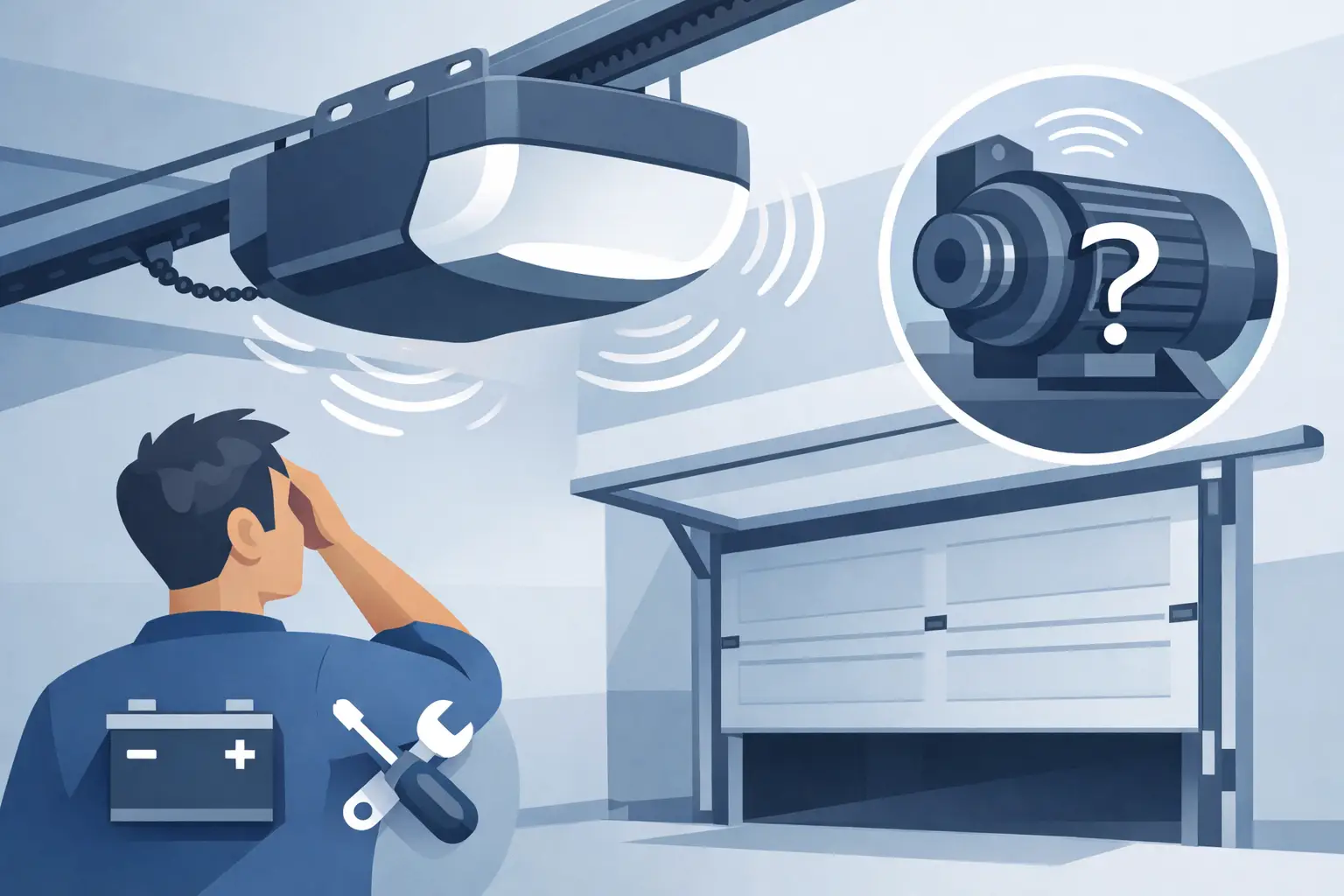
You press the wall button, hear the motor hum, and the garage door does absolutely nothing. If you're asking, why does garage opener hum only, the short answer is this: the opener is getting power, but something is stopping that power from turning into movement. Sometimes it's a worn part inside the opener. Sometimes the door itself is too heavy or jammed. Either way, a humming opener is a warning sign, not a problem to ignore.
In Cheyenne and the surrounding area, we see this a lot when weather, wear, and overdue maintenance catch up with a system all at once. The opener sounds alive, but the door won't budge, or it moves an inch and stops. That usually points to a mechanical issue, not just an electrical one.
Why does garage opener hum only and not open the door?
A garage door opener hums when the motor tries to run but can't complete the job. Think of it like a truck engine revving in mud. The power is there, but something is keeping the drive system from moving forward.
One common cause is a bad start capacitor. The opener motor needs a quick boost to get turning. When that capacitor weakens or fails, the unit may hum for a few seconds without actually starting. This is especially common on older openers.
Another likely issue is a stripped drive gear. Many openers use a plastic gear inside the motor housing. Over time, that gear wears down. The motor still hums because it's trying to operate, but the gear can't grab and move the chain, belt, or screw drive.
The problem can also be outside the opener itself. If a spring is broken, the door may be too heavy for the opener to lift. If the rollers are jammed, the track is bent, or the door is off balance, the opener can sit there humming under strain.
The most common causes of a humming garage door opener
The exact answer depends on what the opener does next. If it hums and then shuts off, that often means it's hitting resistance and the motor's thermal protection is stopping it. If it hums continuously, the motor may be stuck or an internal component may have failed.
Failed capacitor
A failing capacitor is one of the first things a technician will consider. The opener has power, so lights may work and you may hear a steady hum, but the motor does not get the push it needs to start rotating. On some models, this comes with a faint burnt smell or a buzzing sound that lasts a few seconds before stopping.
Worn drive gear
A stripped gear is another frequent culprit. This part connects the motor to the opener's drive system. Once the teeth wear down, the motor can run without moving the trolley. In some cases, you may hear grinding along with the hum.
Broken garage door spring
This is a big one. Homeowners often assume the opener is the issue because that's the part making noise. But if the torsion spring or extension spring has broken, the opener may be trying to lift a door that suddenly weighs far more than it was designed to handle. The opener hums because it's under load, but the door stays put.
A broken spring is not a DIY repair. Springs are under extreme tension and can cause serious injury.
Locked door or engaged manual lock
Sometimes the fix is simple. If the manual slide lock is engaged, the opener will try to open a locked door and hum instead. This can happen after a windy day, after someone used the lock by mistake, or after a property has been vacant.
Track obstruction or frozen rollers
Cheyenne weather can create trouble here. Dirt, ice, hardened grease, or a bent section of track can stop the door from rolling freely. When that happens, the opener may hum while fighting resistance. In winter, frozen bottom seals can also make the door seem stuck even when the opener is working.
Motor failure
If the opener is older, the motor itself may be wearing out. Bearings can seize, windings can degrade, and internal parts can overheat. A hum with no movement from a unit that's been slowing down for months usually means the opener is nearing the end of its service life.
What you can safely check before calling for repair
There are a few things you can inspect without taking apart the opener or putting yourself at risk. Start with the easiest possibilities.
Look at the door and check whether the manual lock is engaged. If it is, unlock it and try the opener again.
Next, check the springs above the door or along the horizontal tracks, depending on your system. If you see a gap in a torsion spring or a hanging loose extension spring, stop there. Do not keep running the opener. That can burn out the motor and make the repair more expensive.
You can also pull the emergency release cord and try lifting the door by hand - but only if you do not see a broken spring and the door appears intact. The door should lift smoothly with moderate effort and stay about halfway open. If it's extremely heavy, slams shut, or binds in the tracks, the issue is likely with the door hardware, not just the opener.
Finally, inspect the tracks for obvious obstructions like debris, ice, or a roller out of place. If something small is blocking the path, clear it carefully. If the track is bent or a roller has come off, that needs professional service.
When a humming opener is a same-day problem
A humming opener is not always an emergency, but sometimes it is. If your car is trapped inside, your business can't access a bay door, or the door is stuck open and leaving the property unsecured, it becomes urgent fast.
It's also a same-day issue if the opener hum started right after a loud snap. That often points to a broken spring. The opener may still sound like it's trying, but using it again can damage the motor, rail, or top section of the door.
The same goes for a burning smell, smoke, or repeated tripping of the circuit breaker. Those are signs to stop using the opener immediately.
Why does garage opener hum only after cold weather?
Cold weather changes how garage doors behave. Metal contracts, grease thickens, and rubber seals can freeze to the concrete. A system that worked yesterday can suddenly start humming today because the opener is pushing against added resistance.
That does not always mean the opener is bad. Sometimes the door needs adjustment, fresh lubrication, or spring tuning to handle winter conditions. Other times, cold weather simply exposes a part that was already close to failure, like a weak capacitor or worn gear.
This is where experience matters. A quick diagnosis can tell you whether the opener needs repair, the door needs balancing, or both.
Repair or replace the opener?
It depends on the age of the unit and what failed. If the opener is fairly new and the issue is a capacitor, gear, or adjustment problem, repair usually makes sense. If the motor is failing and the opener is older, replacement may be the better value.
A newer opener can also bring quieter operation, better safety features, and more reliable performance in day-to-day use. But replacement is not always the first answer. A good service call should tell you exactly what's wrong, what it costs to fix, and whether repair is worth it.
At Mike's Garage Door LLC, that practical approach matters. People want the door working again without guessing, upselling, or waiting around for parts that should already be on the truck.
What not to do when the opener only hums
The biggest mistake is continuing to hit the button over and over. If the door is jammed or a spring is broken, repeated attempts can overheat the motor or strip internal parts.
It is also a bad idea to open the motor housing unless you know exactly what you're looking at. Garage door openers have electrical components, moving gears, and force settings that need to be handled correctly. Guesswork can turn a repairable issue into a full replacement.
And if the problem involves springs, cables, or a door that has come off track, leave it alone. Those repairs require the right tools and training.
A humming opener is the system's way of telling you something is wrong before a complete breakdown. Sometimes the fix is simple. Sometimes it's a worn gear, a failed capacitor, or a broken spring that needs immediate attention. The good news is that this is usually a diagnosable problem, and the faster it's checked, the better your chances of avoiding bigger damage and getting the door back in service quickly.