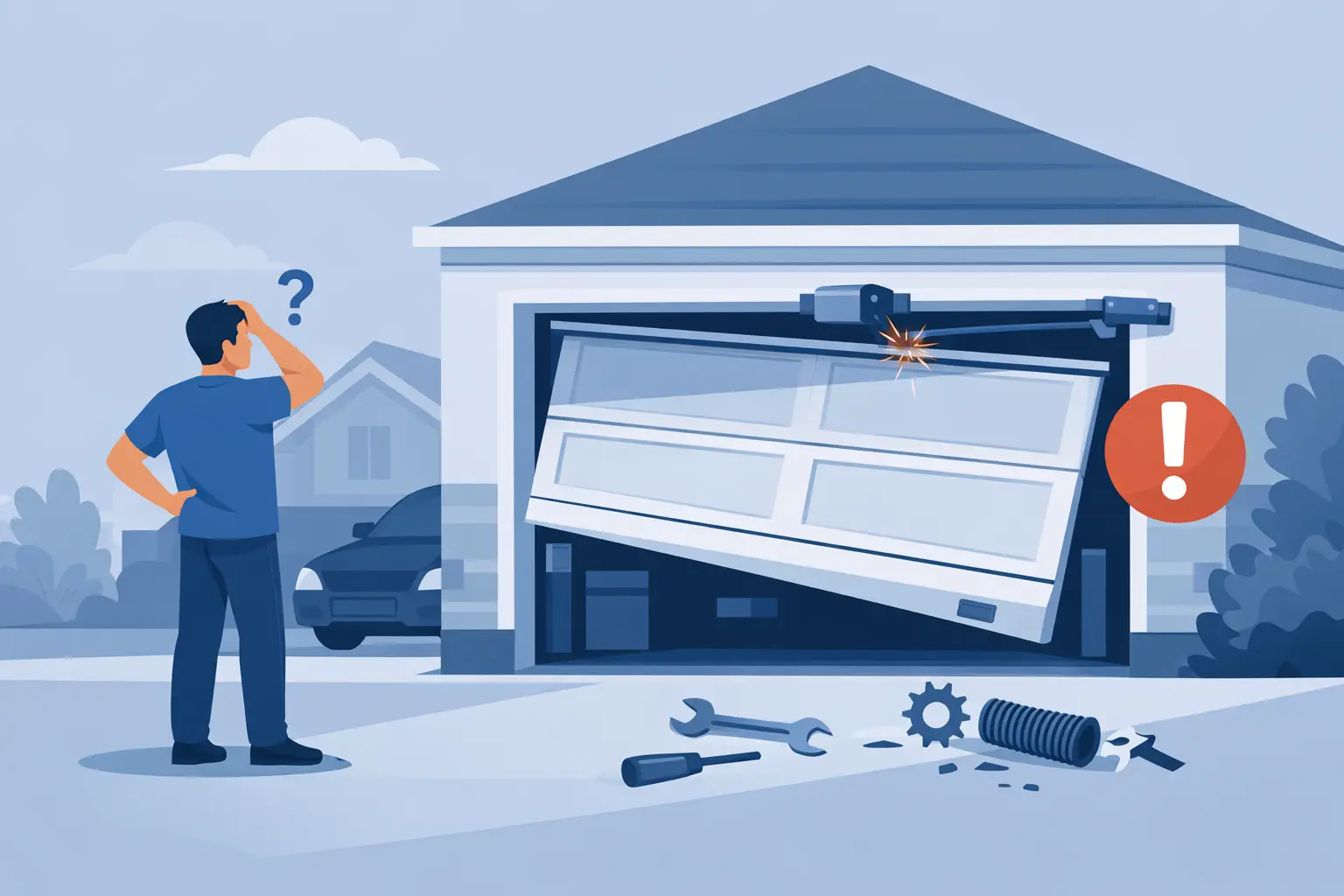
When your car is trapped inside at 7 a.m. or your shop door will not close at the end of the day, the question gets real fast: why is garage door not working? In most cases, the problem comes down to a handful of common issues - power, springs, sensors, tracks, cables, or the opener itself. Some are simple enough to spot right away. Others are signs that the door is no longer safe to operate.
A garage door is heavier and more complex than it looks. The opener gets most of the attention, but the opener is only one part of the system. The springs carry the weight. The rollers and tracks guide the door. The sensors protect people and property. When one part fails, the whole door can stop, reverse, jam, or make noises that tell you something is wrong.
Why Is Garage Door Not Working? Start With the Obvious
Before assuming the worst, start with the simple checks. A lot of service calls begin with a dead outlet, a locked wall console, or a remote with a weak battery. If the opener has no lights and no sound, check the breaker and the outlet. If the wall button works but the remote does not, the battery or programming may be the issue.
Also check the manual lock on the inside of the door. It is easy to bump that slide lock by accident, especially in older doors. If the opener tries to lift while the lock is engaged, the door will not move properly and you can put extra strain on the opener.
Another quick check is the emergency release cord. If that red cord has been pulled, the opener may be disconnected from the door. In that case, the motor might run, but the door will not move with it. Reconnecting the trolley can solve it, but only if the rest of the door is in good condition.
The Most Common Mechanical Problems
If power is not the problem, the next step is figuring out whether the door system itself has failed. This is where most serious garage door issues show up.
Broken springs
A broken spring is one of the most common reasons a garage door stops working. Torsion or extension springs do the heavy lifting. When one breaks, the opener may strain, the door may only lift a few inches, or it may not move at all.
You may hear a loud bang when a spring breaks. Many homeowners describe it as sounding like something slammed in the garage. If you see a gap in the torsion spring above the door, that is a clear sign it has failed. This is not a DIY repair. Springs are under high tension and can cause serious injury if handled incorrectly.
Door off track
If the rollers come out of the track or the tracks are bent, the door may jam at an angle, get stuck halfway, or make grinding sounds. A door can go off track after being hit by a vehicle, after a broken roller, or when hardware loosens over time.
An off-track door is a safety issue. Trying to force it open or closed can make the damage worse and increase the chance of the door falling unevenly.
Snapped cables
Lift cables work with the springs to raise and lower the door evenly. If a cable frays or snaps, one side of the door may sag, bind, or stop moving. In some cases, the door will look crooked when opening.
Cables do not usually fail without warning. Fraying, rust, and uneven movement often show up first. If you spot cable damage, stop using the door until it is inspected.
Why the Opener Runs but the Door Does Not Move
This is a specific problem, and it usually points to one of three things. The opener may be disconnected from the door, the drive gear inside the opener may be worn out, or the springs may have failed and the opener cannot carry the load.
If the motor hums but the door stays put, do not keep hitting the button. Repeated attempts can burn out the opener or strip internal parts. The opener is designed to guide the door, not dead-lift a full door with broken springs.
Chain-drive, belt-drive, and screw-drive openers can all develop wear over time. Gears wear down, travel limits get out of adjustment, and circuit boards can fail. Sometimes repair makes sense. Sometimes replacement is the better value, especially if the opener is older and already missing modern safety features.
Sensor Problems That Stop the Door From Closing
Safety sensors are a frequent cause of closing problems. If your garage door opens fine but will not close, or starts down and then reverses, the photo eyes are one of the first things to check.
The sensors sit near the bottom of the tracks on each side. If they are dirty, misaligned, blocked, or have damaged wiring, the opener may think something is in the way. Even direct sunlight can affect some sensor setups at certain times of day.
Clean the lenses, make sure nothing is blocking them, and look for solid indicator lights. Blinking lights usually mean the sensors are out of alignment or not communicating. This is sometimes a quick fix, but if the wiring is damaged or brackets are bent, it can take more than a simple adjustment.
Why Is Garage Door Not Working in Cold Weather?
In Wyoming, cold weather changes how garage doors behave. Metal contracts, grease thickens, and older parts get less forgiving when temperatures drop. A door that seemed fine in mild weather can suddenly move slowly, bind, or fail to close fully during a cold snap.
Frozen moisture at the bottom seal can also keep the door stuck to the ground. If that happens, do not keep forcing the opener. You can damage the bottom panel, strip opener gears, or throw the door out of alignment. Sometimes the issue is just ice. Sometimes cold weather exposes a spring or opener that was already close to failure.
This is one reason routine tune-ups matter. A properly adjusted door with the right lubrication and balanced spring tension is much less likely to fail when the weather turns.
What You Can Safely Check Yourself
There is a difference between basic troubleshooting and unsafe repair work. It makes sense to check the remote battery, opener power, sensor alignment, and visible obstructions in the tracks. You can also look for signs of wear like loose hinges, worn rollers, or a door that sounds rough during travel.
What you should not do is adjust springs, remove bottom brackets, reset cables under tension, or force a stuck door. Those repairs need the right tools and experience. Garage doors are heavy, and the tension system is where people get hurt.
A good rule is simple: if the issue involves balance, lifting force, or parts under tension, stop and call for service.
When It Is Time to Call a Pro
If the door is stuck open, crooked, off track, unusually heavy, or making loud banging or grinding noises, it is time for professional repair. The same goes for broken springs, damaged cables, opener failure, or a door that reverses for no clear reason.
For homeowners and property managers, speed matters because a garage door problem quickly becomes a security issue, an access issue, or both. For commercial properties, downtime can disrupt deliveries, staffing, and daily operations. That is why same-day service matters when the door is not just inconvenient but affecting the way you use the property.
A trained technician can tell the difference between a small adjustment and a full repair need. That saves time, avoids guesswork, and helps prevent a minor issue from turning into a bigger one.
The Cost Question Depends on the Actual Failure
One reason people search for answers before calling is simple: they want to know what they are walking into. That makes sense. The trouble is that garage door repair pricing depends on the failed part, the door type, and whether the issue caused secondary damage.
A sensor adjustment is not the same as a spring replacement. A worn roller is not the same as an off-track commercial overhead door. Honest pricing starts with an actual diagnosis. In many cases, a service truck stocked with common parts can handle the repair on the first visit, which saves both time and extra labor.
If you are in Cheyenne or the surrounding area and need a fast answer, Mike's Garage Door LLC handles the kinds of issues local homeowners and businesses deal with every day - broken springs, opener trouble, off-track doors, and urgent same-day repairs.
The next time your garage door quits without warning, do not assume it is just being stubborn. Most doors give a reason when they stop working, and the faster that reason gets identified, the easier it usually is to fix before it turns into a bigger problem.