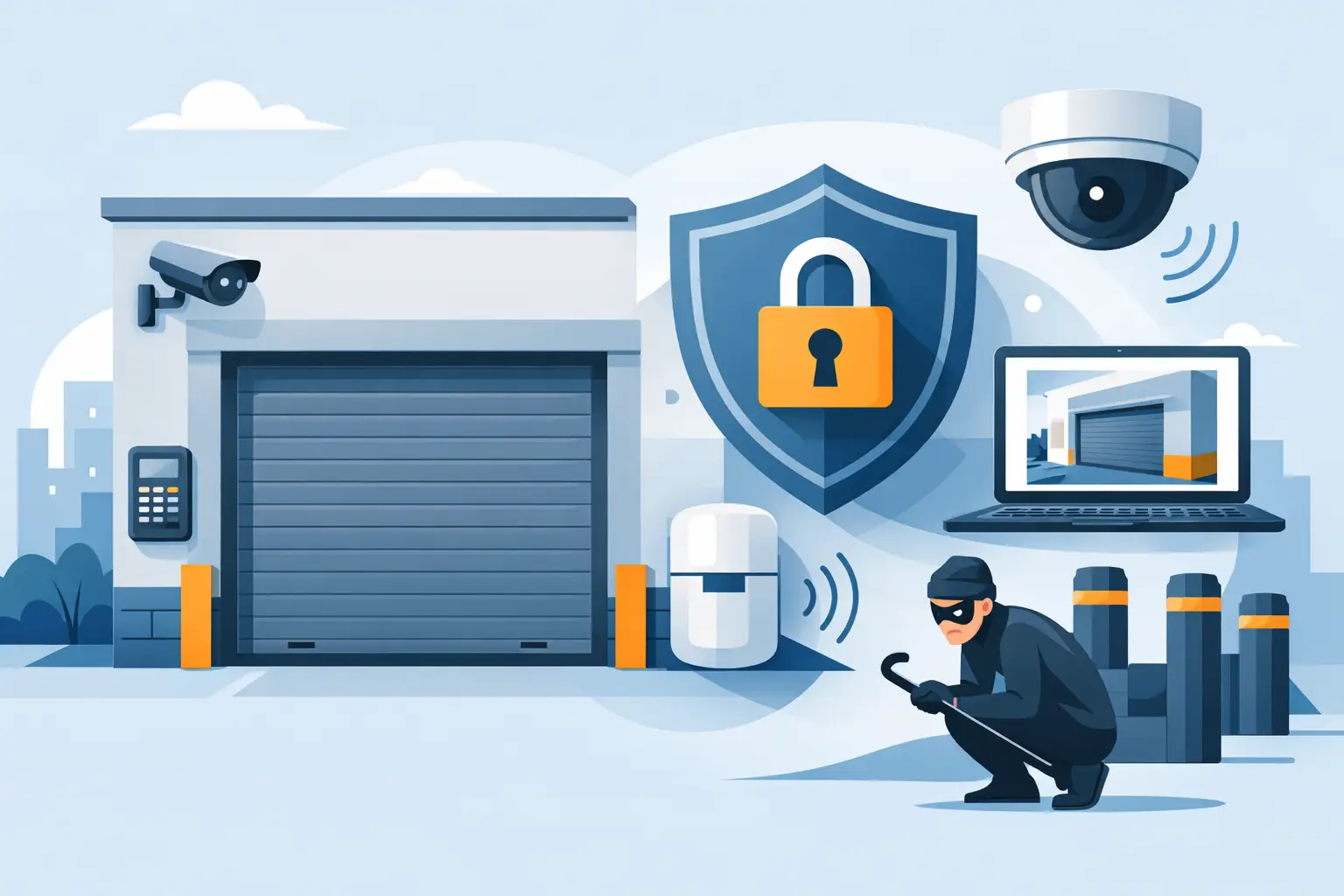
A commercial overhead door can be the largest opening in your building, which makes it a common weak point when it is damaged, left unsecured, or operating on outdated equipment. The best commercial garage door security upgrades do more than make forced entry harder. They help control who enters, show you when a door is open, and keep a minor repair issue from becoming a costly security problem.
For Cheyenne-area warehouses, shops, storage facilities, auto businesses, and property managers, the right upgrades depend on how the door is used. A loading door used all day needs a different setup than a rear service-bay door that should stay closed overnight. Start with the basics, then add controls that solve the actual risks at your property.
Start With a Door That Closes and Locks Correctly
Security equipment cannot make up for a door that is bent, off track, poorly balanced, or not closing all the way. Gaps at the bottom or sides of the door can invite tampering, weather damage, pests, and unwanted access. A worn bottom seal is not usually a stand-alone security failure, but it can reveal a larger issue with alignment or door condition.
Inspect the door panels, tracks, rollers, hinges, cables, and bottom brackets. Look for loose hardware, damaged sections, bent tracks, or signs that the door has been forced in the past. If the door stops short of the floor, reverses unexpectedly, or has to be pushed to close, schedule service before adding electronic upgrades.
A properly operating door is also safer for employees. Commercial springs, cables, and bottom brackets carry significant tension. Do not attempt to adjust these parts yourself. A trained technician can identify whether a repair, reinforcement, or replacement is the sensible next step.
Best Commercial Garage Door Security Upgrades for Most Properties
The most effective security plans use layers. Stronger hardware slows forced entry, access controls limit who can operate the door, and monitoring gives you a chance to respond quickly when something is wrong.
Heavy-duty slide locks and interior locking hardware
For a manually operated commercial door, an interior slide lock or secure hasp can be a simple, cost-effective improvement. The key point is that the lock should be installed on a solid part of the door and frame, not thin or damaged material. A lock that looks substantial but pulls loose under pressure offers little real protection.
For powered doors, locking options require more planning. Manually locking a door and then operating the opener can damage the door, opener, or lock. If a powered door needs extra physical security after hours, ask a garage door professional about compatible locking systems and operating procedures.
Commercial-grade openers with controlled access
Older openers may use basic remotes that are easy to misplace, share, or leave in company vehicles. A modern commercial opener can provide better control through rolling-code remotes, keypad entry, smartphone access, or managed user permissions.
This matters when employees change, tenants move out, or a contractor no longer needs access. Instead of changing a physical key or wondering who has an old remote, you can remove an individual user or reset access credentials. For many small businesses, that is one of the most practical security improvements available.
Not every operation needs phone-based controls. A busy warehouse may prefer durable keypads and designated remotes, while a property manager with several locations may value the ability to check door status remotely. Choose the system that your team will actually use consistently.
Door position monitoring and open-door alerts
A door left open at closing time is one of the easiest security failures to prevent. Door position sensors can alert an owner, manager, or designated employee when a door opens, remains open beyond a set period, or is operated outside normal business hours.
This upgrade is especially useful for rear doors, detached storage buildings, equipment bays, and locations without overnight staff. It does not replace physical security, but it helps turn an unnoticed problem into a quick response. In many cases, a manager can confirm whether the door was opened for a legitimate reason before dispatching someone to the site.
Security cameras aimed at the door and approach area
A camera pointed only at the face of a closed garage door may not capture what matters most. The better placement usually covers the approach to the door, the exterior locking area, and the interior side where practical. Good lighting matters just as much as camera quality.
Cameras are useful for deterrence, investigation, and operational oversight. They can also help identify repeat issues, such as a delivery driver striking the door, an employee leaving it open, or someone attempting to tamper with hardware. Make sure camera placement respects employee privacy requirements and covers the areas where access actually occurs.
Better exterior lighting
Poorly lit loading areas give intruders cover and make it harder for staff to spot damage before it gets worse. Motion-activated lighting can work well for low-traffic areas, while consistent lighting may be better around active entrances, docks, and employee walkways.
Lighting is not a substitute for locks or alarms, but it supports every other part of your security plan. It improves camera footage, makes after-hours checks safer, and sends a clear signal that the property is maintained and monitored.
Reinforce Doors That Face Higher Risk
Some properties need more than a standard sectional door and opener. Businesses that store tools, inventory, vehicles, equipment, or controlled materials may need stronger door construction and more protection around the opening.
Steel sectional doors with reinforced sections can offer better resistance to impact and tampering than lightweight or damaged doors. For certain openings, rolling steel doors or security grilles may be the better fit. They are often used for service counters, storage rooms, warehouses, and areas where a traditional overhead door does not provide the needed level of protection.
The trade-off is cost, weight, and maintenance. Heavier doors need properly matched springs, operators, tracks, and mounting hardware. Installing a stronger door on an aging system without addressing those components can create reliability problems. A site inspection helps determine whether reinforcement makes sense or whether full replacement will provide better long-term value.
Protect Against Side, Bottom, and Track Tampering
Forced entry does not always happen through the center of the door. Intruders may target weak side gaps, bottom corners, exposed emergency releases, or hardware that can be reached from outside.
For doors with electric openers, the emergency release should be evaluated carefully. It is necessary for safety and manual operation during an outage, but exposed or poorly protected releases can create a vulnerability. A professional can recommend a secure setup that preserves safe access without making the release easy to manipulate from outside.
Track and roller condition also matters. Damaged tracks can make a door easier to force, while loose brackets and worn rollers may allow unwanted movement. If you see daylight around the perimeter, scraping during operation, or a door that rattles excessively, do not wait for it to fail completely.
Use Access Rules That Match Your Operation
The best equipment will not solve a process problem. If every employee uses the same keypad code, no one can tell who accessed the door. If remotes are passed from vehicle to vehicle, former employees may still have access months later.
Assign individual access whenever possible. Change keypad codes when staffing changes, keep a record of issued remotes, and collect remotes during offboarding. Establish a clear closing procedure that includes checking every overhead door, locking applicable doors, and confirming that alarms or alerts are active.
For multi-tenant properties, clarify who is responsible for door maintenance and who has authority to approve repairs. A small problem can become a security concern quickly when tenants assume someone else is handling it.
Do Not Skip Preventive Maintenance
Security and reliability are closely connected. A door that binds, opens slowly, or falls out of alignment is more likely to be left partially open or taken out of service. It also creates an opportunity for opportunistic theft and can interrupt deliveries, customer service, and employee access.
Regular commercial garage door maintenance should include inspection of springs, cables, rollers, hinges, tracks, opener settings, safety devices, and mounting hardware. The goal is not to replace parts unnecessarily. It is to catch wear before a broken cable, failed spring, or off-track door puts the opening out of service.
Mike's Garage Door LLC provides commercial overhead door service for businesses and property managers that need straightforward recommendations, honest pricing, and fast help when a door becomes a security issue. If a door cannot close, has been struck, or shows signs of forced entry, same-day service can prevent an already stressful situation from getting worse.
A secure commercial door should not be difficult for authorized staff to use or expensive to maintain. The right upgrade is the one that closes the most likely gap at your property, fits your daily workflow, and keeps the door dependable when your business needs it most.