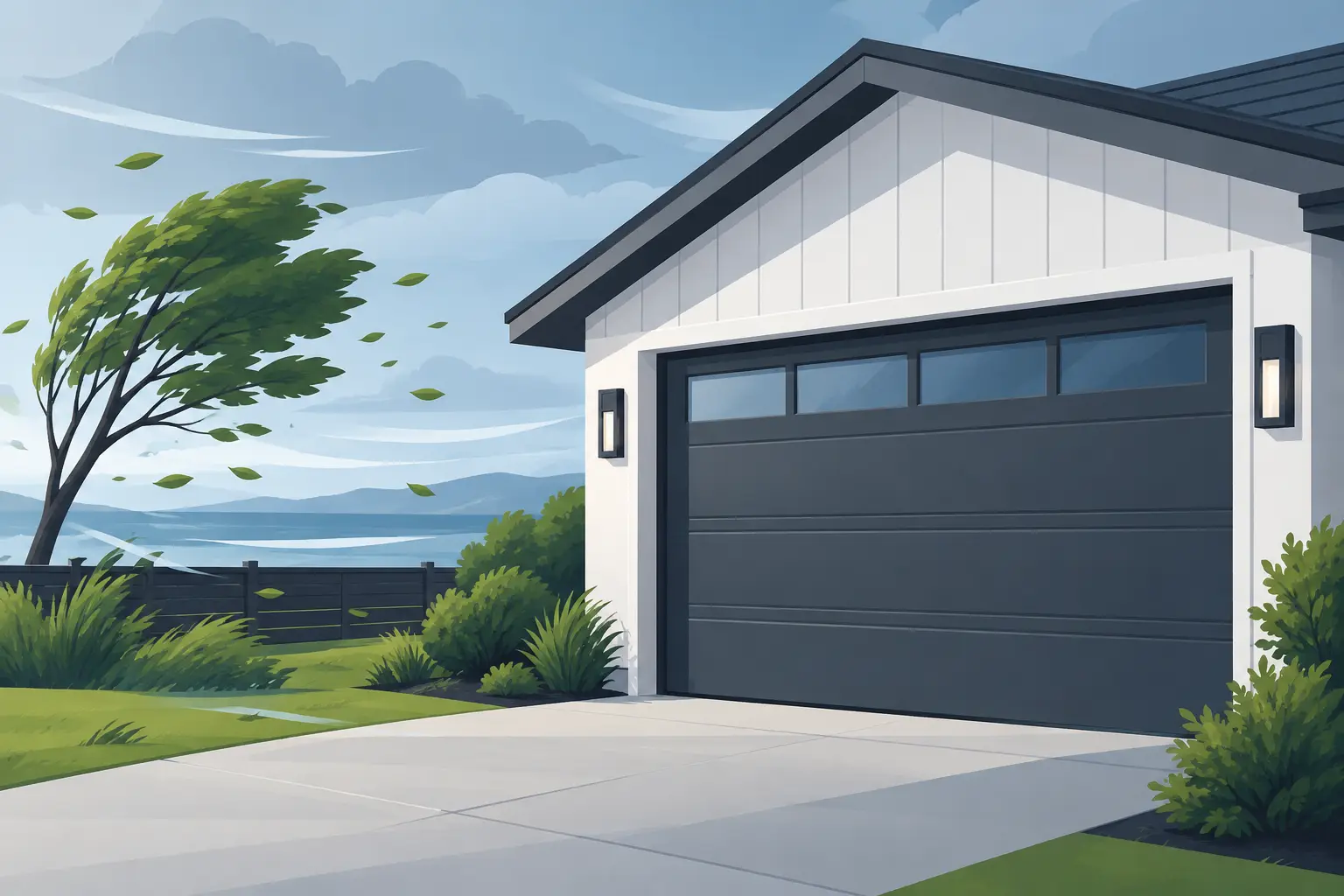
A hard Wyoming gust can turn a weak garage door into more than an inconvenience. When the door flexes, bows, comes off its tracks, or fails to seal, it can leave your garage exposed and put the rest of the building at risk. The best garage doors for windy areas are not simply the heaviest doors on the showroom floor. They are doors engineered for the required wind load, paired with the right tracks, reinforcement, hardware, and installation.
For homeowners and property managers in Cheyenne and surrounding communities, that distinction matters. Our wind is not a rare weather event. A new garage door should be selected with local conditions in mind, not just color, insulation, or curb appeal.
What Makes a Garage Door Suitable for High Winds?
A garage door is a large moving wall. When strong wind hits it, the pressure is spread across every section, hinge, roller, track, and attachment point. If one part gives way, the door can buckle or pull out of the opening.
The key specification is the door's wind-load rating, sometimes listed as a design pressure rating. This rating tells you how much positive and negative pressure the door system is designed to handle. Positive pressure pushes the door inward. Negative pressure pulls it outward, which can be especially damaging when wind passes across the front of a building.
The correct rating depends on the property location, building height, exposure, opening size, and local code requirements. A larger door needs more support than a single-car door. An exposed property outside town may need a different solution than a sheltered garage in an established neighborhood. Do not assume that a standard door is automatically rated for the conditions at your property.
Wind resistance also depends on the full system. A properly rated door installed with light-duty tracks or poor anchoring will not perform as intended. The door, track assembly, jamb brackets, center stile reinforcement, rollers, hinges, and fasteners need to work together.
Best Garage Door Types for Windy Areas
Reinforced steel sectional doors
For most homes, an insulated steel sectional door with a high-wind reinforcement package is the practical choice. Steel doors are durable, widely available, and offered in many styles, from traditional raised panels to carriage-house designs. Manufacturers can often provide heavier-gauge sections, reinforcement struts, upgraded hinges, and wind-rated track systems for the same general door style.
Insulated steel also makes sense in Cheyenne because it adds value beyond wind performance. Polyurethane or polystyrene insulation helps control garage temperatures, reduces outside noise, and gives the door more rigidity than a hollow single-layer panel. The best option depends on the door's tested rating, not insulation alone, but a well-built insulated door is usually a stronger starting point.
Commercial-grade sectional doors
For wide residential openings, detached shops, warehouses, service bays, and commercial buildings, a commercial-grade sectional door may be the better fit. These doors are built for heavier use and can be configured with stronger sections, more substantial tracks, and higher-cycle hardware.
This is often the right conversation for a property manager or business owner with a large opening. A door that looks adequate for a two-car home garage may not be appropriate for a wide equipment bay. Commercial doors can cost more upfront, but replacing a failed door, losing access to a building, or dealing with weather damage costs more than choosing the right system at installation.
Wind-rated carriage-house and custom-look doors
You do not have to give up appearance to get a stronger door. Many steel carriage-house doors and custom-look sectional doors are available with wind-load upgrades. The important step is confirming that the exact model, size, window layout, and hardware package carry the needed rating.
Windows deserve extra attention. They can look great and bring daylight into the garage, but they change the construction of the top sections. Choose a manufacturer-approved window package for the door's wind rating instead of treating decorative glass as an afterthought.
Aluminum and full-view doors, with the right rating
Modern aluminum full-view doors are popular for commercial spaces, workshops, and contemporary homes. They provide light and a clean appearance, but not every glass-and-aluminum door is a good fit for an exposed location. If this is the look you want, ask for a model specifically engineered and tested for the wind load at your property.
The trade-off is often price and insulation. Full-view doors can be more expensive, and glass sections generally do not insulate as well as a solid insulated steel door. For a conditioned workspace, that may affect the decision as much as the wind rating.
Reinforcement Is Not an Optional Add-On
A wind-rated garage door usually gets its strength from reinforcement struts installed across the back of the door sections. These horizontal braces limit flexing when pressure hits the door. Wider doors commonly need more reinforcement because the span is greater.
Heavy-duty vertical tracks and properly secured track brackets matter just as much. A door can have strong panels and still fail if the tracks spread apart or pull loose from the framing. The installer should inspect the condition of the jambs and header before mounting a new system. Rotted wood, cracked masonry, thin steel framing, or previous damage may need to be corrected first.
The spring system should also match the weight of the finished door. Adding insulation, glass, or reinforcement changes the door weight. Springs that are not sized correctly make the opener work harder and can cause poor operation. This is one reason a wind-ready installation should be handled as a complete system, not a collection of upgrades.
How to Choose the Right Wind Rating
Start with the building location and the size of the opening. A reputable installer can help identify the applicable requirements and provide door documentation for the selected model. If your property is part of a new build, remodel, commercial project, or insurance claim, keep the product information and installation records.
Before approving a door, get clear answers to these questions:
- Is this exact door model rated for the required wind pressure at my property?
- Does the quoted price include reinforcement struts, heavy-duty tracks, and all required hardware?
- Is the rating still valid with the chosen windows, insulation, and size?
- Will the existing framing support the new track and jamb attachments?
- Are the springs and opener being matched to the completed door weight?
A lower-priced door may look like a bargain until you find out that the needed reinforcement, tracks, or installation work are extra. Honest pricing means knowing what is included before the job begins.
Installation Matters as Much as the Door
Even a quality wind-rated door can have problems when installed incorrectly. Tracks must be level, properly spaced, and firmly attached. The door must balance correctly. The bottom seal needs to meet the floor evenly, and the opener must be adjusted so it does not force the door against an obstruction or strain the system.
After installation, periodic maintenance protects the investment. Wind can carry dust and grit into tracks and rollers, while seasonal temperature swings affect lubrication and door balance. A tune-up should include checking the roller condition, hinge wear, track alignment, cable condition, spring balance, fasteners, safety sensors, and opener operation.
If a door starts shaking, binding, making new noise, or leaving gaps along the sides, schedule service before the next storm. Do not keep running a door that is visibly bent or off track. Garage door springs and cables are under high tension, and a damaged door can become dangerous quickly.
When Repair Is Enough and When Replacement Makes Sense
A bent strut, loose track bracket, worn rollers, or damaged weather seal can often be repaired. In some cases, adding approved reinforcement to an existing compatible door may improve its performance. However, a severely bowed door, crushed sections, repeatedly failing tracks, or a door with no suitable wind-rating path may be better replaced.
For older doors, replacement can also solve several problems at once: poor insulation, unreliable operation, outdated safety features, and weak construction. The best answer depends on the door's condition, the exposure of the property, and whether replacement parts are available.
Mike's Garage Door LLC can inspect the full door system, explain the practical options, and provide a clear estimate for repair or replacement. A properly selected and installed door gives you something valuable when the wind picks up: confidence that your garage is ready to stay closed, secure, and working when you need it most.