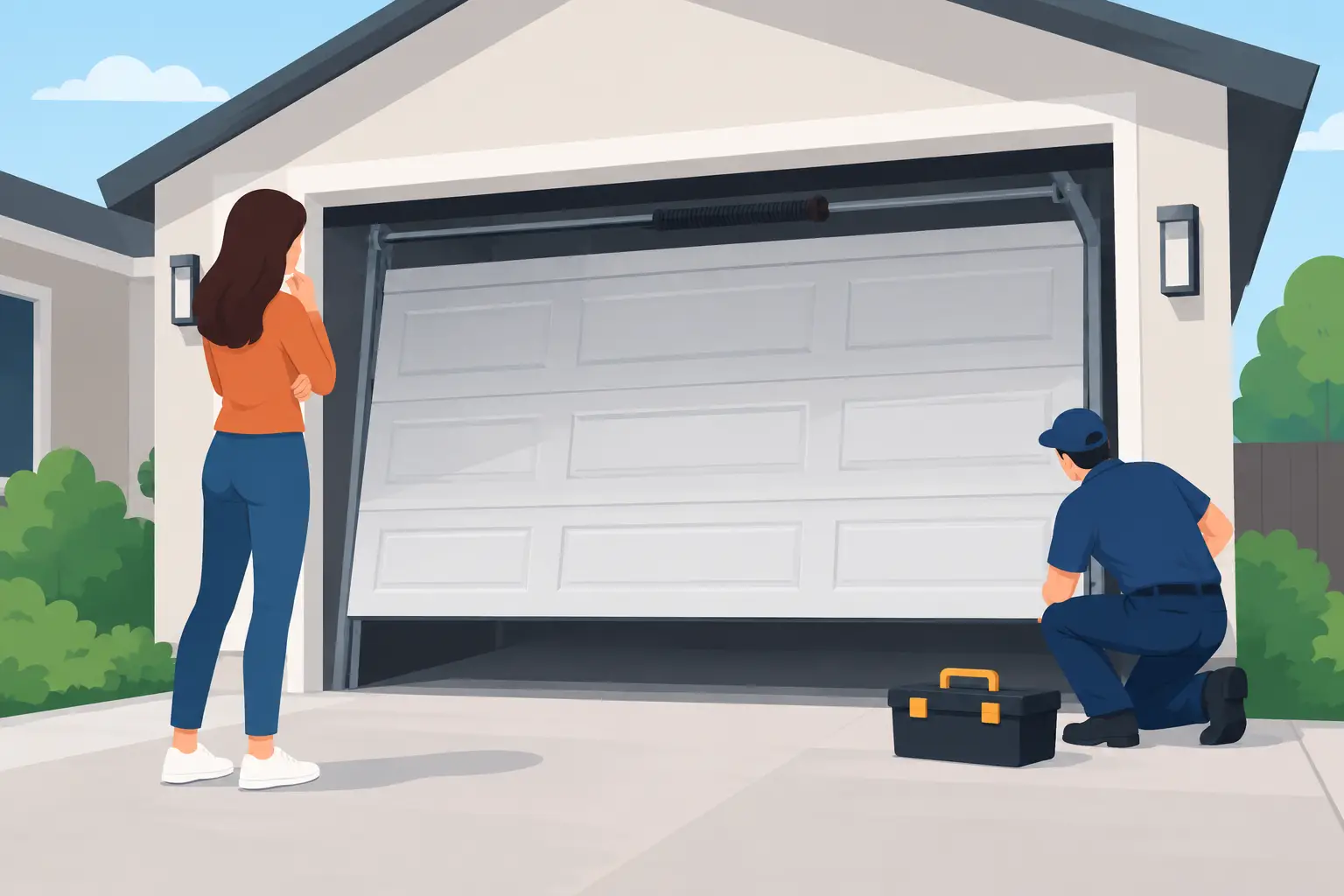
A garage door that will not open at 7 a.m. is more than an inconvenience. It can trap a vehicle, leave a home unsecured, delay deliveries, or prevent employees from accessing a commercial building. Garage door failures usually give some warning, but they can also happen without notice when a spring breaks, a cable comes loose, or an opener stops responding.
The right response depends on what failed. Some issues are simple, such as a blocked safety sensor or dead remote battery. Others involve high-tension parts that should only be handled by a trained technician. Knowing the difference can protect your door, your vehicle, and the people around it.
The Garage Door Failures That Need Fast Attention
A door that is stuck open, halfway open, crooked, or hanging off its tracks should be treated as an urgent repair. Do not keep pressing the opener button in hopes that it will straighten itself out. Continued operation can bend tracks, damage rollers, strain the opener, and turn a repairable problem into a larger one.
A broken spring is another common urgent issue. Torsion and extension springs carry the weight of the door. When one breaks, you may hear a loud bang from the garage, and the door may become too heavy for the opener to lift. The opener may hum, move only a few inches, or stop entirely. A broken spring is not a do-it-yourself repair. Springs are under significant tension and require the right tools and experience to replace safely.
A snapped cable, loose drum, or off-track door also calls for professional service. These parts work together to keep the door balanced as it moves. Once that balance is lost, attempting to force the door closed can create a safety hazard and cause more damage.
For Cheyenne homeowners, weather can make a bad situation more urgent. High winds, freezing temperatures, and blowing snow can affect door movement, harden worn grease, and expose gaps around a door that will not close properly. For a business, a failed overhead door can interrupt operations, restrict access, and compromise security after hours.
Why Garage Doors Fail
Most garage door problems come down to wear, alignment, electrical issues, or a lack of regular service. A typical residential door moves hundreds of times each year. Every cycle puts stress on springs, rollers, hinges, cables, tracks, and the opener.
Worn springs and cables
Springs have a limited service life. They may last for years, but eventually the metal fatigues. Cables can fray, rust, or slip out of place, particularly when a door is out of balance. If your door is getting heavier, closing unevenly, or making new straining noises, the counterbalance system may be wearing out.
Opener and remote problems
Not every opener problem means the motor has failed. A remote may have a weak battery, a wall control may be malfunctioning, or the photo-eye safety sensors may be dirty or out of alignment. If the opener light flashes and the door will not close, check whether anything is blocking the sensors near the bottom of the tracks.
If the door moves by hand but the opener only hums, slips, or fails to engage, the issue may be inside the opener or related to the door being too heavy. An opener is designed to guide a balanced door. It is not meant to compensate for broken springs or a binding track.
Track, roller, and alignment damage
Tracks can bend after a vehicle bump, a falling object, or normal wear over time. Rollers may crack, seize, or wear down. Loose hinges and damaged brackets can make the door shake, scrape, or travel unevenly. These issues often start as noise and become more serious if ignored.
Weather, age, and poor maintenance
Wyoming weather puts extra demand on moving parts. Cold temperatures can stiffen lubricants, moisture can contribute to corrosion, and wind can reveal weak hardware or poor alignment. Older doors may also develop worn seals, loose panels, and hardware fatigue. Regular tune-ups catch these concerns before they become a no-open or no-close situation.
What to Do When Your Door Stops Working
Start by looking for obvious, low-risk causes. Make sure the opener has power, check the circuit breaker, and replace the remote battery if needed. If the door will not close, clear any objects from the sensor area and gently wipe the sensor lenses. Look for a blinking or unlit sensor indicator, which can point to an alignment issue.
If the door is fully closed and the opener is not working, avoid repeatedly cycling it. If the door is open or partially open, keep people, pets, and vehicles away from it. Do not stand beneath a crooked door or attempt to pull a cable back onto its drum.
You can use the emergency release only when the door is fully closed and you understand that disengaging the opener may leave the door unsecured. Never pull the emergency release on an open door if springs, cables, or tracks appear damaged. The door could fall quickly.
Take note of what happened before the failure. Did you hear a loud bang? Is one side lower than the other? Does the opener run while the door stays still? Those details help a technician diagnose the problem faster and arrive prepared with the correct parts.
When a Repair Is the Better Choice
Repair is often the sensible option when the door panels are in good shape and the issue is isolated to a spring, cable, roller, sensor, or opener component. Replacing a worn spring and completing a full safety check can restore reliable operation without the cost of a new door.
It depends on the door's condition and the extent of the damage. A door with multiple cracked panels, severe rust, recurring track problems, or outdated safety features may cost more to keep repairing over time. If insulation, appearance, security, or reliability matters, replacement can be the better long-term value.
Commercial doors need a similar assessment, but downtime matters more. A damaged sectional door, rolling steel door, or overhead operator may be repairable, yet a facility with frequent use may benefit from upgraded hardware built for heavier cycles. The best decision is based on the door's age, use, condition, and repair history, not just the immediate symptom.
How to Prevent Future Problems
A few simple habits can reduce the chance of an unexpected breakdown. Listen for grinding, squealing, popping, or uneven movement. Watch the door as it travels and look for shaking, gaps, or a section that drags. Test the auto-reverse function periodically by placing a small object in the door's path, and keep the photo-eye sensors clear.
Do not use general-purpose grease on tracks. Tracks need to stay clean so rollers can travel correctly. Moving components such as rollers, hinges, and springs need appropriate garage door lubricant applied during routine service. Loose bolts, worn rollers, and balance issues are best addressed during a professional tune-up.
Annual maintenance is especially worthwhile for doors that see frequent use, exposed doors, rental properties, and commercial facilities. A technician can inspect spring condition, cable wear, roller movement, track alignment, opener force settings, and safety systems before a failure leaves you stuck.
Get the Door Fixed Safely and Correctly
Garage door failures are rarely convenient, but a quick diagnosis prevents unnecessary damage and helps get normal access back sooner. If your door is off track, the spring is broken, the cable is loose, or the opener is not operating safely, stop using it and arrange service.
Mike's Garage Door LLC provides straightforward diagnosis, honest pricing, and same-day help for many urgent garage door problems in Cheyenne and nearby communities. A properly repaired door should move smoothly, close securely, and give you one less thing to worry about when you leave for work or lock up for the night.