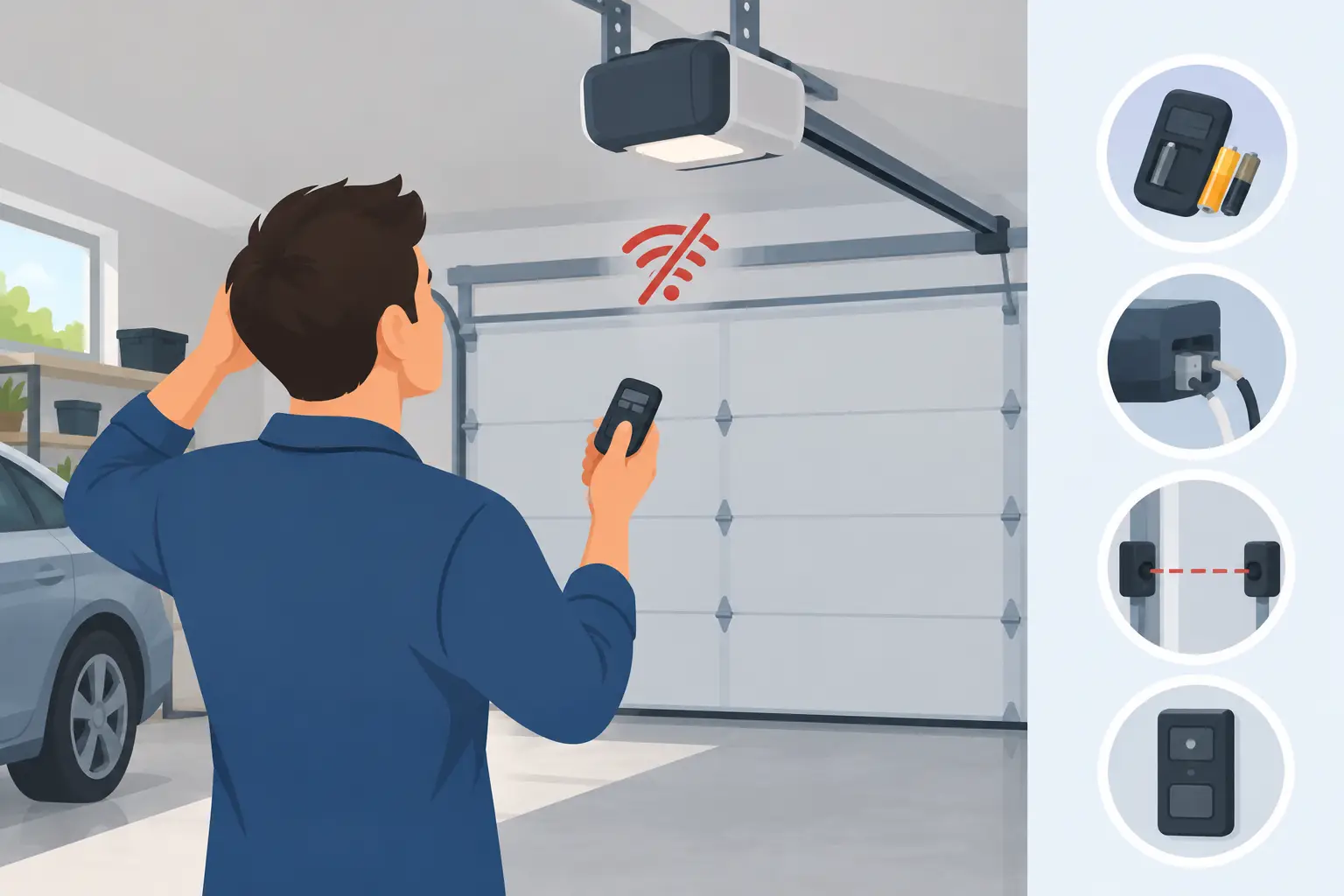
A garage door that will not open at 6:30 a.m. is more than an inconvenience. It can trap your vehicle, delay a work crew, leave a business entrance unsecured, or keep you from getting the kids where they need to go. When your garage door opener not responding problem shows up, the cause may be simple, but guessing can waste time and sometimes make a door problem worse.
Start with the safe, basic checks below. If the opener has power but the door still will not move, or if the door moves unevenly, stops suddenly, or makes loud grinding noises, it is time for a trained garage door technician. Springs, cables, tracks, and opener force settings work together. One failed part can put extra strain on the rest of the system.
Start With Power and the Opener Controls
Before assuming the opener has failed, check whether it is getting power. Look at the ceiling-mounted motor unit. Most openers have a small courtesy light or indicator light. If there are no lights at all, make sure the unit is plugged into its outlet and check the breaker panel or a tripped GFCI outlet nearby.
A loose plug, tripped breaker, or power outage can make an opener appear completely dead. In garages with older wiring, a shared outlet may also be affected by another appliance or a reset button on a nearby GFCI outlet.
Next, press the wired wall button. If the wall button works but the handheld remote does not, the opener itself is probably receiving power. That points to the remote, its battery, its programming, or radio interference rather than a failed motor.
If neither the wall control nor the remote works, do not repeatedly press the buttons. Constantly cycling a struggling opener can overheat the motor or damage internal gears. Check the power source first, then move on to the door and safety system.
Check the Remote Battery and Lock Setting
A weak remote battery is a common and inexpensive fix. Replace the battery with the correct type, then test the remote close to the opener. If it works only when you are standing inside the garage, the battery may have been the issue, but interference or a damaged antenna can also reduce range.
Many wall control panels include a vacation lock or lock mode. When that feature is on, the wall button may still operate the door while remotes do not. Look for a lock symbol or indicator light on the wall console and turn the setting off if it was activated.
A remote can also lose its programming after a power surge, battery issue, or accidental button press. Reprogramming is often straightforward, but the exact procedure depends on the opener brand and model. If programming does not hold or multiple remotes suddenly stop working, the problem may be in the opener’s receiver or circuit board.
When a Garage Door Opener Is Not Responding, Inspect the Safety Sensors
Modern openers use photo-eye safety sensors near the bottom of the door tracks. One sensor sends an invisible beam to the other. If that beam is blocked, misaligned, dirty, or damaged, the opener may refuse to close the door. In some cases, it will start down and immediately reverse.
Look for the small sensors on each side of the opening, usually a few inches above the floor. Remove leaves, snow, tools, cobwebs, or stored items that could block the beam. Wipe the lenses gently with a clean, dry cloth. Then check the indicator lights. A steady light on both sensors usually means they are aligned, though light patterns vary by manufacturer.
Cheyenne weather can create sensor trouble quickly. Wind-driven dust, blowing snow, moisture, and a vehicle bumping a sensor bracket can knock the eyes out of alignment. If one sensor light is blinking or off, carefully straighten the bracket until the indicator becomes steady. Do not bypass or tape over the sensors. They are a required safety feature that helps prevent the door from closing on a person, pet, or vehicle.
If the sensors appear aligned but the door still reverses, the opener may be detecting excessive resistance. That is not always an opener problem. A bent track, dry rollers, broken spring, or door that is out of balance can trigger the same response.
Make Sure the Door Is Still Connected to the Opener
The emergency release cord disconnects the door from the opener trolley. It is the red cord hanging from the rail above the door. Someone may have pulled it during a power outage or while trying to open the door manually.
With the door fully closed, pull the release cord toward the motor unit if needed, then run the opener to reconnect the trolley. The connection usually clicks back into place when the trolley engages. Do not attempt this with the door open if you suspect a broken spring or damaged cable. A heavy door can move suddenly when it is disconnected.
A disconnected trolley explains a specific symptom: you hear the motor running, but the door does not move. It does not explain a completely silent opener, which is more likely related to power, controls, or an internal electrical failure.
Do Not Ignore Signs of a Door Balance Problem
Your opener is designed to guide the garage door, not lift its full weight by itself. The springs do the heavy lifting. When a spring breaks or loses tension, the opener may hum, strain, move the door only a few inches, or refuse to operate at all.
Common signs include a loud bang from the garage, a visible gap in a torsion spring above the door, loose cables, a crooked door, or a door that feels extremely heavy. Extension springs along the sides of the door can also break, stretch, or come off their safety cables.
Do not try to replace springs, reset cables, or force the door open with the opener. These parts are under high tension and can cause serious injuries or additional damage when handled incorrectly. This is especially true for heavy insulated doors and commercial overhead doors, where the system carries much more weight.
If you are comfortable doing so, you can test balance only after the door is closed and the opener is disengaged. Lift the door manually a short distance. A properly balanced door should move smoothly and stay near the halfway point. If it slams down, races upward, binds, or is too heavy to lift safely, stop there and schedule service.
Listen to What the Opener Is Telling You
The sound and behavior of the opener help narrow down the repair. A humming motor with no door movement may indicate a stripped gear, disconnected trolley, or broken spring. Clicking with no movement can point to a bad capacitor, relay, or control board. Grinding or squealing can come from worn internal gears, a failing sprocket, damaged rollers, or a chain or belt issue.
Flashing lights are another useful clue. Many opener models flash the main light or display diagnostic codes when sensors are blocked, travel limits are wrong, or the motor has detected resistance. Check the label on the opener motor housing for the code chart. Avoid adjusting force and travel limit screws at random. Incorrect settings can make the door slam, reverse unpredictably, or continue pushing against an obstruction.
For property managers and business owners, a nonresponsive operator may also involve keypads, access controls, timers, or three-button commercial controls. These systems need diagnosis at the door, operator, and control wiring level. A quick fix that restores operation without finding the underlying issue can lead to another access problem at the worst possible time.
When to Call for Same-Day Garage Door Repair
Call for professional help right away if the door is stuck open, will not close securely, is off its tracks, has a broken spring or loose cable, or the opener is making unusual noises. You should also call if the opener has power but does not respond to either the wall control or remote after the basic checks.
Mike’s Garage Door LLC provides same-day garage door opener repair and overhead door service throughout Cheyenne and nearby communities. Stocked service trucks help technicians handle many common opener, spring, sensor, roller, and hardware repairs in one visit. You should receive a clear explanation of the problem and honest pricing before work begins.
Repair is often the practical choice when the issue is a sensor, gear, remote, capacitor, limit setting, or worn hardware. Replacement may make more sense if the opener is very old, the circuit board has failed, repairs are piling up, or you need better security and battery backup. The right answer depends on the condition of the door itself, how often it is used, and whether the existing opener is properly sized for the door.
Keep a Small Problem From Becoming a Stuck Door
A little maintenance reduces unexpected opener trouble. Keep the sensor area clear, replace remote batteries before they fail, and listen for new rattling or grinding sounds. A technician can inspect spring tension, rollers, cables, track alignment, safety reversal, and opener settings during a tune-up.
If the door starts hesitating, reversing, or requiring repeated button presses, address it before it quits completely. A garage door opener should be dependable and predictable. When it is not, a prompt, correct repair is the safest way to get your home or business moving again.