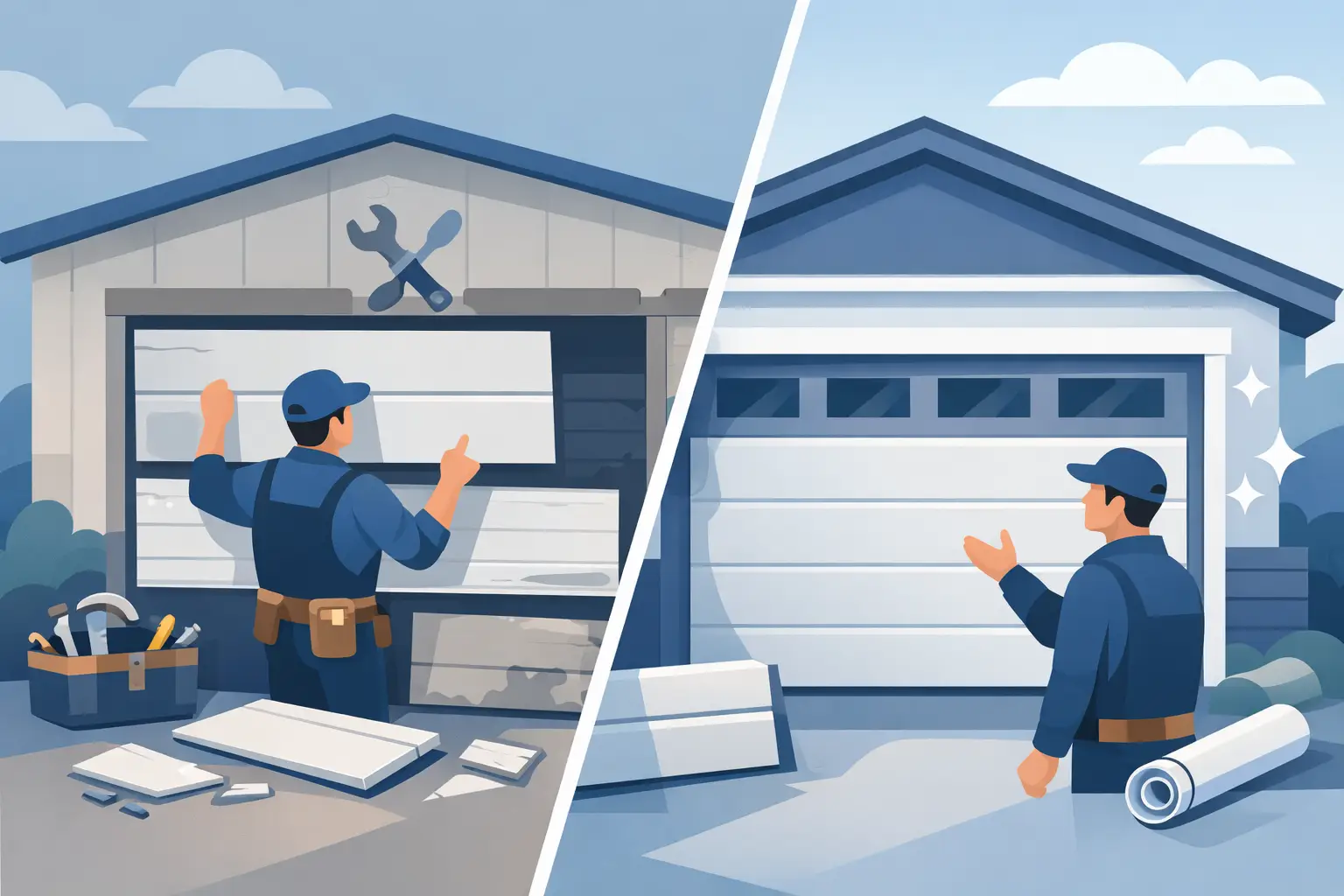
A dented, cracked, or bent garage door panel can make an otherwise well-kept property look neglected. More than that, damage can affect how the door moves, seals, and protects your garage. Garage door panel replacement is often a smart way to fix localized damage without paying for an entirely new door, but it is not the right answer in every situation.
For homeowners, property managers, and business owners around Cheyenne, the decision usually comes down to the door's age, the type of damage, part availability, and whether the rest of the system is still in good shape. A qualified technician can inspect the door, tracks, springs, rollers, and opener before recommending the most cost-effective fix.
When Garage Door Panel Replacement Makes Sense
Replacing one or more sections is a practical repair when the damage is limited and the door is otherwise operating properly. A vehicle backing into the lower section, a stray ball, wind damage, or rust in a small area can leave a panel looking rough while the rest of the door remains structurally sound.
Panel replacement is usually worth considering when the door is relatively new, the manufacturer still makes matching sections, and there are no signs of widespread wear. If the tracks are straight, the springs are properly sized, and the door opens and closes evenly, a replacement panel can restore the look and function of the door for far less than a full installation.
For commercial overhead doors, replacing a damaged section can also reduce downtime. A damaged panel may interfere with daily deliveries, vehicle access, or secure storage. Fast diagnosis matters when a door is part of business operations.
Common signs a panel can be replaced
A single panel replacement may be a good option if the damage is confined to one section, the hinges and rails near that section are not badly bent, and the remaining sections are free of major cracks, corrosion, or separation. The door should also be a current or identifiable model with replacement parts available.
Appearance matters, but operation matters more. A panel that is only cosmetically dented may not require immediate service. However, a panel that bows inward, catches on the track, pulls away from its hinges, or prevents the door from sealing should be inspected promptly.
When Replacing the Whole Garage Door Is the Better Value
A new door can be the smarter investment when panel damage is only one part of a larger problem. Older doors may have faded paint, discontinued designs, weakened sections, worn rollers, damaged weatherstripping, and outdated insulation. Installing one new panel on a heavily weathered door can make the repair obvious because the color and finish may not match.
A full replacement may also make sense after severe impact damage. When multiple panels are bent, the door is out of square, or the bottom section has pushed the tracks out of alignment, replacing individual sections may only address part of the issue. Continued repairs can add up quickly, especially if springs, cables, bearings, or an opener have also been strained.
Cheyenne weather is another factor. Repeated temperature changes, wind, snow, and moisture can expose weaknesses in aging steel and wood doors. If a door has poor insulation or no longer seals well, a new insulated door can improve comfort in an attached garage and help protect stored equipment.
What Affects Garage Door Panel Replacement Cost?
There is no one-price answer because every door is built differently. The panel itself may be affordable on a standard steel door, while a custom carriage-style, wood, aluminum, or insulated section can cost more and take longer to source. Labor depends on the panel location, door size, hardware condition, and whether the door needs to be realigned after the repair.
The lower panel often takes the most abuse from vehicles, water, and road salt. Replacing it can require attention to the bottom seal, brackets, cables, and reinforcement strut. Upper sections may be easier to access, but damage near the top can still affect the way the door follows the tracks.
Before approving work, ask for a clear estimate that separates the replacement section, necessary hardware, and labor. A good technician should explain whether the existing springs and opener are appropriate for the repaired door. Adding a heavier insulated panel, for example, can change the balance of the system.
Matching the Replacement Panel Matters
A replacement section needs to match more than the door's width and height. The panel design, raised or flush profile, window layout, insulation thickness, color, and hardware placement all matter. Even doors that look similar can use different joint designs or track configurations.
The best match comes from the original manufacturer and model information, often found on a label along the edge of the door, near the tracks, or on the back of a section. If that information is missing, a technician can measure the door and identify the profile. In some cases, an exact match is no longer available. That does not always mean the entire door must be replaced, but it may affect the final appearance and cost.
Painting can help blend a new steel panel with an older door. Still, paint cannot solve a mismatch in texture, window placement, or panel pattern. For front-facing garages where curb appeal is a priority, a full door replacement may provide a cleaner result.
Why This Is Not a Typical DIY Repair
It is tempting to treat a damaged panel like a basic home improvement project. Garage doors are heavy, and their springs and cables carry significant tension. Removing a section without controlling the door can cause it to fall, shift in the tracks, or damage nearby hardware.
The risks increase if the door is crooked, off track, or stuck halfway open. Never loosen bottom brackets, lift cables, or spring hardware to replace a panel. Those components can release force suddenly and cause serious injury.
A professional repair includes more than swapping out a section. The technician should check door balance, track alignment, roller movement, hinge condition, cable condition, safety sensors, and opener travel limits. This protects the new panel and helps prevent the same damage from turning into a larger repair later.
What to Do After a Panel Is Damaged
If the door still moves smoothly and the damage is minor, avoid running it repeatedly until it has been inspected. Watch for scraping sounds, gaps between sections, rubbing along the tracks, or a door that stops before fully closing. These are signs that the damage may be affecting alignment.
If the door is off track, hanging unevenly, has a broken cable, or will not close securely, stop using it. Do not force the opener or try to pull the door into place. If possible, keep people, vehicles, and pets away from the opening until service arrives.
Taking a few photos of the damage can help with an initial conversation, especially for property managers coordinating a repair at a rental or commercial site. A technician will still need to inspect the door in person to verify the right panel and identify hidden damage.
Questions Property Owners Often Ask
Can I replace just one garage door panel?
Yes, if a matching section is available and the rest of the door is in good condition. A technician should verify that the door remains square, balanced, and safe to operate before replacing only one panel.
Will a new panel match my old garage door?
It may match closely, especially on a newer door, but sun exposure and age can fade the existing finish. An exact structural match is more important for safe operation. Repainting may improve the appearance when color variation is noticeable.
Can I use my garage door with a dented panel?
A shallow cosmetic dent may not stop the door from working, but it should be monitored. Do not operate the door if it binds, makes loud noises, sits unevenly, or has come off track.
How long does panel replacement take?
Once the correct replacement section is available, many standard repairs can be completed in one service visit. Specialty panels or discontinued models may require ordering parts first.
A damaged panel does not automatically mean you need a new garage door, and it does not always mean a quick cosmetic fix is enough. Mike's Garage Door LLC can assess the condition of the complete system, provide an honest recommendation, and help you choose the repair that keeps your door safe, reliable, and looking right for your property.