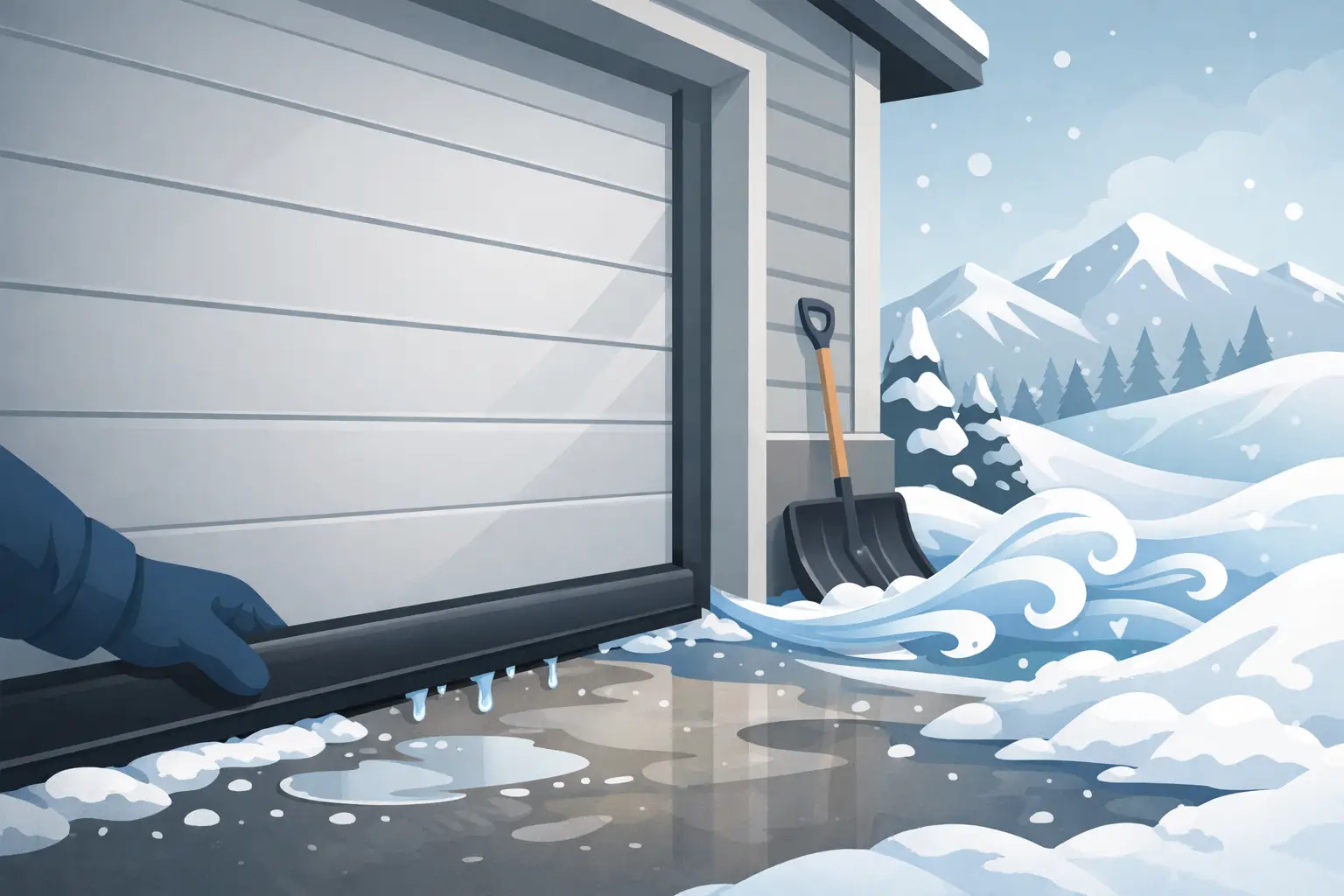
A garage door can look closed and still leave a surprising amount of space for cold air, windblown snow, dust, and pests to enter. In Cheyenne, garage door weather sealing is not a minor finishing detail. It protects the space most homes use as a buffer between Wyoming weather and the rest of the house.
If your garage feels noticeably colder than it should, you see daylight around the door, or snow and leaves collect just inside the threshold, the seals deserve attention. Replacing worn material can make the garage cleaner and more comfortable. It can also help protect stored items, nearby plumbing, and rooms above or beside the garage.
What Garage Door Weather Sealing Actually Does
Weather sealing closes the gaps around the moving edges of the garage door. A typical residential door uses a bottom seal where the door meets the floor, side seals along the vertical tracks or door jambs, and a top seal where the upper section meets the header. Some doors also need a threshold seal on the floor to improve the contact point at the bottom.
These parts are flexible by design. The door must open and close freely, so weatherstripping cannot be rigid or installed so tightly that it interferes with operation. That is why the right material, fit, and adjustment matter as much as simply adding more seal.
For commercial overhead doors, the same principle applies, but the materials and installation details may be different. A loading area, warehouse, shop, or storage building may need heavier-duty bottom astragals, brush seals, dock seals, or other products suited to frequent use and larger openings.
Why Cheyenne Weather Is Hard on Garage Door Seals
Cheyenne doors deal with more than cold temperatures. Strong wind can push dust, moisture, and snow through gaps that might seem small on a calm day. Sun exposure dries rubber and vinyl over time. Winter cold makes older seals stiff and less able to conform to uneven concrete. Temperature swings can also cause the door, framing, and floor to shift slightly, creating new gaps.
The bottom seal usually takes the most abuse. It is compressed against the concrete every time the door closes, dragged across debris, and exposed to moisture. If the garage floor has settled, cracked, or slopes unevenly, even a new bottom seal may not make full contact across the opening.
A poor seal is not always the fault of the weatherstrip itself. The garage door may be out of alignment, the tracks may have shifted, the bottom retainer may be bent, or the door may not be closing level. Adding a new seal without correcting the underlying issue can leave the gap in place.
Signs Your Weather Sealing Needs Replacement
A quick inspection on a bright day can reveal a lot. Stand inside with the garage door closed and look around the perimeter. Thin lines of daylight at the sides or top usually point to worn or flattened perimeter weatherstripping. Daylight under the bottom of the door can mean the bottom seal is damaged, the concrete is uneven, or the door needs adjustment.
Other common warning signs include:
- Cold drafts or blowing dust near the garage door
- Water, leaves, or snow entering during storms
- Brittle, cracked, torn, or flattened rubber material
- Rodent or insect activity near the edges of the door
- A bottom seal that folds, drags, or comes loose from its retainer
Do not assume every gap is cosmetic. A door that sits unevenly, reverses unexpectedly, rubs against the frame, or has visibly bent hardware needs professional attention. Garage door springs, cables, and tracks are under significant tension. Weather sealing work should never involve loosening spring hardware or making major track adjustments without the proper training and tools.
Bottom Seals, Side Seals, and Thresholds: What Is the Difference?
The bottom seal is the flexible rubber or vinyl piece attached to the lower edge of the door. It compresses against the floor when the door closes. Bottom seals come in several profiles, and the correct replacement depends on the type and size of the bottom retainer. Using the wrong profile may cause the seal to slide out, bunch up, or fail to close the gap.
Side and top seals are typically mounted to the wood or metal framing around the opening. They press lightly against the face of the closed door. When properly installed, they block wind and debris without creating excessive drag as the door moves.
A threshold seal is installed directly on the garage floor just inside or outside the door's closing path, depending on the product and door setup. It creates a raised contact surface for the bottom seal. It can be useful when the floor is uneven or when wind-driven rain reaches the door, but it is not right for every garage. A threshold can create a small bump at the entrance and needs careful placement so the door closes correctly and vehicles can pass over it comfortably.
When a Simple Seal Replacement Is Enough
Replacing weatherstripping is often straightforward when the door is operating smoothly, sitting level, and showing only normal age-related wear. This is common when the bottom seal has become hard and cracked or when side seals have flattened after years of sun and wind exposure.
A homeowner can handle some basic seal replacement projects, especially on a small, standard residential door with accessible hardware. The trade-off is that materials need to match the door, cuts must be accurate, and the final fit needs to be checked through multiple open-and-close cycles. Installing a seal too long can make it bunch. Cutting it short leaves the gap you were trying to solve.
It also helps to clean the bottom retainer and garage floor before installing new material. Gravel, old adhesive, and packed dirt can prevent a clean fit. Avoid using petroleum-based products on rubber seals unless the product instructions specifically allow them. Some chemicals can cause swelling or premature breakdown.
When Weather Sealing Points to a Bigger Door Problem
Call for service when new seals will not stay in place, the door does not meet the floor evenly, or gaps remain despite correctly sized weatherstripping. These are often signs of an adjustment, hardware, or structural issue rather than a sealing issue alone.
An off-track door, worn rollers, loose hinges, damaged bottom brackets, or bent tracks can affect how the door sits in the opening. A failing spring or cable problem can also make a door hang unevenly. These are not DIY repairs. The bottom brackets are connected to the lift cables and carry spring tension, so they should not be removed just to replace a bottom seal.
Property managers and commercial operators should pay attention to recurring seal damage. If a busy overhead door repeatedly tears bottom seals, catches on the floor, or allows water into the building, the cause may be vehicle traffic, concrete wear, a damaged door section, or an operational alignment problem. Fixing the source prevents repeated material costs and downtime.
A Practical Seasonal Inspection Routine
Inspect garage door weather sealing at least twice a year, ideally before winter and again after the spring thaw. Open the door and examine the bottom seal for splits, flattening, missing sections, and loose fasteners. With the door closed, check that side and top seals make light, even contact with the door.
Then test the door itself. It should move smoothly without scraping, shaking, or slamming. Listen for unusual noise and watch for a gap that appears on one side before the other. Keep the floor edge clear of ice, gravel, and buildup, since debris can damage the bottom seal and stop the door from closing fully.
For insulated garage doors, weather sealing works best alongside a properly maintained door. Insulation slows heat transfer through the door panels, while seals limit air movement around the edges. One does not replace the other. If the garage is attached to the home, both can make a noticeable difference in comfort near adjoining rooms.
Get the Fit Right Before the Next Storm
A worn seal can be an inexpensive fix, but only when the garage door is closing squarely and operating safely. If you are seeing daylight, water intrusion, or a door that is no longer sitting level, a technician can identify whether the answer is new weatherstripping, a threshold, an adjustment, or a repair.
Mike's Garage Door LLC provides practical garage door service for homeowners, property managers, and commercial properties throughout the Cheyenne area. A properly sealed door will not change Wyoming weather, but it can keep much more of that weather where it belongs: outside the garage.