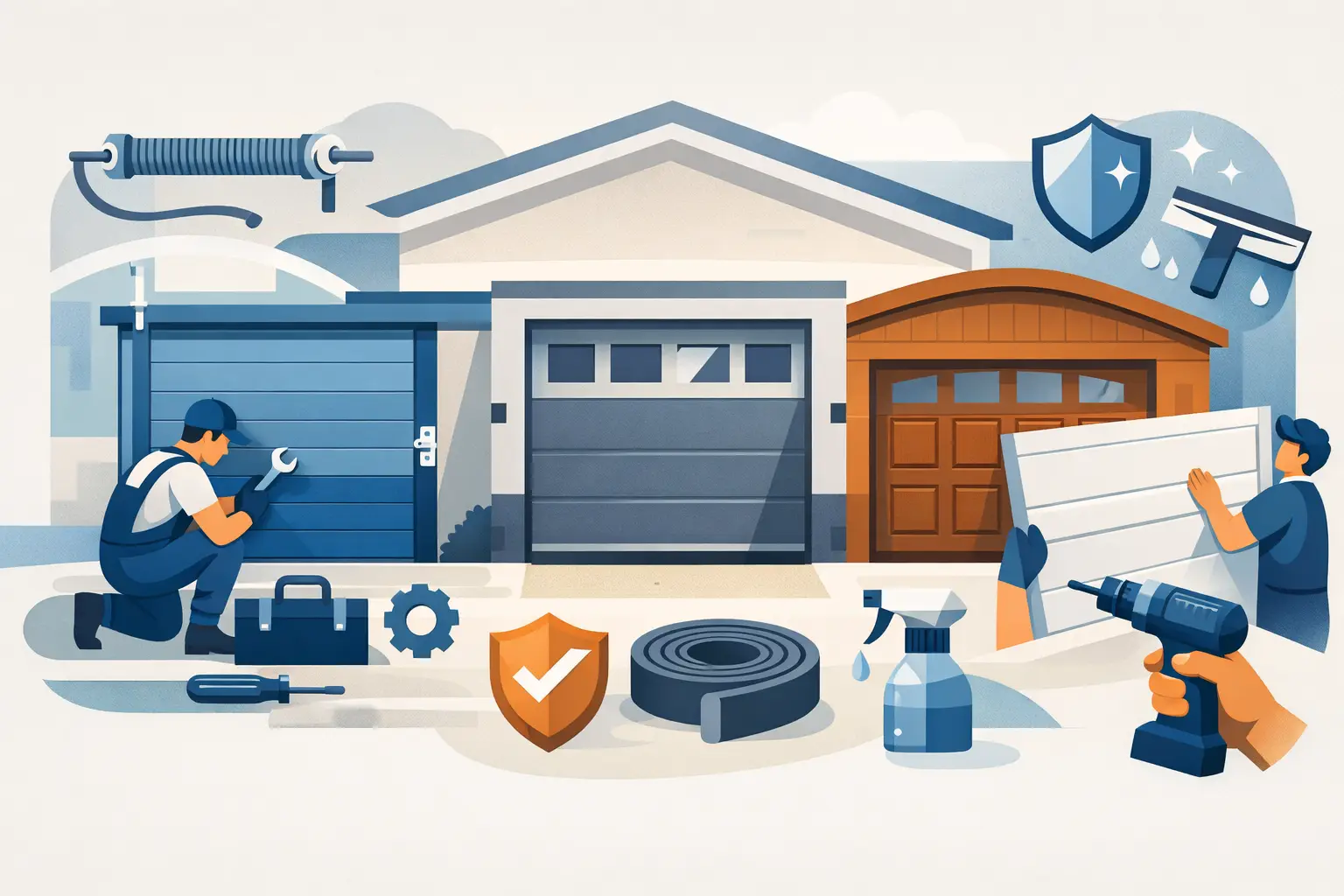
A garage door that will not open is more than an inconvenience. It can trap your vehicle before work, leave your home exposed, or stop a business from receiving inventory. In Cheyenne and surrounding communities, garage doors also take a beating from wind, cold temperatures, road dust, and daily use. Knowing what a problem means - and when it needs professional attention - can save time, prevent further damage, and keep your property secure.
Garage Doors Have More Moving Parts Than Most People Think
A typical overhead door works as a complete system. The door panels, rollers, tracks, cables, springs, brackets, hinges, and opener all need to work together. When one part begins to fail, the rest of the system can be put under added strain.
For example, a weak spring can make an opener work much harder than it should. A bent track can cause rollers to bind, leaving the door crooked or off track. A photo-eye sensor that is out of alignment may prevent an otherwise healthy door from closing. The symptom may look simple, but the source of the trouble is not always obvious.
That is why a quick diagnosis matters. Replacing the wrong part or forcing a door that is stuck can turn a manageable repair into damaged panels, a burned-out opener, or a safety hazard.
Signs Your Garage Door Needs Service Now
Some issues can wait for a scheduled appointment. Others call for same-day service, especially if the door cannot close securely or has become unsafe to operate.
A loud bang from inside the garage, followed by a door that will not lift, often points to a broken torsion or extension spring. Springs carry a large amount of stored tension and should never be replaced without the right tools and training. If the door feels unusually heavy, stop using the opener and avoid trying to lift it yourself.
A door that hangs at an angle, has come out of its track, or has loose cables also needs prompt attention. Do not keep pressing the opener button in hopes that it will correct itself. Continued operation can bend tracks, damage rollers, and put stress on the door sections.
Other warning signs are less dramatic but still worth addressing early. Watch for grinding, squealing, shaking, slow movement, a door that reverses before closing, or an opener that runs while the door barely moves. These problems may come from worn rollers, loose hardware, failing springs, sensor issues, or an opener nearing the end of its service life.
For a commercial property, a nonworking overhead door can interfere with deliveries, vehicle access, employee safety, and security. Fast service is especially valuable when a service bay, storage area, warehouse entrance, or loading space cannot be used as intended.
Repair or Replace? The Right Answer Depends on the Door
Not every garage door problem requires a new door. Many common issues - broken springs, worn rollers, damaged cables, misaligned sensors, remote problems, and opener repairs - can be fixed without replacing the entire system.
Repair is usually the practical choice when the door sections are in good shape, the issue is limited to a working component, and the door has not had repeated major failures. A professional tune-up can also extend the life of a functioning door by tightening hardware, checking balance, lubricating moving parts, and catching wear before it causes a breakdown.
Replacement becomes more reasonable when panels are badly dented, cracked, warped, rusted, or damaged beyond a clean repair. It can also make sense when an older door has poor insulation, unreliable hardware, or a style that no longer fits the property. For homeowners, a new door can improve curb appeal and help reduce temperature swings in an attached garage. For business owners, the priority may be durability, dependable daily operation, insulation, or the right clearance for equipment and vehicles.
The opener deserves its own evaluation. A new garage door does not always require a new opener, and a failed opener does not always mean the door itself needs replacement. However, if the opener is older, noisy, lacks modern safety features, or struggles with the weight of the door, replacing it at the same time can be a sensible long-term decision.
What Affects Garage Door Repair Costs?
Fair pricing starts with identifying the actual problem. The cost of a repair depends on the type of door, the damaged component, door size and weight, labor involved, and whether the service is routine or urgent.
Spring replacement, cable repair, roller replacement, track work, and opener repair all involve different parts and levels of labor. A simple sensor adjustment is not priced like an off-track door or a failed torsion spring. Commercial doors may also require specialized hardware, heavier-duty components, or additional safety considerations.
Be cautious about choosing service based only on the lowest advertised price. A repair that skips a balance check, uses undersized parts, or fails to address the underlying cause may not hold up. Clear recommendations and transparent pricing give you the information needed to decide whether repair or replacement is the better value.
At Mike's Garage Door LLC, the goal is straightforward: inspect the system, explain what is wrong, provide an honest estimate, and complete the needed work with properly stocked service trucks whenever possible. That approach matters when your car is stuck inside, your building is unsecured, or a business door needs to be back in operation quickly.
Choosing a New Garage Door for Wyoming Conditions
A new garage door should match how you use the space, not just how it looks from the street. Steel doors are a popular choice because they are durable, available in many styles, and generally easy to maintain. Insulated models can be especially worthwhile for attached garages, workshops, or spaces that see wide temperature changes through the year.
Insulation is measured by R-value, but the highest number is not automatically the best choice for every property. A detached garage used mainly for parking may not need the same insulation level as a heated workspace or garage beneath a bedroom. The construction of the door, weather sealing, and installation quality all affect real-world performance.
Style still matters. Traditional raised-panel doors, carriage-house designs, modern flush panels, windows, and color options can change the appearance of a home significantly. For commercial buildings, sectional overhead doors, rolling doors, and other configurations should be selected based on opening size, usage frequency, security needs, and operating conditions.
A properly sized and installed door is just as important as the model you choose. Even a quality door can perform poorly if tracks are not aligned, springs are not calibrated to the door weight, or weather seals are not fitted correctly.
Simple Maintenance That Prevents Bigger Problems
Homeowners can do a few safe checks throughout the year. Look at the door from inside and outside for loose hinges, worn weather stripping, frayed cables, damaged rollers, or dents that affect movement. Keep the photo-eye sensors clean and make sure nothing blocks their path near the floor.
You can also listen while the door runs. New rattling, scraping, popping, or grinding noises are a reason to schedule service before the system fails completely. Test the opener's reversing function according to the manufacturer's instructions, and replace remote batteries when operation becomes inconsistent.
Do not lubricate everything with whatever spray is on the shelf. The wrong product can attract dust or interfere with parts that should not be heavily lubricated. More importantly, do not adjust spring tension, remove cables, or loosen bottom brackets. Those jobs involve high tension and can cause serious injury.
Professional maintenance is a good fit for doors that see frequent use, older systems, rental properties, and commercial facilities. A service visit can include a balance test, hardware inspection, roller and track review, opener safety check, and adjustment of components that homeowners should not handle.
When Speed Matters, Secure the Property First
If your door is stuck open, off track, or has a broken spring, keep people clear of the opening and do not attempt to force it shut or open. If the door can be safely left closed, avoid using it until it has been inspected. For a door that cannot secure a home or business, prompt professional service can protect access, vehicles, equipment, and the property itself.
A garage door should open smoothly, close securely, and operate without making you wonder whether it will work tomorrow morning. When it starts sending warning signs, addressing them early is usually the fastest, safest path back to a door you can rely on.