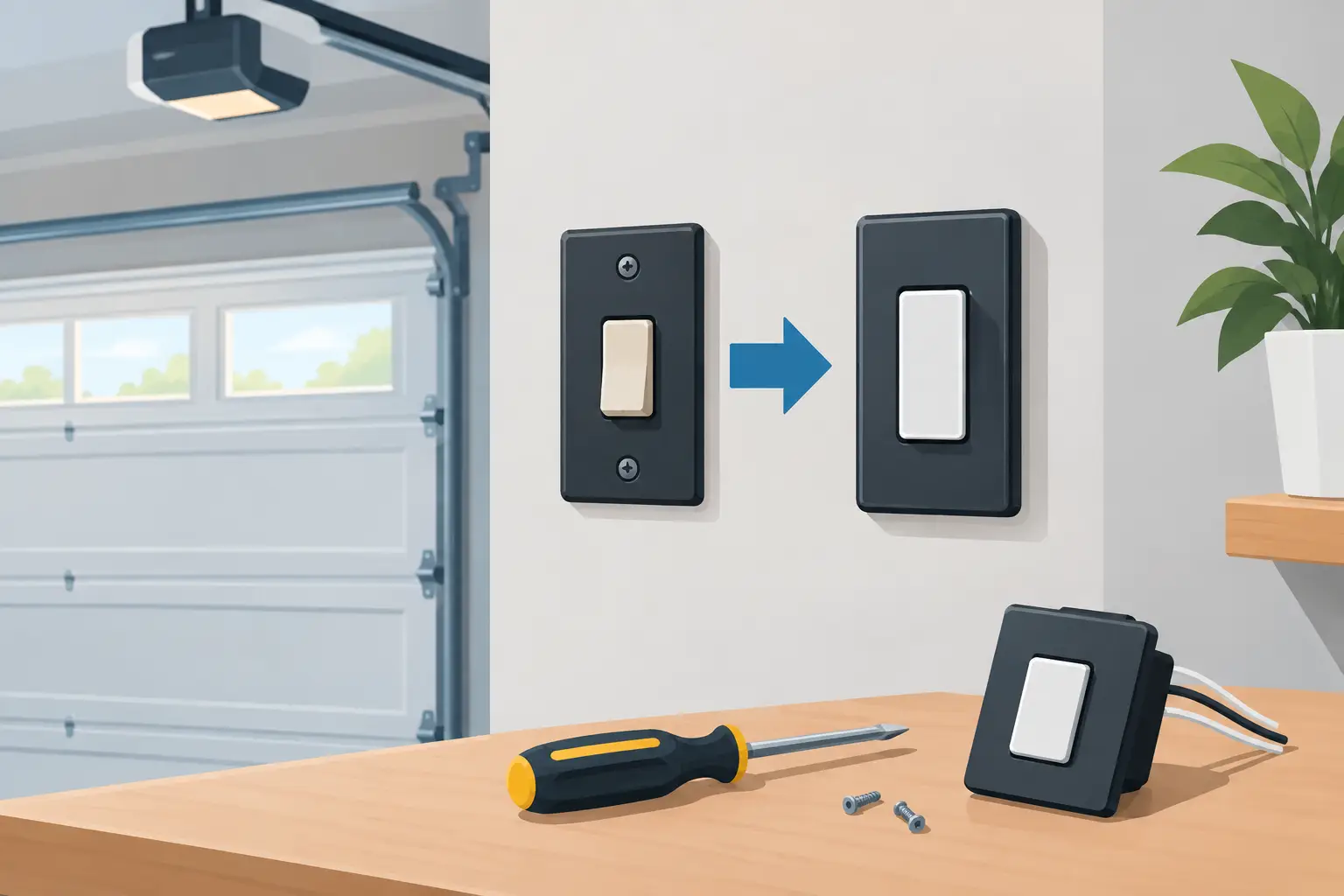
A garage door that works from the car but ignores the wall control creates a frustrating start to the day. Before assuming the entire opener has failed, a garage opener wall button replacement may be the straightforward fix. The right diagnosis matters, though. A failed button, damaged low-voltage wire, locked control panel, or opener problem can cause nearly identical symptoms.
For homeowners, property managers, and business operators around Cheyenne, a working wall control is more than a convenience. It is the primary indoor control for a door that may protect vehicles, tools, inventory, or access to a building. Here is how to identify the problem, understand your replacement options, and know when it is time to bring in a technician.
When a Garage Opener Wall Button Replacement Makes Sense
A standard wall button or wall console sends a low-voltage signal to the garage door opener. When you press it, the opener should start the door moving. Depending on the system, the button may be a basic single push button, a wired multi-function control with a light button and lock feature, or a smart control panel with a display.
Replacement is often the answer when the button is physically cracked, loose, missing, or only works when pressed at a certain angle. A control with no response, even though the opener has power and the remote works normally, is another common sign. On older doors, worn contacts inside a basic push button can simply stop completing the circuit.
Still, do not replace a wall control based on one symptom alone. If neither the remote nor the wall button works, the issue may be a tripped breaker, unplugged opener, failed outlet, motor problem, or door safety condition. If the door starts down and reverses, or refuses to close while the wall button works only when held down, the photo-eye sensors are more likely the problem.
Start With These Safe Checks
A few basic checks can prevent an unnecessary service call or the purchase of the wrong part. Start at the opener unit itself. Verify that it is plugged in, then check whether its outlet has power. Garages often share a GFCI circuit with an exterior outlet, bathroom, or utility area, so a tripped GFCI can shut down the opener without warning.
Next, look at the wall console. Some multi-function controls have a lock or vacation feature that disables remote transmitters. If the wall control operates the door but the vehicle remotes do not, make sure that feature has not been switched on by accident.
Inspect the thin control wire running from the wall button to the opener. It is low-voltage wiring, but it can be damaged by staples, pets, renovations, moisture, or a hard tug on the control. Look for loose connections at both ends, exposed copper, pinched wire, or corrosion. Do not assume a wire is good just because it looks intact. A break behind a wall or under an insulation staple can interrupt the signal.
If you are comfortable with a simple test, disconnect the two wall-control wires from the opener terminals and briefly touch them together. If the door runs, the opener is receiving the command and the issue is likely the wall button or its wire. If it does not run, stop there. The problem could be the wiring run, terminal connection, or opener electronics.
Never work around the door springs, cables, or open opener housing while troubleshooting a wall control. Those parts are not related to a typical button replacement and can cause serious injury when handled incorrectly.
Choosing the Right Wall Button or Control Panel
Compatibility is the part that catches many do-it-yourself repairs. A basic wired push button can work with many older openers, but a modern branded wall console may communicate with the opener using a specific signal system. It can include features such as light control, a lock setting, timer-to-close functions, or diagnostic displays. A universal button is not always a full replacement for a manufacturer-specific console.
Before buying a part, locate the opener’s brand and model number. The label is usually on the motor housing, rail, or side of the unit. Also note how many wires connect to the existing control. Most simple buttons use two wires. More advanced consoles may use a proprietary connection or require a matching model.
A basic replacement can be a practical choice when all you need is dependable open-and-close operation. A matching control panel is usually the better choice when you want to retain the original features. For commercial overhead doors, the correct control station matters even more. A three-button open-stop-close station, key switch, or other commercial control must be selected and installed for the specific operator and use case.
Cheyenne’s temperature swings are another reason to avoid questionable bargain parts. A quality control and secure wiring connection are less likely to develop intermittent problems after repeated cold-weather use.
How Wall Button Replacement Is Usually Done
For a standard residential wired button, the work is generally simple, but careful labeling prevents mistakes. Disconnect power to the opener before removing the old control. Take a photo of the wiring and terminal positions, then remove the button from the wall. Transfer the wires to the corresponding terminals on the new button, mount it securely, restore power, and test the door several times.
The replacement should sit at a usable height, away from the door’s path and out of reach of small children. Do not rely on twisted wires covered with tape as a permanent repair. Loose or poorly terminated wire can create intermittent operation that appears to be an opener failure.
After installation, test more than one function. Confirm that the door opens fully, closes fully, reverses correctly when the safety system is triggered, and that the light and lock features work if the console includes them. If the door behaves unpredictably after the new control is installed, disconnect it and have the system checked rather than continuing to experiment.
What Garage Opener Wall Button Replacement Can Cost
The cost depends on the control type and the actual source of the failure. A basic push button is typically the least expensive option. A manufacturer-specific multi-function wall console costs more, particularly for newer opener systems or smart-enabled controls. Wiring repair adds labor because technicians may need to trace, replace, or reroute a damaged low-voltage line.
The bigger cost question is whether the button is truly the failed component. If the opener’s logic board, receiver, transformer, or motor is failing, replacing the wall control will not solve the problem. A proper diagnosis upfront is usually less expensive than buying several parts and still ending up with a door that will not operate.
For rental properties and commercial sites, consider the cost of downtime as well. A door that cannot be opened from inside can delay tenants, employees, deliveries, and daily operations. Same-day diagnosis can be the sensible option when access is affected.
When to Call for Opener Service Instead
Call a garage door professional when the wall button is not the clear issue, the wiring is concealed or damaged, or the replacement control will not communicate with the opener. Service is also the right call if the opener hums but the door does not move, the door is off track, the remote and wall button both fail, or the door feels unusually heavy when operated manually.
A heavy or stuck door can point to a broken spring, damaged cable, or track problem. The opener may be reacting normally by refusing to lift a door it cannot safely move. Replacing controls in that situation does nothing for the underlying repair and can put additional strain on the operator.
Mike's Garage Door LLC can diagnose the wall control, wiring, opener, and door system together, so the repair matches the actual problem. For customers in Cheyenne and nearby communities, that means a clearer answer, upfront pricing, and a working door instead of a trial-and-error replacement.
A wall button is a small part, but it has a big job every time you leave or come home. If a quick power and wiring check does not reveal an obvious fix, have the system tested before a minor control issue turns into a day without reliable garage access.