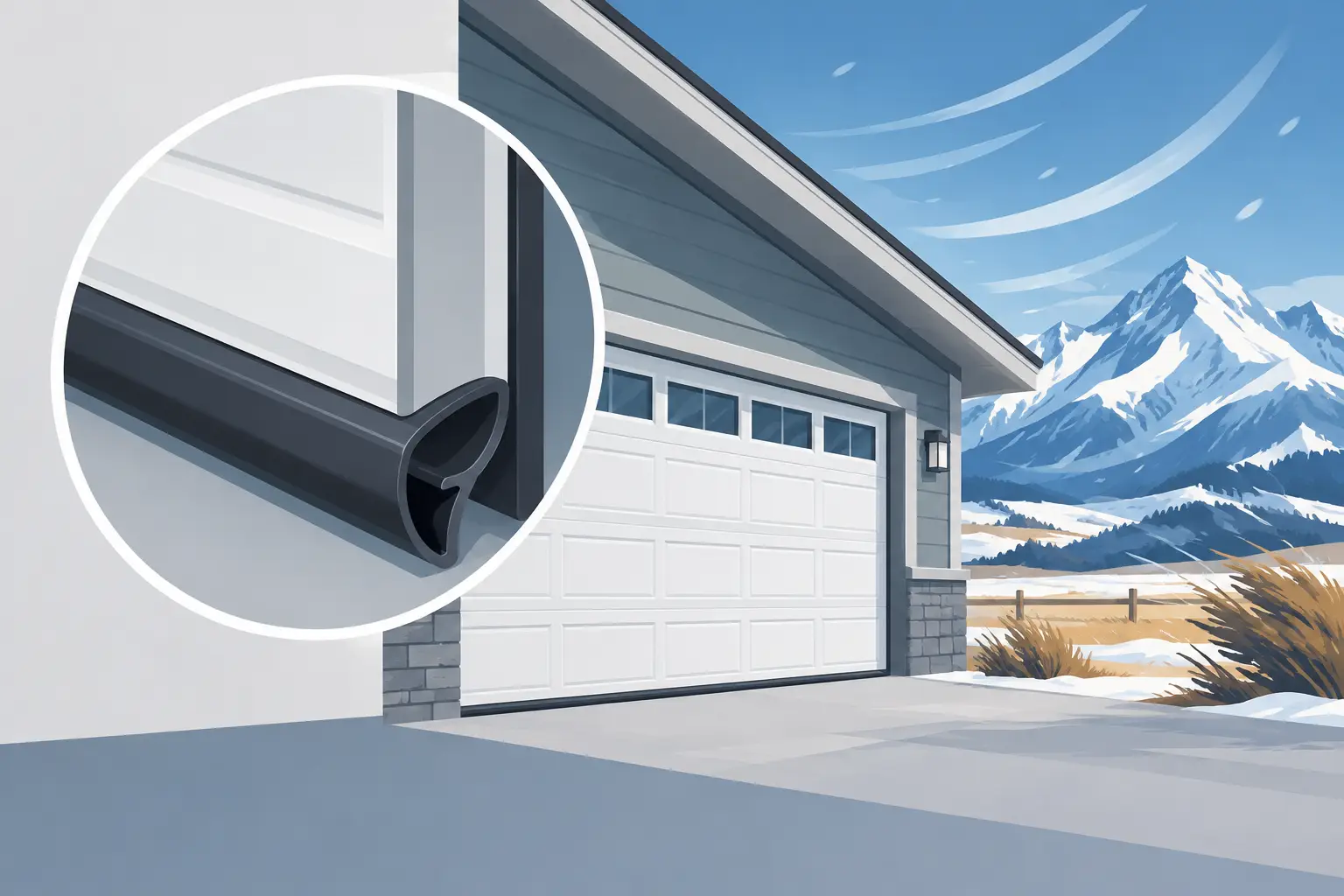
A thin strip of rubber can make a major difference when Cheyenne wind is pushing dust, snow, and cold air under your garage door. Garage weatherstripping is not a cosmetic add-on. It is the seal system that closes the gaps around the door, helps protect what is inside, and keeps harsh weather from working its way into your garage.
If your garage feels drafty, you see daylight around the door, or snow blows in during a storm, the weatherstripping deserves a close look. Replacing worn seals is usually a straightforward maintenance job. But the right seal, a properly adjusted door, and a solid installation matter if you want it to last through Wyoming weather.
What garage weatherstripping actually does
Garage doors are built to move, which means they need small clearances around the sides, top, and bottom. Weatherstripping fills those clearances when the door is closed. A good seal keeps out wind-driven rain, loose snow, dust, leaves, insects, and small rodents looking for shelter.
It also helps control temperature swings. Weatherstripping will not turn an uninsulated garage into a heated living space, but it can reduce the steady flow of cold air that makes an attached garage uncomfortable and puts extra strain on rooms next to it. For property managers and commercial operators, better perimeter sealing can also help keep loading areas cleaner and reduce moisture entering the building.
The key is setting realistic expectations. A new bottom seal will not fix a door with a bent track, damaged panels, a broken spring, or an opener that stops before the door fully closes. It seals an otherwise properly operating door. When the door itself is out of alignment, a technician should correct that problem first.
The three areas that need sealing
Most residential garage doors use weatherstripping in three locations: along the bottom edge, down both sides of the opening, and across the top. Each area does a different job.
Bottom seals stop drafts at the floor
The bottom seal, sometimes called an astragal, attaches to the lower edge of the door. It compresses against the concrete when the door closes. This is often the first seal to wear because it deals with moisture, grit, ice, and daily movement.
A bottom seal may be a simple bulb shape, a U-shaped seal, or a wider vinyl seal that slides into an aluminum retainer. The correct replacement depends on the retainer attached to your door and the size of the gap at the floor. Buying a generic seal without checking the track style is a common reason a new seal does not fit or pulls loose.
An uneven concrete floor adds another complication. A larger bottom seal can sometimes bridge a minor low spot, but it cannot compensate for a substantial slope or a door that sits crooked in the opening. Oversizing the seal can make the door bind, wear out faster, or interfere with a safety reversal system.
Side and top weatherstripping seals the perimeter
Vinyl stop molding is commonly installed on the exterior jambs at each side of the opening and across the header. Its flexible flap rests against the face of the closed garage door. This is the material that prevents daylight and wind from coming through the perimeter gaps.
In cold, windy areas, flexible vinyl that remains pliable is usually a better choice than brittle, low-grade material. It must sit firmly against the door without being pressed so tightly that it drags or catches as the door moves. The top seal is especially important when wind-driven snow finds its way into the upper corners.
Threshold seals have a limited but useful role
A garage door threshold is a raised rubber strip adhered to the floor just inside the door opening. It works with the bottom seal to manage small gaps, light water flow, and windblown debris. It can be helpful when the floor is slightly uneven or water tends to move toward the garage.
It is not right for every door. Thresholds can collect dirt, create a small bump for vehicles and equipment, and become a trip concern in busy commercial spaces. They should also never be used as a workaround for a door that fails to close correctly.
Signs it is time to replace garage weatherstripping
Do not wait for a major storm to find out that a seal has failed. A quick visual inspection a few times a year can catch trouble early. Look for cracked, flattened, torn, stiff, or missing rubber. On side and top trim, check whether the vinyl flap has curled away from the door or pulled loose from the wood or metal jamb.
Daylight is one of the clearest signs. Stand inside the garage with the door closed during the day and inspect the bottom corners, side edges, and header. A little light does not always mean the door is damaged, but a visible gap is an open invitation for wind and debris.
Pay attention to what is on the floor near the opening. Repeated lines of dust, leaves, snow, or water point to a sealing issue. If you notice rodents or insects getting in, inspect the lower corners carefully. Those are common weak points when the bottom seal has compressed or the door does not sit level.
A seal that makes a scraping sound or folds under the door may be worn, but it can also signal an adjustment issue. Garage doors are heavy, spring-loaded systems. If the door is moving unevenly, stopping short, or closing harder on one side, the weatherstripping is not the only thing that needs attention.
Choosing the right material for Cheyenne conditions
Rubber and vinyl are both common choices, and the best option depends on the location and type of door. Flexible rubber generally handles repeated compression well and can remain more pliable in colder temperatures. Vinyl perimeter trim is practical and widely used for side and top seals, provided it is installed square and secured properly.
For residential doors, a quality bottom seal matched to the existing retainer is usually the priority. For detached garages that see a lot of wind and dust, adding or replacing side and top perimeter seals can make a noticeable difference. Attached garages benefit from all three areas because every draft entering the garage can affect the rooms nearby.
Commercial overhead doors need a more tailored approach. A warehouse bay, shop door, or agricultural building may need heavier-duty bottom astragals, brush seals, dock seals, or other components designed for frequent operation and larger openings. The material has to match the door cycle count, the floor condition, and the equipment moving through the opening.
Price matters, but the cheapest seal is rarely the best value in a high-wind climate. Thin material can crack, flatten, or tear sooner, leading to another replacement before long. Paying for the correct profile and a clean installation generally saves more than repeatedly patching a poor-fitting seal.
When weatherstripping is a DIY job and when to call for service
Replacing a simple perimeter seal can be manageable for a homeowner with basic tools, especially when the garage door is operating smoothly and the jambs are in good condition. Measure the opening carefully, remove old fasteners, and install the trim so the flexible edge just contacts the closed door. Check the door through several open-and-close cycles before trimming material to final length.
Bottom seals can be more difficult than they look. The door may need to be open and secured, the old seal can be stuck in the retainer, and the new material has to slide through without tearing. Never loosen bottom brackets, cables, or any hardware connected to the springs. Those parts are under serious tension and are not a safe DIY repair area.
Call for professional service when the gap changes from one side to the other, the door is off track, the floor is badly uneven, or the door will not close fully. Those conditions often point to a mechanical issue that should be repaired before new weatherstripping is installed. Mike's Garage Door LLC can inspect the door, explain what is causing the gap, and handle both the seal replacement and any needed adjustment with clear pricing.
Keep the new seals working longer
Weatherstripping lasts longer when the door and opening are kept clean. Sweep away gravel, ice-melt residue, leaves, and packed snow from the threshold area so the bottom seal is not grinding against debris every time the door moves. Avoid petroleum-based cleaners on rubber or vinyl, which can make some materials deteriorate faster.
During routine garage door maintenance, inspect the seals along with the rollers, hinges, tracks, and opener safety features. A small adjustment made early can prevent a seal from wearing unevenly. If the bottom edge starts leaving a gap after a hard freeze or a season of heavy use, address it before the next storm sends cold air and moisture across your garage floor.
A garage door should close securely, sit evenly, and keep the weather where it belongs. If yours is letting in Wyoming wind or snow, a properly fitted seal is a practical fix that protects the space every day.