A garage door that rattles, squeaks, or groans every time it opens is not just annoying. It can be a sign that moving parts are dry and working harder than they should. Knowing how to lubricate garage rollers correctly can quiet the door, reduce wear, and help it move more smoothly. The key is using the right product in the right place - and knowing when noise points to a repair issue instead of a simple maintenance need.
What Garage Door Rollers Actually Need
Garage door rollers guide the door up and down inside the vertical and curved tracks. Most residential doors have rollers with either nylon or steel wheels. Some include sealed bearings, while others have exposed bearings that need occasional lubrication.
The roller wheel itself is not always the part that needs attention. What usually needs lubricant is the small bearing area at the center of the roller shaft. When those bearings dry out, the roller can drag, squeak, and make the opener work harder.
A little routine maintenance can make a noticeable difference, especially in Cheyenne, where cold temperatures and dry conditions can leave moving garage door components stiff or noisy. But lubrication will not fix a bent track, a worn roller, a broken spring, or a door that is off track. Those problems need professional service.
Choose the Right Garage Door Lubricant
Use a garage door lubricant, silicone-based spray, or white lithium grease designed for moving metal components. These products stay in place better than general-purpose household sprays and are less likely to collect dust and grime.
For most rollers, a silicone garage door spray is a good choice because it lubricates without leaving a heavy, sticky coating. White lithium grease can also work well on metal roller bearings and hinges, but use it sparingly. Too much grease attracts dirt, particularly around an active garage door system.
Avoid using motor oil, cooking oil, or thick multipurpose grease. They can drip, gum up, and create a dirty buildup. Standard WD-40 is mainly a water displacer and cleaner, not a long-term lubricant. It may temporarily quiet a squeak, but it will not provide the lasting protection your rollers need.
You will also want a clean rag, safety glasses, gloves, and a step stool or ladder if you need access to rollers higher on the door. Keep the work area clear so you have room to move safely.
How to Lubricate Garage Rollers Safely
Start with the garage door closed. This keeps the rollers in a stable position and reduces the risk of putting your hands near moving parts. Unplug the automatic opener or turn off its power at the outlet before beginning. If someone presses the remote while you are working, the door could move unexpectedly.
Do not attempt to remove bottom rollers yourself. The bottom roller brackets are connected to the garage door cables, which are under significant tension from the spring system. Removing or loosening those brackets can cause serious injury and damage. A trained garage door technician should handle bottom roller replacement or cable-related work.
For the rollers you can safely reach, wipe away visible dust, cobwebs, and old residue around the roller stem and bearing area. You do not need to make every component spotless. The goal is to remove enough buildup so the new lubricant can reach the moving parts.
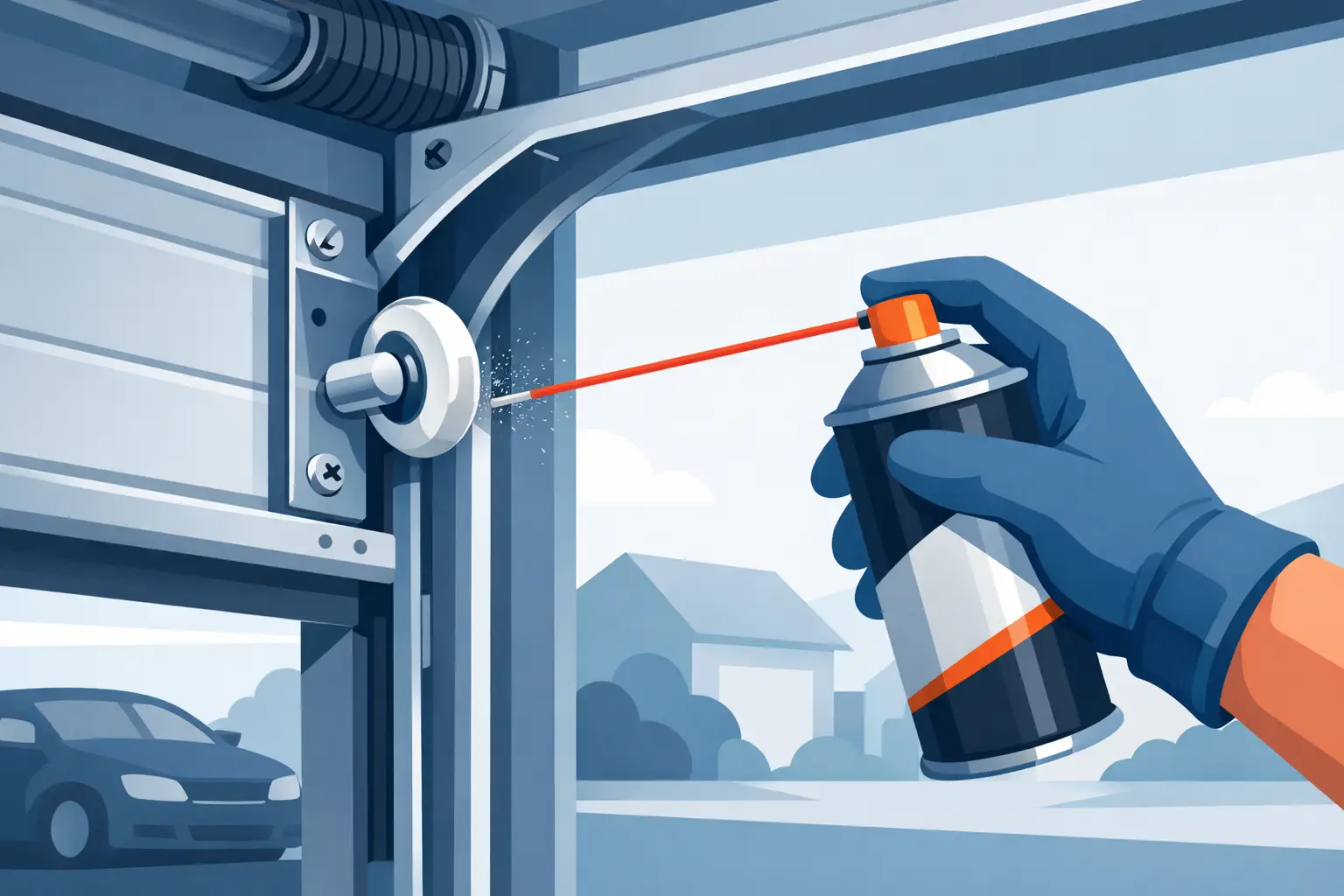
Hold the spray straw close to the center of the roller, where the wheel meets the shaft. Apply a short, controlled burst to the bearing area. One or two quick sprays per roller are usually enough. If you are using white lithium grease, apply only a small amount to the bearing area rather than coating the entire wheel.
After lubricating the accessible rollers, reconnect power and run the door through two or three full open-and-close cycles. This helps distribute the lubricant. Listen carefully. The door should sound smoother, but it may not become completely silent. Some normal operating noise is expected from any garage door.
Wipe off excess lubricant that drips onto the door, floor, or track. Overspray can create a mess and may make nearby surfaces slippery.
Do Not Lubricate the Tracks
This is one of the most common garage door maintenance mistakes. The rollers are supposed to roll inside the tracks, not slide through a layer of grease. Lubricating the tracks can cause dust, road grit, and debris to stick to them. Over time, that buildup can interfere with roller movement.
Instead, wipe the tracks clean with a dry or lightly damp rag. If you see a dented, loose, heavily rusted, or misaligned track, do not try to bend it back with a hammer. Tracks must be positioned correctly for the door to operate safely.
Lubricate More Than Just the Rollers
Rollers are only one part of the system. If the door still makes noise after roller lubrication, other dry components may be the cause. You can lightly lubricate the hinges where each door section pivots, the metal spring coils, and the bearing plates at the ends of the torsion spring shaft.
Use a garage door lubricant on the hinges, applying a small amount at the pivot points. For torsion springs, a light coating helps reduce friction between the coils as the door moves. Keep hands away from springs and cables, and never adjust a spring yourself. Springs are tightly wound and can cause severe injury if handled incorrectly.
The opener chain or screw drive may also need a specific lubricant, depending on the manufacturer. Belt-drive openers usually do not need belt lubrication. Check the opener manual before applying any product to the drive system.
When Lubrication Will Not Solve the Problem
Lubrication is preventive maintenance, not a cure-all. If a roller is cracked, wobbly, seized, or visibly worn, adding lubricant will not restore it. A damaged roller can cause the door to shake, bind, or come off track.
Call for garage door service if the door is jerking, moving unevenly, rubbing against the track, stopping before it fully opens or closes, or making a sharp grinding or popping sound. You should also call if the door feels unusually heavy when operated manually with the opener disconnected. That may indicate a broken spring or another balance problem.
A noisy door that suddenly becomes quiet after lubrication is a good sign. A door that remains loud, slow, or rough after maintenance deserves a closer inspection. Catching worn rollers, loose hardware, or track alignment issues early can prevent a more expensive breakdown later.
How Often Should You Lubricate Garage Rollers?
For most homes, lubricating garage rollers once or twice a year is enough. A good schedule is early spring and fall, when you are already checking weatherstripping, testing the opener, and preparing for seasonal temperature changes.
You may need more frequent maintenance if the door sees heavy use, such as a busy household with multiple vehicles, a rental property, or a commercial overhead door. Dusty conditions, moisture, and frequent temperature swings can also shorten the time between tune-ups.
Do not lubricate simply because you have a can in the garage. If the rollers look clean, the door moves smoothly, and there is no noise, adding excess product does more harm than good. Use small amounts and pay attention to how the door operates.
A Quick Maintenance Check While You Are There
While the door is closed and the opener is disconnected, look over the rollers, hinges, brackets, tracks, and cables. Tighten any visibly loose hinge bolts or track fasteners, but do not touch bolts connected to the bottom brackets or spring system.
Test the door balance only if you are comfortable doing so. With the opener disconnected, lift the door manually about halfway. A properly balanced door should stay near that position rather than dropping quickly or shooting upward. If it will not hold position, stop using the door and schedule service. That is commonly a spring or cable issue, not a lubrication issue.
For homeowners and property managers who want the job checked from top to bottom, Mike's Garage Door LLC can inspect rollers, tracks, springs, openers, and safety hardware during a professional tune-up. A trained technician can spot problems that are easy to miss before they leave you with a stuck door.
A few minutes of careful lubrication can keep your door quieter and reduce everyday wear. If the sound changes, the door starts binding, or a roller looks damaged, do not force it - get the issue checked before a small maintenance problem turns into a door that will not open when you need it.