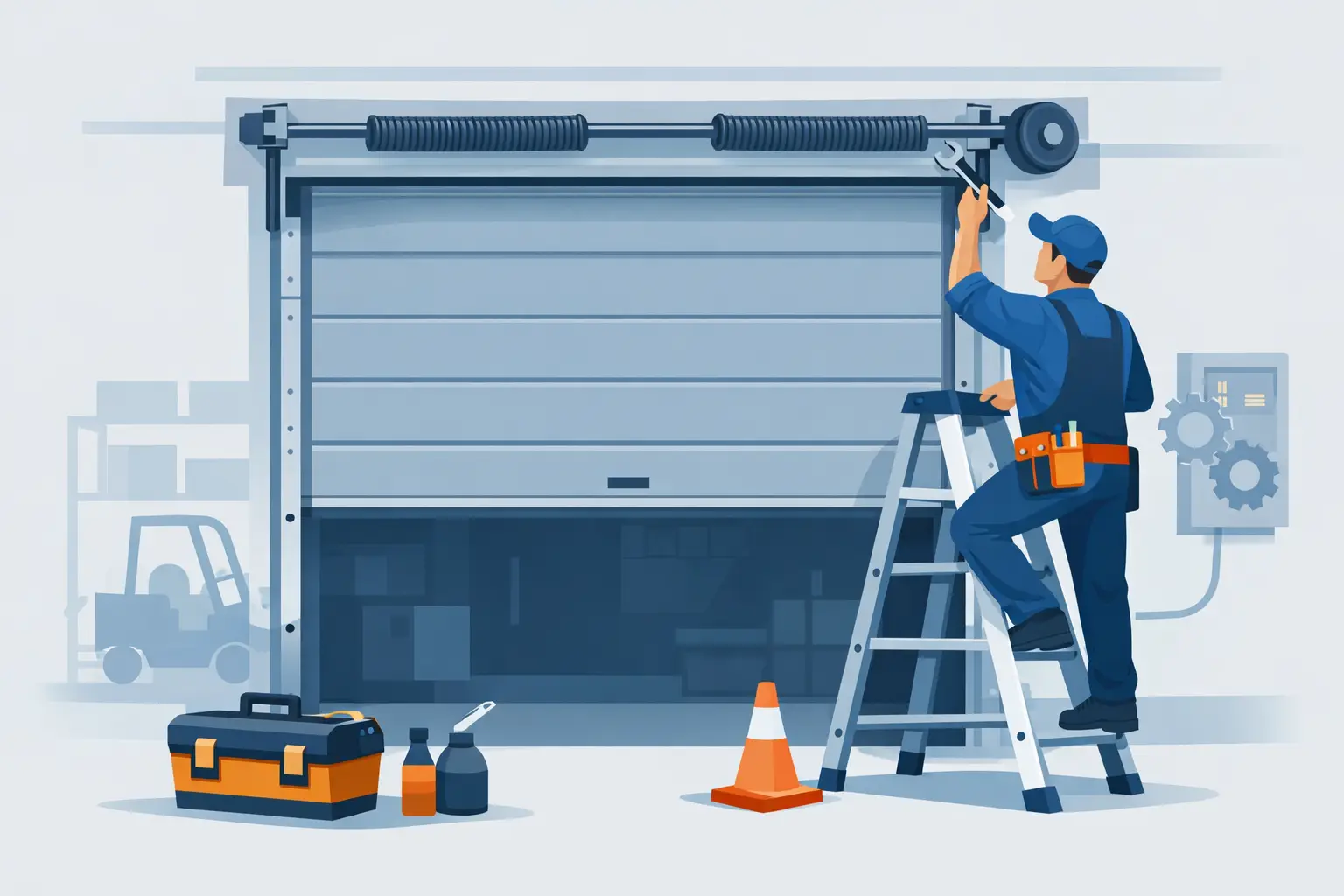
A commercial overhead door that sticks halfway open at 7 a.m. can delay deliveries, leave inventory exposed, and create a safety issue before the workday has even started. Knowing how to maintain commercial overhead doors helps property managers and business owners catch small problems early, schedule repairs on their terms, and avoid costly emergency downtime.
Commercial doors work harder than most people realize. A warehouse, auto shop, loading dock, storage facility, or agricultural building may cycle its doors dozens of times each day. Springs, cables, rollers, tracks, hinges, and openers all take that repeated load. In Cheyenne and surrounding areas, wind, dust, temperature swings, and winter weather add even more wear.
Start With Regular Visual and Operational Checks
A quick monthly inspection does not replace professional service, but it can reveal problems while they are still manageable. Assign the check to a facilities team member or include it in your regular property maintenance routine. The goal is not to adjust high-tension parts. It is to notice changes in how the door looks, sounds, and operates.
Watch the door through a full open-and-close cycle. It should move evenly, remain aligned in the tracks, and stop where the controls tell it to stop. Grinding, scraping, popping, rattling, or a sudden increase in opener noise deserves attention. So does a door that hesitates, jerks, hangs unevenly, or needs repeated button presses to move.
Look over the panels, hinges, brackets, rollers, tracks, cables, bottom seal, and weatherstripping. Check for loose hardware, bent track sections, cracked rollers, frayed cables, worn hinges, dents that interfere with travel, and daylight around the door when it is closed. Do not ignore a door that appears slightly crooked. A small alignment issue can turn into an off-track door quickly.
Keep Tracks, Seals, and Work Areas Clean
Tracks need to be clear, but they should not be packed with grease. Dirt, gravel, packaging debris, ice, and windblown material can interfere with rollers and contribute to rough travel. Clean accessible track surfaces with a dry cloth or soft brush, then remove anything that could block the door's path.
Keep the area around the opening clear as well. Pallets, carts, product stacks, and parked equipment can be damaged by a closing door or prevent it from closing fully. If forklifts operate near the opening, inspect the lower panels and tracks more often. Minor impacts are common around loading areas, and a bent vertical track can cause a door to bind or come off track.
Weather seals deserve closer attention before winter. A torn bottom seal lets in snow, water, dust, and cold air. Worn perimeter weatherstripping can raise heating costs and make the building less comfortable for employees. Replacing a seal is usually far less expensive than dealing with water damage, frozen door components, or an opener that has to work harder against a poor seal.
Lubricate Moving Parts the Right Way
Proper lubrication reduces friction and helps moving parts last longer. For most commercial overhead doors, use a garage-door-specific lubricant or a light silicone-based product approved for the components on your door. Apply it sparingly to hinges, rollers with metal bearings, and other moving pivot points as recommended by the manufacturer.
Avoid coating the tracks with heavy grease or oil. Rollers need to travel along clean tracks, and thick lubricant collects dirt and grit. That buildup can create more resistance than it solves.
Frequency depends on use. A door that cycles several times every day may need lubrication every few months, while a lightly used door may need it less often. If the door gets louder or starts moving less smoothly between scheduled services, have it checked instead of repeatedly adding lubricant. Noise can be a warning sign of worn rollers, loose hardware, spring trouble, or opener strain.
Test Safety Systems Without Taking Risks
Commercial overhead doors often have photo eyes, monitored sensors, reversing systems, safety edges, or other protective devices. These systems are there to prevent a door from closing on people, equipment, or vehicles. They need regular testing, especially at busy loading docks and work areas.
Keep photo-eye lenses clean and make sure they are aligned. If the opener will not close unless someone holds the wall button, a blocked or misaligned sensor may be the cause. Check that sensor wiring is protected from damage and that nothing regularly blocks the sensor path.
Test the reversing feature according to the opener manufacturer's instructions. If the door fails a safety test, stops unexpectedly, or closes with more force than it should, take it out of normal operation until a qualified technician can inspect it. Do not bypass sensors or disable safety equipment to keep a door moving. That may seem like a short-term fix, but it creates a serious liability and injury risk.
What Employees Should Report Right Away
Your employees are often the first people to notice a door acting differently. Give them clear instructions to report changes early rather than forcing the door to operate. A prompt service call can often prevent a breakdown during a delivery, shift change, or severe weather event.
Call for service when you notice any of the following:
- The door is off track, crooked, jammed, or stuck open or closed.
- A cable is frayed, loose, or appears to have come off its drum.
- A spring is broken, stretched out of place, or makes a loud bang when it fails.
- The opener runs but the door does not move normally.
- The door reverses unexpectedly, slams shut, or will not stay open.
- A vehicle, forklift, or piece of equipment has struck the door or track.
Never ask an employee to repair springs, cables, bottom brackets, or other high-tension components. These parts can cause severe injury if handled incorrectly. The right move is to secure the area, stop using the door if necessary, and call a commercial overhead door technician.
Schedule Professional Maintenance Based on Usage
Monthly visual checks are useful, but commercial doors also need professional tune-ups. For many businesses, twice-yearly service is a practical baseline. High-cycle doors, loading dock doors, and doors exposed to heavy wind, dust, or frequent vehicle traffic may need quarterly inspections instead.
During a professional maintenance visit, a technician can inspect spring balance, cable condition, roller wear, track alignment, bearings, hinges, opener settings, safety systems, and hardware torque. They can also identify parts that are nearing failure before they shut down your operation.
This is where preventive maintenance pays off. Replacing worn rollers or tightening loose hardware during scheduled service is usually straightforward. Waiting until a cable breaks, a door goes off track, or a spring fails can mean an urgent call, a blocked opening, and disrupted business activity. The lowest-cost option is not always the one with the lowest immediate invoice. It depends on how much downtime that door creates for your operation.
Prepare Commercial Doors for Cheyenne Weather
Wyoming weather can be tough on commercial equipment. Cold temperatures can stiffen lubricants, affect seals, and expose weak springs or worn opener components. High winds can put extra pressure on large door panels, especially if the door has existing damage or loose hardware.
Before winter, check weatherstripping, inspect the door for gaps, clear drainage around the opening, and make sure snow or ice cannot build up in the door's path. Do not force a frozen door open with the operator. That can damage the opener, cables, or door sections. Clear the obstruction carefully and arrange service if the door still will not move normally.
After a major wind event or impact, inspect the door before returning it to regular use. A door may still open and close after a hit, but damaged tracks, loosened brackets, or bent panels can become a larger problem with continued cycling.
Keep a Simple Service Record
A maintenance record helps you make better repair decisions over time. Note the date of inspections, lubrication, service visits, replaced parts, reported issues, and any impact damage. This is especially useful for property managers overseeing multiple doors or multiple locations.
Patterns matter. If one door repeatedly needs adjustments, has recurring sensor problems, or is operating far more often than originally planned, it may need a different maintenance schedule or a more suitable commercial operator. A technician can help determine whether repair is still the practical choice or whether replacement will provide better reliability.
A commercial door does not need to fail completely before it deserves attention. When it starts getting louder, slower, rougher, or less reliable, schedule service before the problem chooses the busiest moment of your day. Mike's Garage Door LLC provides straightforward commercial overhead door service for businesses that need their doors operating safely and reliably.