A garage door that works fine in September can become a major problem after the first hard Cheyenne freeze. Cold temperatures stiffen moving parts, wind finds every worn seal, and snow or ice at the threshold can leave your door stuck when you need to get out. Knowing how to winterize garage door system components before severe weather arrives helps protect your door, opener, vehicles, and daily routine.
Winter prep is not about making a garage door perfectly airtight. Most garages are not conditioned living spaces, and a door still needs safe operating clearance. The goal is simpler: reduce drafts and moisture, keep the hardware moving freely, and catch worn parts before cold weather turns a small issue into a no-access emergency.
How to Winterize Garage Door System Parts Safely
Start with a visual inspection while the door is closed, then run it through a complete open-and-close cycle. Watch for jerking, shaking, rubbing, excessive noise, or a door that stops short of the floor. A balanced door should move smoothly. If it feels unusually heavy when disconnected from the opener, do not try to compensate by adjusting the opener force setting. That usually points to a spring, cable, roller, or track issue that needs professional attention.
Look closely at the weatherstripping along the bottom and sides of the door. The bottom seal should make even contact with the concrete across the entire opening. If it is cracked, flattened, torn, or missing sections, cold air, snow, and wind-driven debris can enter the garage. Side and top seals should sit against the door without being crushed or pulled loose.
A little daylight around the edges may be normal depending on the door and framing, but obvious gaps are not. Replacing worn weatherstripping is often one of the most cost-effective winter maintenance steps. For attached garages, it can also make nearby rooms less drafty and reduce the amount of cold air reaching plumbing or stored items.
Clean the threshold before ice forms
Sweep dirt, leaves, road grit, and old salt away from the bottom of the door and the concrete threshold. Debris prevents the bottom seal from sitting correctly and traps moisture where it can freeze. After a storm, clear snow away from the outside of the door before operating it.
Do not chip at ice with a shovel directly against the bottom seal or door panels. It is easy to tear the seal, dent a steel door, or damage the lower retainer. Use a plastic snow shovel carefully, apply a pet-safe ice melt away from the seal when appropriate, and give the ice time to release. If the door is frozen to the floor, do not repeatedly run the opener. You can strip gears, bend an arm, or put extra stress on the spring system.
Lubricate moving metal parts, not the tracks
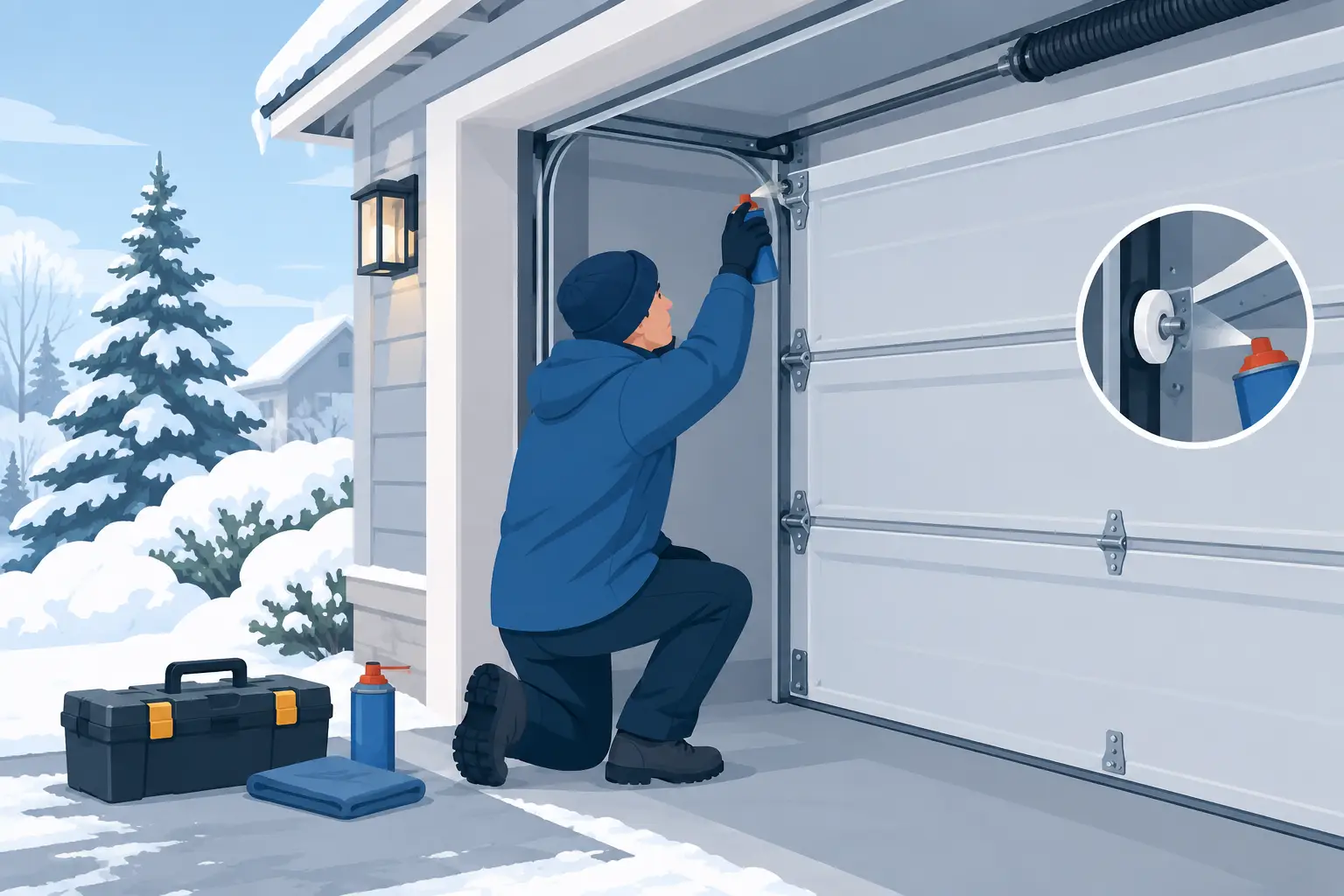
Cold weather exposes dry rollers, hinges, bearings, and springs quickly. Use a garage-door-rated lubricant or a light silicone-based lubricant on the moving metal joints. Apply a small amount to roller bearings, hinge pivot points, spring coils, and the opener rail if the manufacturer calls for it. Wipe away excess so it does not collect dust.
Avoid coating the vertical or horizontal tracks with grease. Tracks guide the rollers, and heavy lubricant can attract grit and create a sticky buildup. Instead, wipe the tracks clean with a dry cloth and check that the mounting brackets are secure.
If you hear loud grinding, popping, scraping, or a sharp bang, stop using the door until it is inspected. A broken spring or failing cable is not a do-it-yourself winter project. Garage door springs are under extreme tension and can cause serious injury when handled incorrectly.
Check the Opener Before the Temperature Drops
Your automatic opener does less work when the door itself is balanced and properly maintained. Test the safety reversal system by placing a piece of lumber flat on the floor beneath the door. When the closing door contacts the object, it should reverse. Also test the photo-eye sensors by closing the door and passing an object through the sensor beam. The door should stop and reverse.
Wipe dirt and cobwebs from the photo-eye lenses, and confirm the sensors face each other at the same height. Bright winter sun, blowing snow, condensation, or a loose sensor bracket can interfere with the beam. If the opener light flashes and the door will not close, check the sensors first.
Replace weak remote batteries before the cold takes a further toll on them. If you use a keypad, make sure the cover closes fully and that the buttons respond consistently. A keypad that works only sometimes in mild weather will not become more reliable during a Wyoming cold snap.
For homes with an older opener, listen for a motor that strains or runs longer than usual. The issue may be the opener, but it may also be a door that is out of balance. An opener should guide the door, not force a heavy door through a failing spring system.
Insulation Helps, but It Is Not the First Repair
An insulated garage door can make a noticeable difference for attached garages, workshops, and spaces used for storage. It can reduce heat transfer, soften outside noise, and help moderate temperature swings. That said, insulation cannot solve a damaged seal, an unbalanced door, or wind coming through gaps around the frame.
If you are considering adding insulation panels to an existing door, check the door's construction and weight limits first. Extra weight can affect spring tension and opener performance. A lightweight insulation kit may be suitable for some doors, while others are better served by replacing an older, thin door with an insulated model designed for the climate.
Commercial overhead doors have similar concerns, but the stakes can be higher. A poor seal at a loading area can waste energy and create slick conditions near the opening. Facility managers should inspect bottom seals, rollers, cables, tracks, safety devices, and operator controls before winter traffic increases. A planned service visit is usually easier to schedule than an emergency repair when a door is blocking deliveries.
Know When to Call for Garage Door Service
You can handle basic cleaning, snow removal, and visible weatherstrip checks. Call a qualified technician when the door is crooked, off track, unusually loud, slow, stuck, or difficult to lift. The same applies if you see a loose cable, gap in a torsion spring, bent track, damaged rollers, or an opener that reverses without a clear obstruction.
Do not keep cycling a malfunctioning door to see if it will eventually work. Continued operation can turn a minor roller or alignment problem into damaged panels, a broken cable, or an opener repair. If the door is open and will not close securely, protect the opening if possible and arrange service promptly.
For homeowners and property managers in Cheyenne and nearby communities, Mike's Garage Door LLC provides straightforward maintenance, repair, and same-day help for urgent door problems. A technician can inspect the full system, identify the actual cause of the issue, and explain the repair before work begins.
Winter garage door care pays off most when it happens before the forecast turns harsh. Set aside time to check seals, clear the threshold, test the safety system, and listen to how the door runs. If something seems off, addressing it now is a lot easier than dealing with a stuck garage door in the middle of a snowstorm.