A garage opener should fit the door, the ceiling space, and the way you use the garage - not just the empty spot on a store shelf. When comparing a jackshaft vs ceiling garage opener, the right answer often comes down to your garage layout and door hardware. Both can be dependable choices when installed correctly. The wrong choice can create clearance problems, unnecessary noise, or a more expensive installation than you expected.
For homeowners and property managers in Cheyenne, the decision also needs to account for a heavy insulated door, seasonal temperature swings, and the need for reliable access when you are headed to work, school, or a job site. Here is what separates these two opener styles and when each one makes sense.
What Is a Ceiling Garage Door Opener?
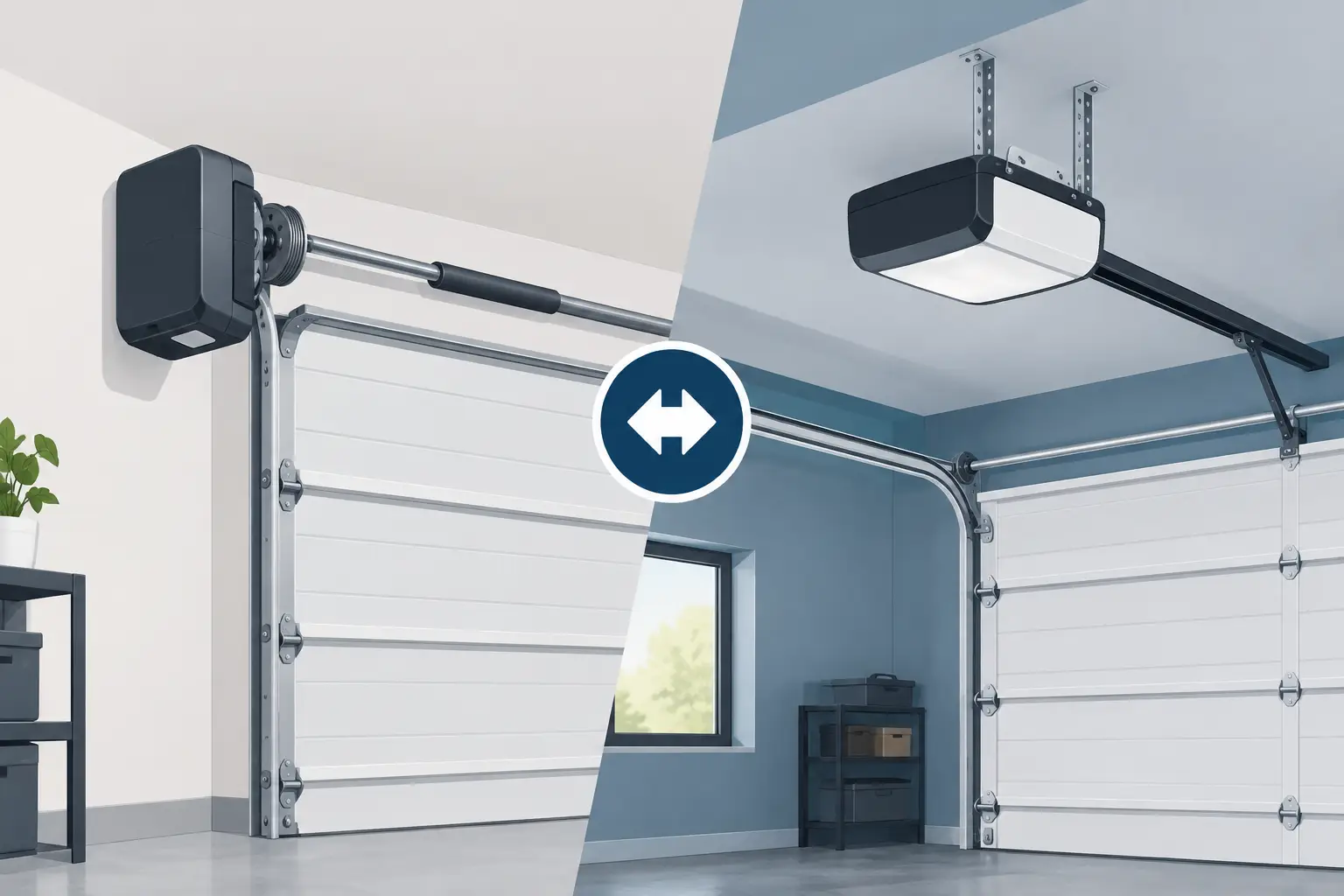
A ceiling-mounted opener is the familiar setup found in many homes. The motor unit hangs from the ceiling, usually near the center of the garage. A rail runs from the motor to the header above the garage door, and a trolley moves the door up and down.
Most ceiling openers use either a chain drive, belt drive, or screw drive. Chain-drive units are durable and often cost less, but they tend to be louder. Belt-drive models cost more upfront but operate more quietly, which matters when there is a bedroom or living space above the garage.
This style works with most standard sectional garage doors. It is widely available, straightforward to service, and usually the most practical option when there is adequate room above the door and in the center of the ceiling.
What Is a Jackshaft Garage Door Opener?
A jackshaft opener, also called a wall-mount opener, installs beside the garage door rather than overhead. It connects directly to the torsion bar above the door and turns that bar to raise and lower the door.
Because the motor sits on the wall near the end of the torsion shaft, it leaves the middle of the ceiling open. That can be a major advantage in garages with high ceilings, overhead storage, a car lift, exposed beams, or a cathedral-style ceiling.
Jackshaft openers are not a universal replacement for ceiling units. They require the proper torsion spring system, sufficient side room beside the door, and a door that is correctly balanced. A professional should inspect the setup before recommending one.
Jackshaft vs Ceiling Garage Opener: The Biggest Differences
The most visible difference is where the equipment goes. A ceiling opener uses overhead space. A jackshaft opener uses wall space beside the door. That simple distinction affects storage, lighting, maintenance access, and installation cost.
A jackshaft model is often quieter inside the garage because there is no long rail and trolley moving across the ceiling. It may also reduce vibration transferred through the ceiling structure. For a garage under a bedroom, that can be a real benefit. Still, quiet operation depends on more than the opener. Worn rollers, loose hinges, an unbalanced door, and damaged tracks can make any system noisy.
Ceiling-mounted openers usually offer more flexibility for standard garage layouts and are commonly less expensive to install. They are a solid choice for a typical one- or two-car garage where the ceiling is clear and the door has conventional tracks.
A jackshaft unit can cost more because it is a more specialized installation. It may also require additional electrical work, door adjustments, or safety hardware depending on the existing system. The higher price can be worthwhile when reclaimed ceiling space is valuable, but it is not automatically the better opener.
When a Ceiling Opener Is the Better Choice
Choose a ceiling-mounted opener when your garage has a standard ceiling height, clear overhead space, and a conventional sectional door. It is usually the sensible route for homeowners who want dependable automatic operation without paying for features their garage does not need.
A belt-drive ceiling opener is especially appealing for an attached garage. It provides smooth, quiet operation and is well suited for insulated residential doors. A chain-drive model can be a good fit for detached garages, rental properties, or situations where durability and budget matter more than noise.
Ceiling openers can also be easier to replace when an older unit fails. In many cases, the existing mounting location, outlet, and door configuration already support a new model. That can keep installation simpler and more affordable.
When a Jackshaft Opener Makes More Sense
A jackshaft opener is a strong option when the center of your ceiling needs to stay clear. Homeowners often choose one to make room for storage racks, taller vehicles, lighting, a golf simulator, or a vehicle lift. It can also work well with high-lift track systems where a traditional rail opener may not fit the door travel properly.
For commercial or light-commercial spaces, wall-mount equipment may help preserve overhead clearance. However, a busy shop, warehouse, or service bay may need a commercial-grade operator instead of a residential jackshaft model. Door size, weight, cycle count, and safety requirements matter. A homeowner-grade opener is not designed for every commercial door.
A jackshaft setup can also be a practical answer when there is no suitable center mounting point for a ceiling rail. Exposed steel, uneven ceilings, or unusual framing may make a wall-mount design easier to accommodate. The torsion shaft and spring system must still be in good condition.
Door Balance Matters More Than Opener Type
Neither opener is meant to lift the full weight of a garage door by itself. The springs do that work. The opener controls the door's movement, but a properly adjusted spring system makes the door feel much lighter.
That is particularly important with jackshaft units because they operate directly through the torsion bar. If the door is too heavy, moves unevenly, or will not stay halfway open when disconnected from the opener, there may be a spring, cable, roller, or track issue that needs attention first.
A ceiling opener can struggle with the same problems. Replacing an opener without fixing a broken spring or off-track door often leads to another service call and can damage the new equipment. Before installing any opener, have the door inspected, balanced, and lubricated as needed.
Safety Features and Backup Power
Both opener styles should include photo-eye safety sensors that stop and reverse the door if something crosses the opening. Those sensors need to be aligned and kept clear of dirt, snow, and stored items. A blinking sensor light or a door that closes only when the wall button is held can indicate a sensor problem.
Battery backup is worth considering in either style. A power outage can happen during a winter storm or at the worst possible time. Battery backup allows the opener to operate for a limited number of cycles when the power is out, reducing the chance of being stuck outside or unable to get a vehicle out.
Smart controls are available on many current models as well. They can provide phone alerts, remote operation, and the ability to check whether the door was left open. These features are convenient, but they should not replace regular visual checks of the door, springs, cables, and safety sensors.
Questions to Ask Before You Buy
Before choosing an opener, look beyond horsepower ratings and promotional features. The installer should measure available headroom and side room, inspect the torsion system, check the condition of the door, and ask how the garage is used.
You should also consider whether the garage shares a wall with living space, whether overhead storage is planned, and whether the door is unusually tall or heavy. An insulated double door, for example, places different demands on the system than a lightweight single door. The right opener is the one that fits the complete setup, not simply the one with the highest advertised number on the box.
Get the Layout Right Before Installation
If your garage ceiling is clear and your door is standard, a quality ceiling opener is usually the efficient, cost-conscious choice. If overhead clearance matters or the garage has an unusual layout, a properly matched jackshaft opener can be well worth the added investment.
Before committing to either option, have the door and hardware checked by an experienced technician. Mike's Garage Door LLC can evaluate the available space, door balance, spring system, and everyday access needs so you can choose an opener that works reliably long after installation day.