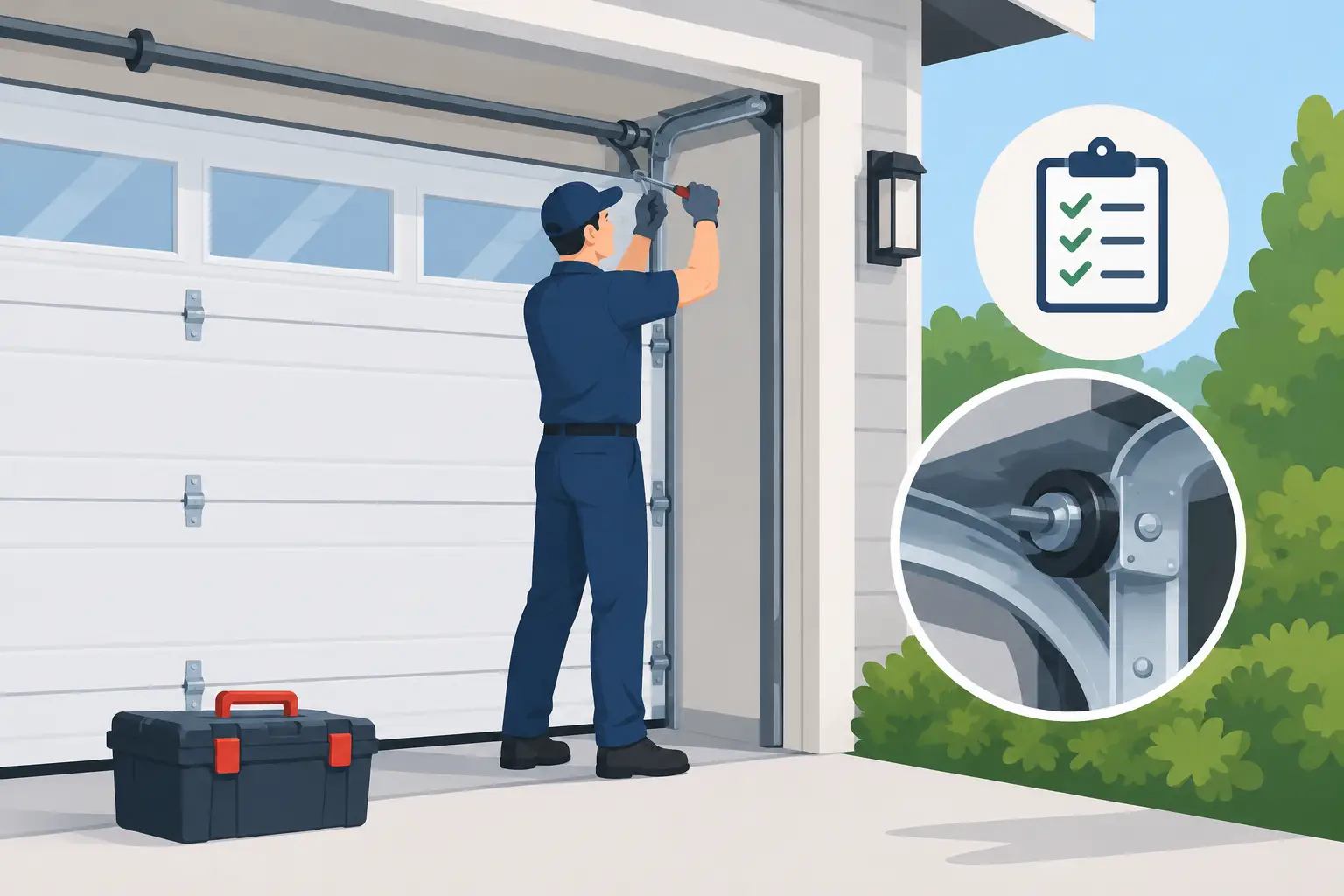
A garage door can seem fine right up until the morning it will not open. That is why this preventive maintenance case study matters to Cheyenne homeowners and property managers. A routine tune-up can catch wear that is easy to miss from the driveway, before it becomes a broken spring, an off-track door, or a vehicle trapped in the garage.
This example reflects a common service situation: a working door with no emergency at the moment, but several warning signs that could turn into one. The goal was not to sell unnecessary work. It was to inspect the system, correct small issues, and give the owner a clear picture of what needed attention now versus what could be monitored.
Preventive Maintenance Case Study: A Door That Still Opened
The homeowner called for maintenance on a two-car garage door that was about eight years old. The door opened and closed every day, and the opener still responded to the remote. But it had become noticeably louder over the previous few months. The owner also mentioned that the door sometimes hesitated before closing, especially on colder mornings.
Those details matter. A noisy door is not always an emergency, but it is rarely just background noise. Squealing, grinding, popping, or jerky movement can point to worn rollers, loose hardware, poor lubrication, an unbalanced door, or strain on the opener.
During the inspection, the technician checked the full operating system: door balance, springs, cables, rollers, tracks, hinges, brackets, bearings, weather seal, opener settings, safety sensors, and mounting hardware. The findings were straightforward. Several nylon rollers were worn, a few hinge bolts had loosened through normal vibration, and the door was not properly balanced. The torsion spring was still intact, but it was carrying more strain than it should because the door did not move smoothly.
The opener was also working harder than necessary. It had not failed, but the extra resistance put more load on the motor and drive system every time the door cycled.
What Was Fixed During the Tune-Up
The immediate work focused on parts and adjustments that affected safe, reliable operation. Loose hardware was tightened, moving parts received the correct garage door lubricant, and the worn rollers were replaced. The tracks were inspected for alignment and cleared of buildup. The technician then adjusted the spring tension to bring the door back into proper balance.
A balanced garage door should stay near the halfway point when disconnected from the opener and carefully tested by a trained professional. If it drops quickly, shoots upward, or feels unusually heavy, the spring system needs attention. This is not a do-it-yourself adjustment. Garage door springs and cables are under high tension and can cause serious injury when handled incorrectly.
The safety sensors were cleaned and aligned, then the automatic reverse function was tested. The opener limits were checked as well. These steps are easy to overlook because they do not always cause obvious problems until the door refuses to close or reverses unexpectedly.
The bottom weather seal showed early cracking but was still doing its job. Rather than pushing for replacement that day, the technician explained what to watch for: daylight under the door, more dust or snow blowing into the garage, water intrusion, or a seal that becomes brittle and torn. The homeowner chose to monitor it and plan for replacement before the next severe winter season.
That is what honest preventive service should look like. Some repairs need immediate attention. Others are better handled on a planned schedule, before they become urgent but after the customer has time to make a practical decision.
The Result: Less Strain, Less Noise, Fewer Surprises
Once the maintenance was complete, the door moved more quietly and evenly. The opener no longer had to pull against an unbalanced door, and the owner had a clear record of the work performed and the one item to keep an eye on.
Just as important, the service addressed the issue before a spring failure or opener breakdown created a same-day emergency. A broken spring can leave a door too heavy to lift safely. A failed roller or loose hinge can allow the door to bind or come off track. For a homeowner, that can mean missed work, limited access to the garage, and a repair that cannot wait. For a commercial property, it can interrupt deliveries, vehicle access, security, and daily operations.
Preventive maintenance cannot guarantee that a part will never fail. Springs, openers, rollers, and cables all have a service life. But regular inspections reduce the odds that ordinary wear will go unnoticed until it causes a bigger problem.
Why Garage Doors Need Attention in Cheyenne
Garage doors in Cheyenne deal with conditions that can speed up wear. Temperature swings can affect lubricant performance, weather seals, metal components, and opener operation. Wind can put extra pressure on large doors, especially if hardware is loose or the door is already moving poorly. Dust, moisture, and everyday vehicle traffic also take a toll over time.
Usage matters, too. A door used twice a day has very different wear patterns from one used eight or ten times a day. Property managers and business owners should pay especially close attention to doors serving tenants, storage areas, shops, warehouses, or fleet vehicles. When a commercial overhead door is down, the cost is not only the repair. It can also be lost access and delayed work.
A maintenance schedule should match the door's age, condition, and use. For most residential doors, an annual professional tune-up is a practical starting point. Doors with heavy daily use, older components, or a history of problems may need service more often.
Warning Signs That Should Not Wait
Some issues are better handled as soon as they appear. Call for service if the door is unusually heavy, crooked, shaking, scraping, or making a loud bang. A visible gap in the torsion spring, a loose cable, a bent track, or a door that has come off track also requires professional attention.
Do not keep running the opener when the door is struggling to move. The opener is designed to guide a properly balanced door, not lift the full weight of one with a broken spring or damaged cable. Continued operation can damage the opener and make the original repair more expensive.
If the door will not close and your property is exposed, or if a vehicle is trapped inside, same-day service is usually the right call. Mike's Garage Door LLC keeps service focused on getting the problem diagnosed clearly and repaired with the right parts on hand whenever possible.
A Practical Maintenance Plan for Property Owners
Between professional visits, homeowners can do a few simple checks without taking risks. Listen for changes in sound, watch whether the door moves evenly, keep the photo-eye sensors clean, and make sure nothing blocks the door's travel path. Avoid spraying household oil on every component. The wrong product can attract dirt or create problems on tracks and moving parts.
Leave spring adjustment, cable work, and major track repairs to a trained technician. Those are not small fixes, even when the problem looks simple from the ground.
The best time to schedule maintenance is before your garage door gives you a reason to stop everything else. A quiet tune-up on a normal day is easier to plan for than a stuck door on a cold morning, a busy workday, or the moment you need to leave town.