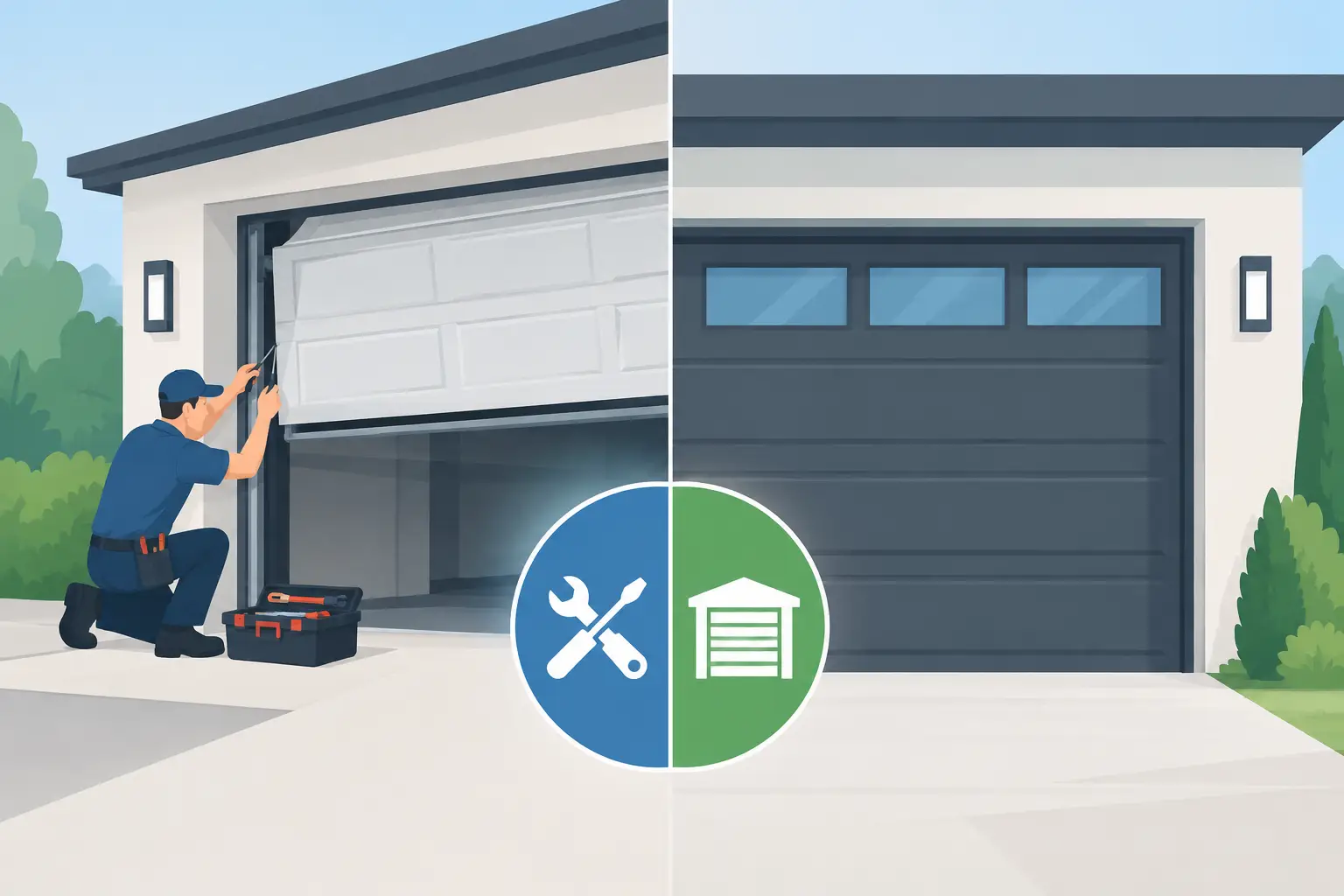
A garage door that will not open puts the whole day on hold. Before assuming you need a new door, compare repair versus replacement costs based on the actual problem, the door’s condition, and how long the fix is likely to last. A broken spring can often be repaired the same day. A door with major structural damage, repeated failures, and outdated safety equipment may be a better candidate for replacement.
For homeowners, property managers, and commercial operators in Cheyenne, the right answer is not always the cheapest option today. It is the option that restores safe, dependable access without creating another expensive service call a few months from now.
Start With the Actual Garage Door Problem
Garage doors are heavy systems with several working parts. A door that will not move may have a broken torsion spring, worn cables, a failed opener, damaged rollers, a bent track, or a problem with the door itself. These issues carry very different repair costs and different replacement considerations.
A broken spring is a common example. The door may be in good shape, but without spring tension it becomes too heavy for the opener to lift safely. Replacing the spring is usually far more practical than replacing an otherwise sound door. The same is often true for worn rollers, loose hardware, damaged sensors, and many opener issues.
Replacement becomes more reasonable when the panels are cracked, the door has been hit by a vehicle, the sections are badly warped, or corrosion has weakened key parts of the door. On a commercial overhead door, damage that affects daily loading, security, or employee safety deserves quick attention. A technician should inspect the full system before anyone makes a cost decision.
When Repair Is Usually the Better Value
Repair is generally the right move when the issue is isolated and the door has years of useful life left. A quality garage door can often serve a property well for many years when springs, rollers, cables, hinges, and openers receive timely service.
Consider repair when the door panels are solid, the tracks are in good condition, and the problem comes down to a single worn or failed component. Replacing springs, repairing an opener, realigning a door that has come off track, or installing new rollers can restore reliable operation at a fraction of the cost of a complete new door.
Repair also makes sense when appearance is not a concern. If the door works well, matches the property, and protects the garage as it should, there may be no financial reason to replace it just because one part failed.
That said, a low repair price does not always mean a low total cost. If a technician repairs one failing part but identifies several other worn components, ask how soon those parts may need attention. Honest pricing means understanding both the immediate repair and the likely next step.
Repairs That Should Not Wait
Some problems are urgent, even if they are repairable. A door hanging off its track, a snapped cable, a broken spring, or a door that will not close securely should be handled by a trained technician. Trying to force the door or operate it with a damaged spring can cause more damage and create a serious safety risk.
Do not remove or adjust garage door springs yourself. Springs are under extreme tension and require the right tools and training. The cost of professional service is small compared with the risk of injury or a damaged door, opener, or vehicle.
When Replacement Is Worth the Cost
A new garage door costs more upfront, but it can be the smarter investment when repairs only delay a larger failure. The clearest replacement signal is structural damage. If multiple panels are bent, wood sections are rotting, steel is severely rusted, or the door no longer sits square in the opening, repair may not deliver a durable result.
Age matters, but it is not the only factor. An older door that has been maintained and still operates safely can often be repaired. On the other hand, a newer door that has sustained major impact damage may need replacement. The question is whether the door can be restored to safe, dependable operation without putting money into a short-term patch.
Replacement may also make sense if your current door lacks insulation, has poor weather sealing, or no longer meets the needs of the property. Cheyenne weather can be hard on garage spaces. An insulated door with proper seals can make an attached garage more comfortable and may help protect stored equipment from temperature swings, wind, and moisture.
For a business, replacement can be a productivity decision. A worn overhead door that repeatedly sticks or fails can disrupt deliveries, restrict vehicle access, and leave the building unsecured. If downtime is becoming routine, a planned replacement is often better than waiting for a complete breakdown.
Repair Versus Replacement Costs: What Changes the Price?
There is no single garage door price because the final cost depends on the door size, material, hardware, damage, and labor involved. A basic component repair costs far less than a full door installation, but a repair can become more involved when damage spreads to tracks, cables, panels, or the opener.
The biggest cost factors include the type of repair, the number of affected parts, door weight and size, and whether the job requires emergency service. Residential doors often use standard components, while commercial doors may require heavier springs, larger hardware, specialty operators, or more complex access equipment.
Replacement costs also vary widely. A single-car steel door is different from an insulated double door, a custom carriage-style door, or a commercial sectional overhead door. Windows, insulation, wind-load requirements, decorative hardware, and a new opener all affect the total investment.
When comparing estimates, make sure you are comparing the same scope of work. One price may cover only the failed part, while another may include a complete spring system, new cables, safety inspection, adjustment, and warranty coverage. The lowest number is not always the most complete repair.
Ask These Questions Before You Decide
A good service visit should give you a clear picture, not pressure you into a fast decision. Ask whether the current door is safe to operate after repair, how long the proposed repair should reasonably last, and whether other parts show signs of wear.
For replacement, ask whether the new door includes installation, removal of the old door, weather sealing, hardware, and opener setup if needed. If energy efficiency matters, ask about insulation options and whether the door is a good fit for an attached garage or conditioned workspace.
Property managers should also consider consistency. If several units have aging doors from the same era, tracking service history can help identify when ongoing repairs are becoming less cost-effective than planned replacements.
A Practical Way to Make the Call
Choose repair when the failure is isolated, the door structure is sound, and the repair restores safe operation for a reasonable period. Choose replacement when structural damage, recurring breakdowns, poor security, or outdated performance makes another repair hard to justify.
The best decision starts with an on-site diagnosis from someone who can inspect the springs, tracks, panels, opener, and safety systems together. Mike's Garage Door LLC provides straightforward estimates and same-day service for many urgent garage door problems in the Cheyenne area. A clear assessment now can keep a manageable repair from turning into a locked-out garage, a disrupted business day, or a much larger expense later.