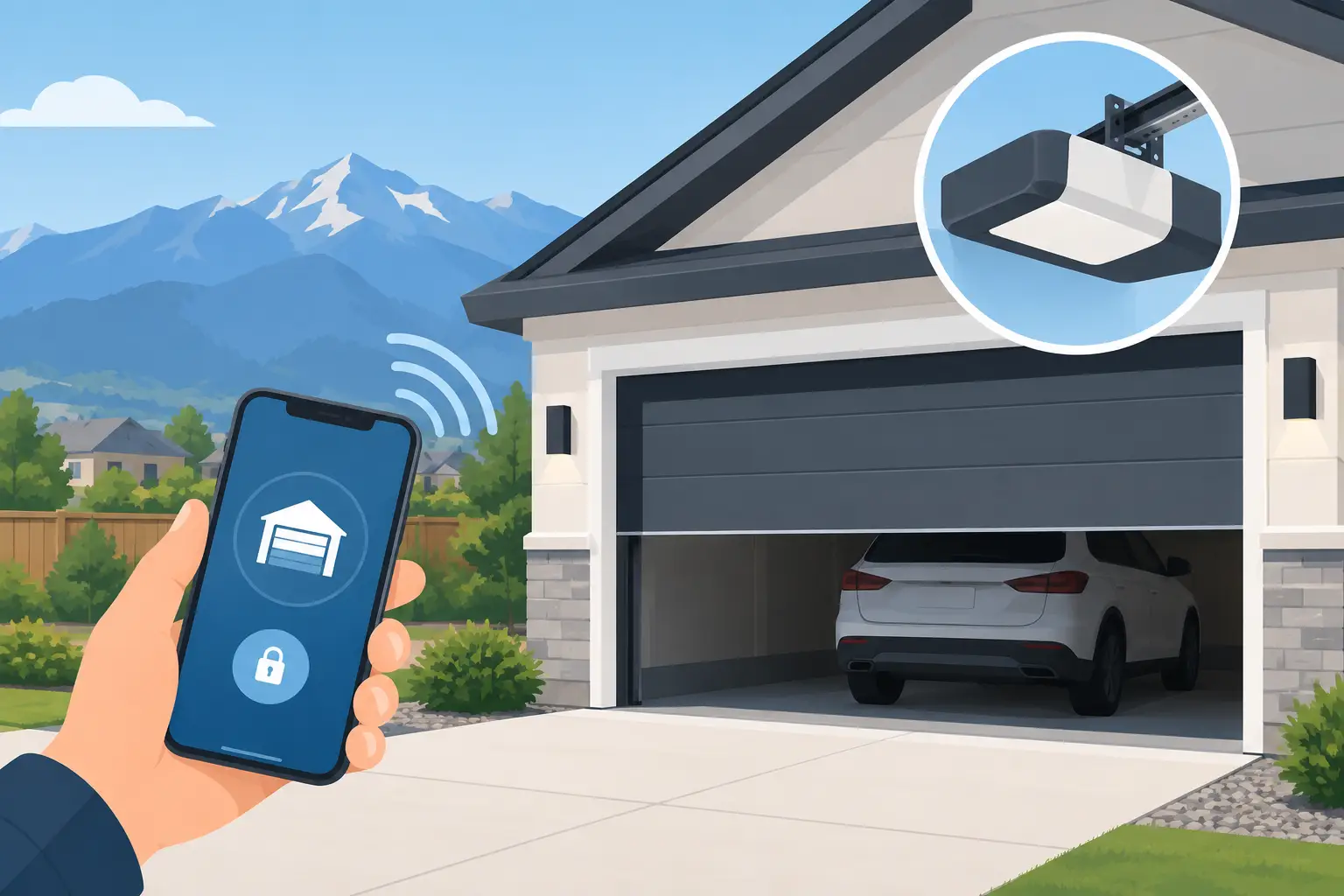
A smart garage opener can save you from turning around halfway to work because you cannot remember whether the door is shut. It can also send an alert when someone opens the garage, let a family member in without handing out a remote, and give you control from your phone. But a smart garage opener review should start with the part that matters most: the app is only useful if the opener and door are safe, dependable, and properly installed.
For Cheyenne homeowners, the right choice often comes down to more than phone control. Cold weather, a heavy insulated door, an aging spring system, and unreliable Wi-Fi in a detached garage can all affect how well a smart opener works. Here is a practical look at what these systems do well, where they fall short, and when repair is the better move.
Smart Garage Opener Review: What You Are Actually Buying
A smart opener connects your overhead door opener to an app, usually through your home Wi-Fi. Depending on the model, you can open or close the door remotely, check its position, receive activity notifications, set schedules, and share access with other people in the household.
Some systems come built into a new opener. Others are add-on controllers that connect to a compatible existing opener. The built-in option is usually cleaner and offers more features, while a retrofit controller costs less if your current motor is otherwise in good condition.
The best feature is not remote opening. It is the door-closed alert. A properly configured notification can tell you the garage was left open after you pulled away, which is useful for security, pets, tools, and heat retention during a Wyoming winter.
That said, smart controls do not make a worn-out opener reliable. If the motor strains, the chain or belt slips, the safety sensors fail, or the door binds in the tracks, an app will not fix the underlying problem. It may simply give you a notification that the door did not close.
The Features Worth Paying For
Most homeowners do not need every feature on the box. They need controls that work consistently and do not create more frustration than convenience.
Position alerts and activity history
Look for clear open-and-closed status alerts. Activity history is also helpful for rental properties, busy families, and small businesses that need to know when a door was used. It is not a replacement for a security system, but it can answer basic questions quickly.
Shared access with limits
A good smart system lets you provide access to a spouse, teenager, house sitter, cleaner, or delivery service without making extra remotes. Better systems allow temporary or scheduled access. That is far more practical than leaving a keypad code unchanged for years.
Change access immediately when a tenant moves, an employee leaves, or a remote is lost. Treat garage access like a house key, because in many homes it effectively is one.
Battery backup
Battery backup is one of the most useful upgrades in this area. A standard electric opener will not run during a power outage unless it has backup power. If your garage is your primary entrance or you need to move a vehicle during an outage, battery backup is worth serious consideration.
Safety sensor monitoring
Every modern residential opener should reverse when it contacts an obstruction and should not close when the photo-eye sensors are blocked or misaligned. Smart monitoring is helpful, but physical safety equipment remains the priority. Never bypass photo eyes just to get a door moving.
Built-In Smart Opener vs. Add-On Controller
An add-on controller makes sense when you have a relatively newer opener that runs smoothly, reverses properly, and is compatible with the smart device. It is the lower-cost route, and it can provide the basic phone control and notifications many homeowners want.
A full opener replacement is the better value when the existing unit is noisy, unreliable, lacks modern safety features, or is approaching the end of its service life. It also makes sense if your door is heavy and the motor is undersized. A smart accessory attached to a struggling opener is usually money spent in the wrong place.
Belt-drive openers are a popular choice for attached garages because they are typically quieter than chain-drive models. Chain drives remain a practical, durable option, especially where noise is not a major concern. The best drive type depends on the door, the location of bedrooms, and the level of daily use.
For commercial doors, the decision is different. Commercial operators need to match the door size, weight, cycle count, safety requirements, and building use. A residential smart device is not a substitute for a correctly specified commercial operator.
The Trade-Offs Most Reviews Skip
Smart openers depend on several things working at once: the opener, the door hardware, your Wi-Fi network, the app provider, and your phone. That does not make them a bad choice. It just means they are not as simple as a wall button.
Wi-Fi range is a common issue. A garage at the far end of the house, a metal-sided detached building, or thick exterior walls can weaken the signal. Before purchasing, check your phone's Wi-Fi connection where the opener is installed. If coverage is poor, you may need a better router location or a mesh Wi-Fi point.
Privacy is another reasonable concern. Smart devices collect account and activity information to provide remote access and alerts. Use a unique, strong password and enable two-factor authentication when available. Do not share your main account password with anyone who only needs temporary garage access.
There is also a convenience trade-off. Remote closing is useful, but do not close a door from miles away if you cannot confirm that people, pets, or vehicles are clear. Most systems use safety sensors, but remote operation still calls for common sense.
When to Repair Before Going Smart
A smart opener installation should not be the first step if the door is difficult to lift manually or has obvious mechanical problems. The opener is designed to guide a balanced door, not force a damaged one up and down.
Have the door inspected first if you notice any of these issues:
- The door jerks, shakes, or stops partway through travel.
- The opener hums but the door does not move.
- The door is unusually heavy when disconnected from the opener.
- Cables are loose, the door is off track, or a spring is broken.
- The opener reverses unpredictably or the safety sensors do not work.
Broken springs and high-tension cables are not DIY repairs. A door can weigh several hundred pounds, and the spring system carries dangerous stored energy. A trained technician can determine whether you need an opener adjustment, a sensor repair, spring replacement, or a new operator.
What Installation Should Include
A proper installation is more than mounting a motor and connecting an app. The opener must be correctly sized for the door, the rail and header bracket must be secure, travel limits need to be set, and the photo eyes must be aligned and tested. The emergency release should work, the wall control should be accessible, and the door should reverse correctly during a safety test.
The app setup should be completed before the installer leaves. Make sure you know how to add users, receive alerts, use the manual release, and operate the door if your internet is down. Keep a working physical remote and know where the emergency key release is located if the garage has no other entry door.
At Mike's Garage Door LLC, we see many opener problems that are really door balance, spring, sensor, or track problems. Addressing those issues first helps a new smart opener last longer and operate the way it should.
A Practical Buying Decision
Choose a smart retrofit controller if your current opener is dependable, compatible, and less than a decade or so into normal use. Choose a new smart opener if you want quieter operation, battery backup, stronger lifting capability, updated safety features, or your existing unit has repeated failures.
Do not choose based on app features alone. A few extra notifications are not worth much if the door is noisy, unbalanced, or unsafe. Start with a reliable door system, then add the smart features that genuinely make daily access easier.
If your garage door is stuck, reversing, making grinding noises, or refusing to respond before you upgrade, have the mechanical issue diagnosed first. The right repair can restore dependable operation, and the right smart opener can make that dependable door easier to manage every day.