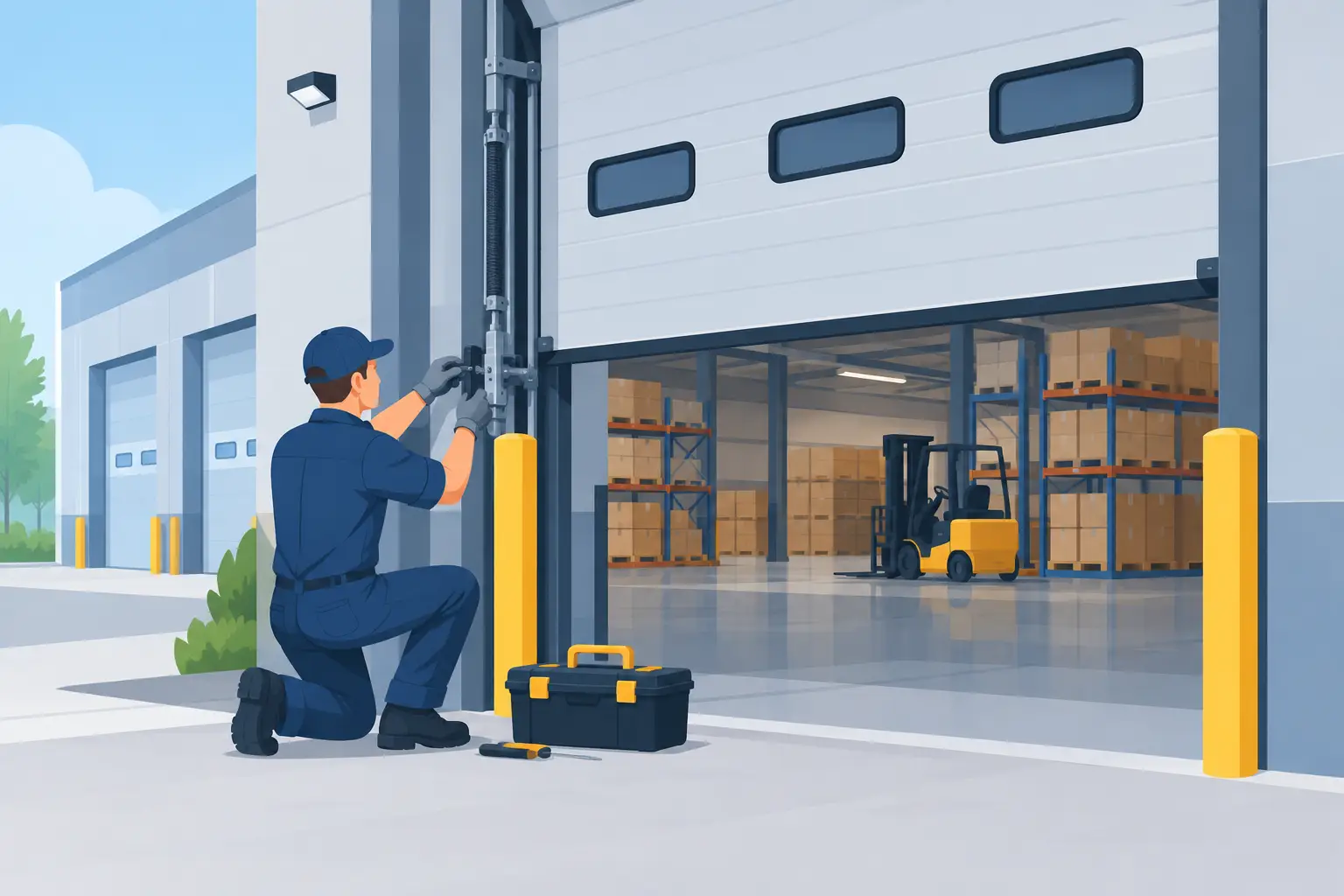
A warehouse door that sticks, drops unevenly, or will not close all the way can slow down receiving, shipping, security, and employee movement within minutes. Warehouse door maintenance is not just about making a door quieter. It is how facility managers prevent a minor worn part from becoming a blocked loading bay, a damaged vehicle, or an unsafe work area.
For commercial properties in Cheyenne and surrounding communities, weather adds another layer of strain. Wind, blowing dust, freezing temperatures, and daily operating cycles can wear down springs, rollers, cables, tracks, operators, and safety equipment faster than many owners expect. A planned maintenance routine keeps those components working together and gives you time to make repairs before the door fails during a busy shift.
What warehouse doors need to handle every day
Commercial overhead doors are built for hard work, but they are not maintenance-free. A warehouse door may open and close dozens of times per day, carry a much heavier load than a residential door, and operate around forklifts, delivery drivers, pallets, and employees. Every cycle puts tension on the springs, cables, drums, hinges, rollers, and opener system.
The most common problem is gradual wear that goes unnoticed. Rollers can loosen, tracks can collect debris, and cables can begin to fray without stopping the door immediately. Then one cold morning or one heavy-use day is enough to push the system past its limit. The result may be a door stuck open, a door that will not move, or an off-track door that requires immediate service.
A maintenance plan does not eliminate every unexpected failure. It does reduce the chance that normal wear turns into an urgent shutdown.
Set the right warehouse door maintenance schedule
The best schedule depends on door size, type, environment, and cycle count. A small warehouse door used a few times a day has different needs than a high-cycle loading dock door that runs all day. For many commercial facilities, a professional inspection and tune-up twice a year is a sensible starting point. High-use doors may need quarterly service.
Do not wait for an annual inspection if you notice changes in operation. A new grinding sound, delayed response from the operator, jerky travel, or an uneven bottom seal is a reason to schedule service now. Early repairs are usually simpler and less disruptive than emergency repairs after a component breaks.
Seasonal timing matters in southeast Wyoming. A check before winter can catch worn weather seals, weak springs, failing batteries, and lubrication problems before freezing conditions arrive. A second visit in spring helps address wear from winter moisture, dirt, temperature swings, and heavy use.
Start with safe visual checks between service visits
Facility staff can help spot trouble early, but they should not attempt repairs involving springs, cables, drums, or high-tension hardware. Those parts can cause serious injury when handled incorrectly. The goal of an in-house check is observation, basic cleaning, and prompt reporting.
Walk around the door while it is closed and look for dents, loose fasteners, damaged panels, gaps around the perimeter, and worn bottom seals. Check whether the tracks are visibly bent or have been hit by equipment. A small impact from a forklift can put a track out of alignment and cause rollers to bind later.
Operate the door from a safe distance and listen. A well-maintained commercial door should move steadily without banging, scraping, popping, or excessive vibration. Watch whether the door remains level as it opens. If one side rises faster than the other, stop using it and have it inspected. Uneven movement can point to cable, drum, spring, or track problems.
Keep the area around the tracks and photo-eye sensors clear. Dust, shrink wrap, pallets, ice, and debris can interfere with normal operation. Clean sensor lenses gently and make sure nothing blocks the door’s path. If the safety system reverses unexpectedly or fails to respond correctly, take the door out of service until a technician can test it.
The components that deserve professional attention
A trained overhead door technician should inspect the moving and high-tension parts during scheduled service. This includes springs, cables, pulleys, drums, rollers, hinges, bearings, tracks, brackets, and the operator assembly. The technician can identify parts that are approaching failure and recommend replacement before they create downtime.
Springs deserve special attention. They counterbalance the weight of the door, making it possible for the operator to lift it safely. A weak or broken spring can make the door feel extremely heavy, strain the opener, and stop operations. Springs should never be adjusted by warehouse staff or general maintenance personnel unless they are specifically trained and equipped for commercial door work.
Cables are another critical safety item. Fraying, corrosion, loose winding, or uneven tension can cause a door to lift crookedly or come off track. A cable issue may look minor at first, but continuing to run the door can damage the track, panels, operator, and surrounding equipment.
The operator also needs regular attention. A technician can inspect the drive system, limits, mounting hardware, chain or belt condition, controls, safety reversal function, and electrical connections. An opener that struggles or runs longer than usual may be dealing with a mechanical door problem, not just an electrical one. Replacing an operator without correcting the underlying balance or track issue can lead to another failure.
Lubrication helps, but it is not a repair
Proper lubrication reduces friction on rollers, hinges, bearings, and springs. It can quiet a noisy door and help components move more smoothly during cold weather. But lubrication cannot fix bent tracks, worn rollers, loose hardware, damaged cables, or an unbalanced door.
Use products designed for garage and overhead door components. Heavy grease can collect dust and grime, especially in warehouse environments, creating more resistance over time. Avoid spraying lubricant on tracks where rollers travel. The tracks should generally stay clean so the rollers can move without buildup.
If a door suddenly becomes noisy after being quiet for years, do not assume more lubricant is the answer. Noise is often an early warning that a roller, hinge, bearing, or spring system needs closer inspection.
Protect the door from warehouse traffic damage
Many commercial door repairs are caused by impact rather than normal mechanical wear. Forklifts, pallet jacks, trucks, and stored materials can all damage bottom sections, tracks, photo eyes, and controls. Protecting the area around the opening is part of effective maintenance.
Make sure drivers have clear approach paths and enough room to maneuver. Keep stored goods out of the door’s travel path, and use visible markings where equipment regularly passes near tracks or wall-mounted controls. If your facility has recurring impact damage, consider whether bollards, guard rails, or operational changes would prevent a more expensive repair.
Weather seals are also worth protecting. A torn bottom seal lets in wind, dust, water, pests, and cold air. That can raise heating costs and make the loading area less comfortable for employees. Replacing a seal is usually straightforward, but allowing moisture and debris to enter for months can create bigger maintenance issues.
Know when to stop using the door
Some issues should be treated as urgent. Stop operating the door and request professional service if it comes off track, hangs unevenly, has a broken spring or cable, will not stay open, or has been struck by a vehicle. The same applies if a safety sensor fails, the operator smokes or trips breakers, or the door is visibly damaged near its lifting hardware.
Trying to force a heavy commercial door open can turn a manageable repair into a major replacement. It also puts employees and equipment at risk. Secure the area, use another bay if possible, and have the problem assessed by a qualified technician.
For property managers and business owners, keeping a service record is useful. Note the door location, reported issue, repair date, replaced parts, and any recommended follow-up. This makes it easier to track repeat problems and budget for high-cycle components before they fail.
Make maintenance part of your operating plan
The lowest-cost warehouse door repair is often the one you avoid through early inspection and timely adjustment. A dependable service partner can tune the door, replace worn parts, check safety systems, and give you a clear picture of what needs attention now versus what can be planned for later.
Mike's Garage Door LLC provides commercial overhead door maintenance and repair for warehouse operators, property managers, and businesses in the Cheyenne area. If a door is slowing down operations, making unusual noises, or showing signs of wear, addressing it before the next busy delivery window can save time, protect your crew, and keep the building moving.