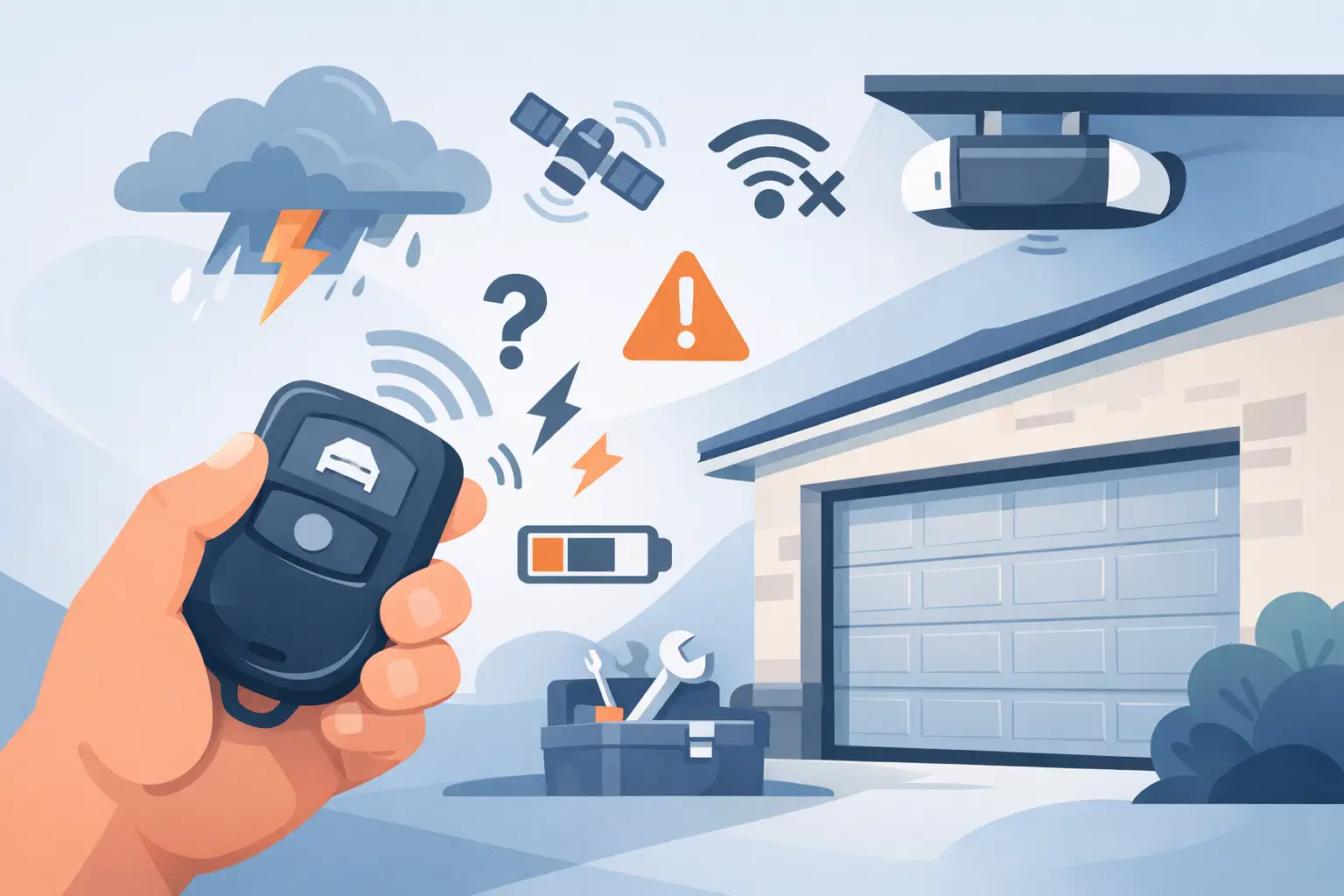
Your garage door is closed, the remote is in your vehicle, and nothing happens when you press the button. Before assuming the opener needs replacement, it helps to understand what causes garage opener remote failure. In many cases, the problem is a battery, signal issue, or programming error. In others, the remote is only exposing a bigger problem with the opener or the door itself.
For homeowners and property managers in Cheyenne, a remote that quits working can be more than an inconvenience. It can leave a vehicle outside during a Wyoming cold snap, delay access to a rental property, or interrupt a commercial operation. A quick, methodical check can narrow down the cause and help you decide whether this is a simple fix or a same-day repair call.
What Causes Garage Opener Remote Failure?
A garage door remote works by sending a coded radio signal to the receiver inside the opener motor unit. When the receiver recognizes that signal, it tells the opener to run. Failure can happen at any point in that chain: the remote may not transmit, the signal may not reach the receiver, the receiver may not recognize it, or the opener may not be able to move the door safely.
The most common causes are weak batteries, damaged remote components, lost programming, radio interference, an obstructed or defective antenna, and problems with the opener's receiver board. A door problem can also look like a remote problem. If the opener receives the command but detects excessive force, an engaged lock, or a broken spring, it may refuse to move the door or reverse right away.
Dead or Weak Remote Batteries
This is the first thing to check because it is common, inexpensive, and easy to miss. A battery can be weak enough to light the remote's indicator but still lack enough power to send a reliable signal. You may notice the remote works only when you are very close to the garage, works intermittently, or requires several button presses.
Replace the battery with the exact type specified inside the remote or in the owner's manual. Check that the battery terminals are clean and that the battery is installed in the correct direction. If a fresh battery does not change anything, do not keep buying remotes until the rest of the system is checked.
Remote Damage and Worn Buttons
Garage remotes take a beating. They get dropped on driveways, crushed in cup holders, exposed to moisture, and left in vehicles through extreme heat and cold. Internal circuit boards can crack, battery contacts can corrode, and the button membrane can wear out.
A damaged remote may have a loose button, no indicator light, or a light that stays on after the button is released. If only one remote has failed while another remote and the wall control still operate the door normally, the remote itself is the likely issue. Replacing or reprogramming that remote is usually the right next step.
Lost Programming or an Incorrect Code
Many modern openers use rolling-code technology. Each time the remote is used, the code changes for security. The opener and remote must stay synchronized. A power outage, a replacement remote, accidental programming, or a reset of the opener can cause the remote to lose its connection.
Reprogramming is often straightforward, but the exact process depends on the opener brand and model. It usually involves pressing the opener's Learn or Program button, then pressing the desired remote button within a short time window. Be careful around the opener motor while programming, and avoid pressing a reset function unless you know what it will erase. A full reset can remove every remote, keypad, and vehicle transmitter from memory.
Signal Interference Around the Garage
Radio interference is a frustrating cause because the remote may work perfectly one day and fail the next. Nearby LED bulbs, wireless cameras, Wi-Fi equipment, battery chargers, security systems, and certain electronic devices can interfere with the radio frequency used by the opener.
A useful clue is range. If the remote works only when you are inside the garage or standing directly under the opener, interference or an antenna issue is possible. Start by removing or turning off recently added electronics near the opener. Also check the light bulbs installed in the opener. Some standard LED bulbs create enough interference to reduce remote range, while garage-door-rated LED bulbs are designed to avoid that problem.
A Damaged or Blocked Opener Antenna
Most opener units have a short wire antenna hanging from the motor housing. It should hang freely and remain clear of metal brackets, wiring, insulation, and stored items. If it is cut, pinched, tucked into the housing, or damaged during other work in the garage, the opener may receive signals only at close range or not at all.
The antenna is not usually a homeowner repair item. Avoid splicing wires or opening the motor housing without proper experience. If the antenna appears damaged or the remote range has steadily declined, a technician can inspect the receiver and determine whether a repair is practical.
When It Is Not Actually a Remote Problem
The wall-mounted button is one of the best troubleshooting tools available. If the wall button opens and closes the door but the remote does not, focus on the remote, programming, antenna, and receiver. If neither the remote nor wall button works, the opener may lack power, be in a locked mode, or have an internal electrical problem.
If you hear the opener hum, click, or run but the door does not move, stop using it. The door could have a broken spring, a stripped gear, a disconnected trolley, or a door that is binding in the tracks. Garage door springs and cables are under high tension. They are not safe DIY repair items.
Also look at the photo-eye safety sensors near the bottom of the tracks. Misaligned, dirty, or damaged sensors usually affect closing rather than opening, but they can make the system appear unpredictable. The door may start down and reverse, or it may only close when the wall button is held down. Cleaning the lenses and checking for a steady indicator light can help, but persistent sensor issues should be repaired correctly.
A Practical Troubleshooting Order
Before scheduling service, work through these checks in order. They prevent wasted time and can identify an easy solution:
- Replace the remote battery and make sure its contacts are clean and secure.
- Test a second remote, the wireless keypad if you have one, and the wall control.
- Check whether the opener has power and whether the wall control's lock or vacation mode is active.
- Remove possible sources of interference near the opener, especially recently installed LED bulbs or electronics.
- Inspect the visible antenna wire and try reprogramming the remote using the opener manufacturer's instructions.
Do not force the door open or closed if it feels unusually heavy, hangs crooked, makes grinding noises, or has a visible broken spring. Disconnecting the opener to move a door manually can be unsafe when the door has a spring, cable, or track failure.
When to Call for Garage Door Opener Repair
Call for professional service when new batteries and reprogramming do not restore operation, when all remotes fail at once, or when remote range is extremely short despite removing likely interference. These signs often point to a failing receiver board, damaged antenna, wiring issue, or aging opener.
It is also time to call when the opener runs but the door will not move safely. An opener is designed to move a properly balanced door, not lift the full weight of a door with broken springs. Continuing to operate it can burn out the motor, strip internal gears, or create a larger repair.
For Cheyenne-area homeowners, businesses, and property managers, Mike's Garage Door LLC can diagnose the whole system - remote, receiver, opener, springs, sensors, and door balance - rather than replacing parts based on a guess. A stocked service truck and clear diagnosis matter when access to the garage cannot wait.
A remote failure is often simple, but the pattern matters. One dead remote may need a battery or replacement. Every remote failing, limited range, or an opener that strains against the door calls for a closer look. Addressing the cause early keeps a small access problem from turning into a stuck door at the worst possible time.