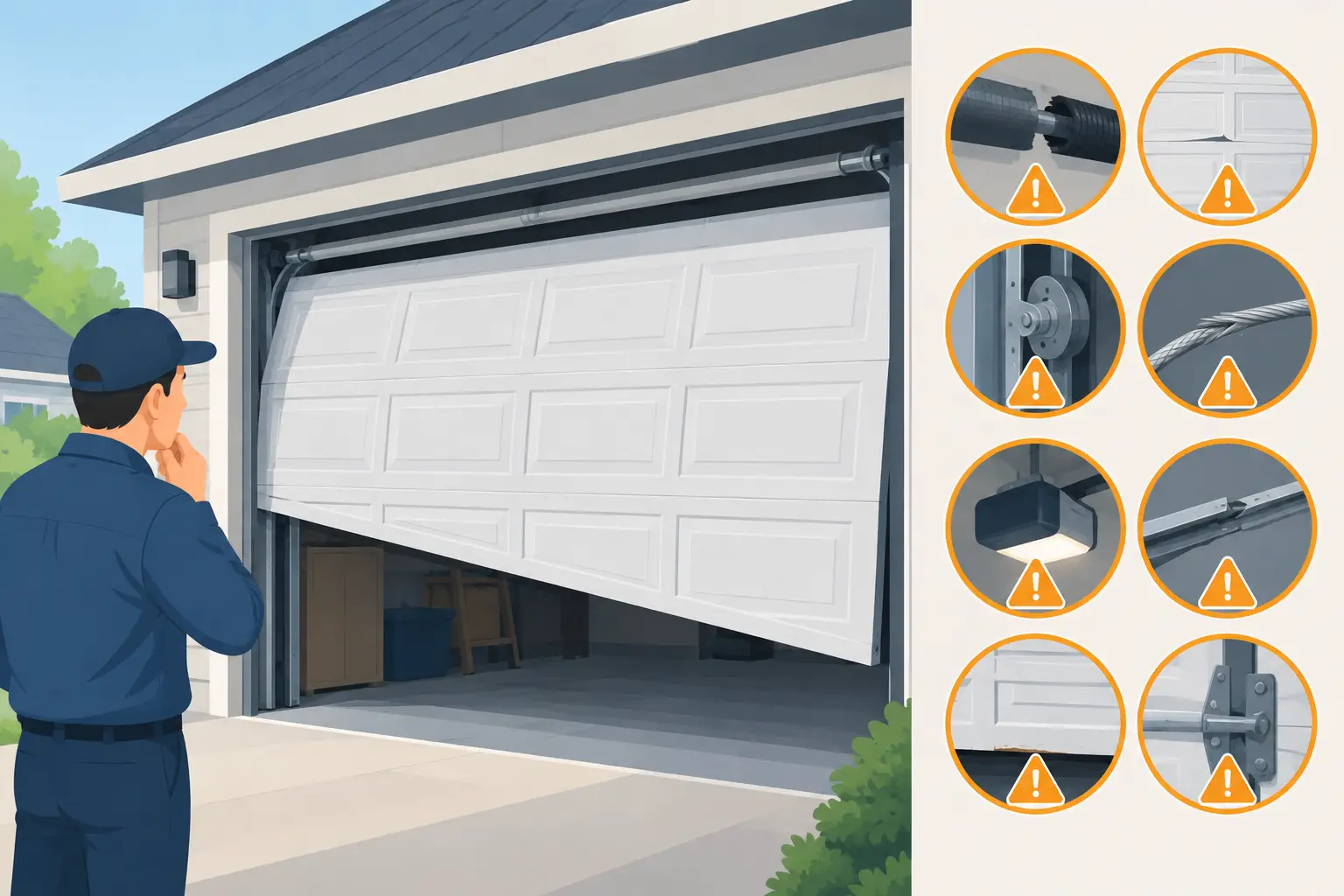
A garage door that still opens is not necessarily a safe garage door. A heavy overhead door can weigh several hundred pounds, and it relies on springs, cables, tracks, rollers, hardware, and an opener all working together. Knowing what makes overhead doors unsafe helps homeowners, property managers, and business owners act before a small problem turns into a damaged vehicle, a blocked entrance, or an injury.
The biggest warning sign is simple: the door is acting differently than it used to. Grinding, jerking, sagging, stopping halfway, or closing too fast are not normal quirks. They are reasons to stop using the door until the cause is identified.
What Makes Overhead Doors Unsafe?
An overhead door becomes unsafe when its weight is no longer properly controlled, its travel path is obstructed or misaligned, or its safety systems fail to respond. Some issues are obvious, such as a broken spring or hanging cable. Others are easy to miss, including worn rollers, loose hardware, or a photo-eye sensor that does not reverse the door when it should.
Cheyenne weather can add stress to these components. Cold temperatures can make old rollers and hinges noisier, affect lubricants, and expose a spring or cable that was already near failure. Wind, moisture, and regular use also take a toll on both residential and commercial doors.
1. Broken or Weak Springs
Garage door springs carry most of the door's weight. When a spring breaks, the opener may strain, the door may lift only a few inches, or it may feel extremely heavy when disconnected from the opener. In some cases, a door can slam shut or become stuck in the open position.
A broken spring is not a do-it-yourself repair. Springs are under high tension, and the wrong tool or adjustment can cause serious injury. If you hear a loud bang from the garage and the door suddenly will not open, treat it as a likely spring failure and keep people clear of the door.
2. Frayed, Loose, or Broken Cables
Cables work with the springs to raise and lower the door evenly. A frayed cable can snap without much warning. A cable that has slipped off its drum may leave one side of the door higher than the other, causing the door to bind or come off track.
Never pull on a loose cable or try to wind it back onto the drum. The cable system is connected to spring tension, so even a repair that looks simple can be dangerous. Leave the door in its current position if possible, keep the area clear, and arrange professional service.
3. An Off-Track or Crooked Door
A door that is visibly crooked, rubbing against the track, or hanging on one side needs immediate attention. Continuing to run an off-track door can bend tracks, damage panels, break rollers, and create a collapse risk. This is especially concerning on larger insulated doors and commercial overhead doors, where the weight is substantial.
Common causes include a vehicle bumping the door, a broken cable, loose track hardware, worn rollers, or an object caught in the path of the door. Do not use the opener to force the door closed. Disconnecting or operating the system incorrectly can make the condition worse.
4. Failed Safety Sensors
Modern automatic garage doors use photo-eye sensors near the bottom of the tracks. These sensors are designed to stop and reverse the door when a person, pet, vehicle, or object is in the opening. If the door closes onto an object without reversing, that is a serious safety concern.
Sometimes the fix is straightforward: dirt on the sensor lens, a bumped sensor bracket, or sunlight interfering with the beam. But repeated sensor trouble can point to damaged wiring, failing sensors, or opener problems. Do not bypass the sensors or hold the wall button down to force the door closed as a regular workaround.
5. A Door That Closes Too Fast or Will Not Stay Open
A properly balanced door should not race to the floor, drift downward when partially open, or require the opener to do all the lifting. These symptoms often mean the springs are weak, broken, or improperly adjusted.
A door that will not stay open can fall unexpectedly. That creates a real hazard for anyone walking underneath it, moving equipment through the opening, or parking a vehicle in the garage. Keep children and pets away from the area until the balance problem is repaired.
6. Worn Rollers, Bent Tracks, and Loose Hardware
Rollers and hinges may seem like small parts, but they guide a heavy moving door through its full travel. Worn rollers can wobble or jump in the track. Bent tracks can pinch the rollers. Loose brackets, hinges, and lag screws can allow the system to shift over time.
Look for excessive vibration, scraping sounds, metal shavings, visible gaps in the track, or a door that shakes as it moves. Lubrication can reduce normal friction, but it will not fix cracked rollers, damaged track sections, or loose mounting hardware. Those issues need inspection and repair.
7. Opener Problems That Override Safe Operation
An opener should move the door smoothly, stop at the right positions, and reverse when it meets resistance. When the travel limits are wrong, the door may hit the floor too hard, reverse unexpectedly, or leave a gap at the bottom. A failing opener can also make clicking noises, hum without moving the door, or operate inconsistently.
The opener is not meant to compensate for a heavy or unbalanced door. If the door only works with the opener and feels too heavy by hand, the problem is usually with the door system, not just the motor. Replacing an opener without correcting spring or balance issues can shorten the life of the new unit.
8. Damaged Panels and Weak Door Sections
A cracked, bent, rotted, or heavily dented door panel can affect the entire door's stability. Damage near hinges or reinforcement struts is particularly concerning because those areas carry force as the door bends through the tracks. On commercial doors, damaged sections can disrupt daily deliveries, vehicle access, and building security.
Minor cosmetic dents may not require immediate replacement. But if the door is bowing, separating at a joint, catching in the tracks, or allowing wind and weather into the building, it should be assessed before continued use.
When to Stop Using an Overhead Door Immediately
Some problems call for a service appointment soon. Others call for stopping operation right away. Do not run the door if you notice any of the following:
- A broken spring, snapped cable, or cable hanging loose
- The door is off track, crooked, or sagging on one side
- The door closes rapidly, will not stay open, or falls when released
- The safety sensors do not reverse the door when the opening is blocked
- A vehicle has hit the door, track, or bottom section
- The opener is smoking, sparking, or repeatedly tripping a breaker
If the door is stuck open and the property cannot be secured, avoid standing beneath it or attempting to pull it shut. Emergency overhead door service is the safer choice when the opening creates a security or access problem.
Simple Checks Owners Can Do Safely
You do not need to take apart a garage door to spot developing trouble. With the door closed, look over the tracks, rollers, hinges, cables, and visible hardware for damage or loose parts. Keep the sensor lenses clean and make sure nothing is stored in the door's path.
You can also test the photo eyes by placing a suitable object in the doorway while the door is closing. The door should reverse before touching the object. If it does not, stop using automatic operation until the issue is corrected.
Avoid adjusting springs, cables, bottom brackets, or torsion hardware. Those components are under tension even when the door is closed. A professional tune-up is the right time to check balance, tighten hardware, inspect rollers, test safety features, and catch wear before it becomes an emergency repair.
For homeowners and property managers in Cheyenne and nearby communities, Mike's Garage Door LLC can diagnose unsafe door conditions, explain the repair clearly, and provide same-day service when the situation calls for it. If your overhead door is noisy, uneven, or unreliable, treating that warning early is usually safer and less costly than waiting for it to fail at the worst possible time.