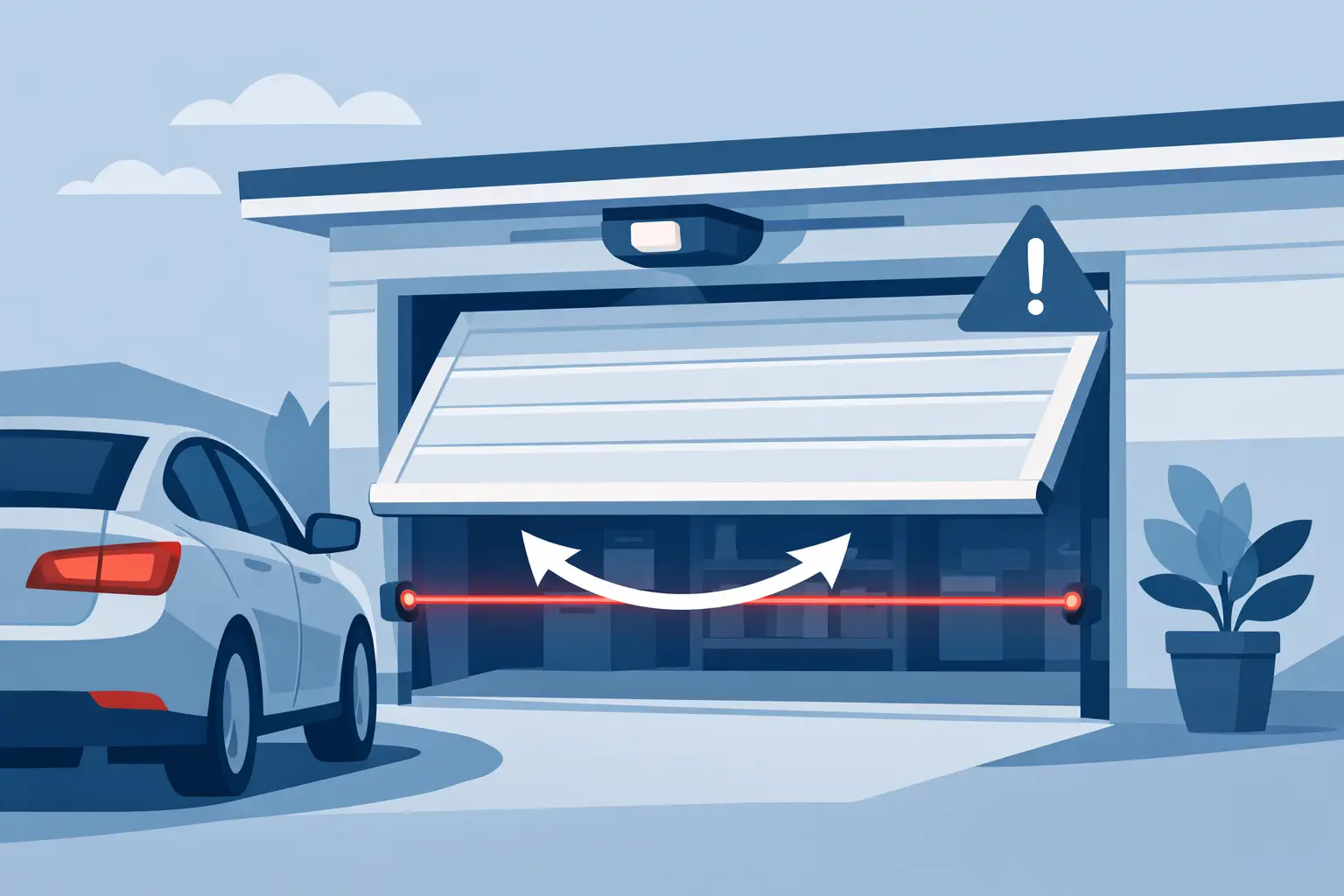
A garage door that starts down, then suddenly heads back up is not just frustrating when you are trying to leave for work. It is usually responding to a safety signal or mechanical problem. If you are asking, why does garage door reverse, the opener may be detecting an obstruction, too much resistance, or a faulty signal that tells it the door is not closing safely.
That safety feature helps prevent damage and injury, but it can also leave your garage unsecured or your business unable to close for the day. Some causes are simple enough to check from the ground. Others involve high-tension parts, damaged door hardware, or opener settings that should be handled by a qualified technician.
Why Does Garage Door Reverse Instead of Closing?
Modern automatic garage doors are designed to reverse when they sense something in the door's path or when the motor encounters unexpected resistance. The system cannot always tell the difference between a child, a box, a bent track, or a worn roller. It simply knows the door is not moving as expected and sends it back up.
The timing of the reversal offers a useful clue. A door that reverses immediately after you press the remote often has a photo-eye sensor issue. A door that gets halfway down and returns upward may be binding in the tracks. If it reaches the floor, touches down, and then opens again, the close-force or travel setting may need adjustment.
Misaligned or Blocked Safety Sensors
The photo-eye sensors sit near the bottom of the garage door tracks, usually a few inches above the floor. One sensor sends an invisible beam to the other. When that beam is blocked or interrupted, the opener will not allow the door to close normally.
Look for boxes, toys, snow buildup, yard tools, or debris between the sensors. In Cheyenne, windblown dirt and winter moisture can also coat the sensor lenses. Wipe each lens gently with a soft, clean cloth. Do not scrape at the lens or use harsh cleaners.
Next, check the small indicator lights on both sensors. The color and pattern vary by opener brand, but a blinking or unlit light often means the sensors are out of alignment, have a loose wire, or are not receiving power. A bump from a vehicle tire, broom, or trash bin can move a sensor just enough to break the beam.
You can carefully straighten a visibly crooked sensor bracket, but avoid forcing it. If the light will not stay solid after the area is cleared and the sensors are aligned, the wiring or sensor itself may need repair.
Dirt, Ice, or Damage in the Door Tracks
Your door needs a clear, properly aligned track to move smoothly. A small object in the track can cause resistance that makes the opener reverse. Check the vertical tracks on both sides for gravel, leaves, hardened mud, ice, or anything caught near the rollers.
Do not use grease inside the tracks. Grease collects dirt and can make the problem worse. A dry cloth or soft brush is usually enough to remove loose debris. During freezing weather, check for ice at the bottom seal and around the track area before running the opener again.
Bent tracks are a different matter. If a track is dented, loose from the wall, or visibly out of line, stop operating the door. Continuing to use it can pull the door off track, damage rollers, or strain the opener. Track repairs require the correct tools and adjustment experience because the door's weight and spring tension are working against you.
Worn Rollers, Hinges, or Other Moving Parts
A garage door should move with steady, controlled motion. Grinding, squealing, jerking, or a visible wobble can point to worn rollers, loose hinges, failing bearings, or damaged cables. When those parts create drag, the opener may interpret that resistance as an obstruction and reverse the door.
With the door closed, look over the rollers, hinges, brackets, and tracks. You may spot a cracked roller, loose hardware, or a roller that is no longer sitting correctly in the track. Do not tighten or remove bottom brackets. Those brackets are connected to cables under severe spring tension and can cause serious injury if handled incorrectly.
Regular garage door maintenance can catch these issues before a door starts reversing. A technician can inspect moving parts, lubricate the correct components, test the balance, and replace worn hardware before it creates a larger repair.
Incorrect Close-Force or Travel Limits
Your opener has settings that control how far the door travels and how much force the motor uses while closing. If the down-travel limit is set too far, the door may press against the floor and reverse. If the close-force setting is too sensitive, ordinary resistance can trigger the same result.
This is especially common after a new opener installation, a power outage, a change in weather, or work on the door itself. The adjustment process differs between opener models. Many units have adjustment screws or buttons on the motor housing, while newer models may use a programming menu.
It is tempting to increase the force setting until the door stays shut. That is not always the safe answer. Too much close force can keep the door from reversing when it actually should. If you cannot follow your opener manufacturer's instructions exactly, have the system adjusted and safety-tested by a professional.
A Broken Spring or an Unbalanced Door
Garage door springs carry most of the door's weight. When a spring breaks or loses tension, the opener has to work far harder than it was designed to. The door may reverse, stop partway, move unevenly, or refuse to open at all.
A loud bang from the garage, a gap in the torsion spring above the door, or a door that suddenly feels extremely heavy are common signs of a broken spring. Extension springs along the sides of the door can also fail or stretch out.
Do not try to replace garage door springs yourself. Springs store a dangerous amount of energy, and the wrong repair can cause injury or damage to the door. A trained technician can identify the correct spring size, replace it safely, and balance the door so the opener is not carrying the load.
Safe Checks You Can Do Before Calling for Service
Start with the easy checks: clear the door opening, clean the sensor lenses, and make sure nothing is blocking the tracks. Then look for obvious damage without touching cables, springs, or bottom brackets.
If your opener has a wall control, you may be able to hold down the button continuously to close the door. On many systems, this temporarily bypasses the photo-eye sensors. Only do this if you can watch the entire door path, keep people and pets clear, and release the button immediately if the door binds or moves unevenly. This is a diagnostic step, not a long-term fix.
You can also test the door's balance, but only if the springs appear intact and the door is fully closed. Disconnect the opener using the emergency release cord, then lift the door manually. A balanced door should stay near the halfway point without slamming shut or racing upward. If it is very heavy, crooked, or difficult to move, reconnect the opener if possible and schedule service rather than forcing it.
When a Reversing Garage Door Needs Professional Repair
Call for service promptly if the sensors appear clear but will not align, the door is scraping or shaking, the track is bent, a cable is loose, or you suspect a broken spring. A door that repeatedly reverses can leave your home exposed, create a security issue for a rental property, or interrupt access to a commercial bay.
For homeowners and property managers in the Cheyenne area, Mike's Garage Door LLC can diagnose the cause on site and explain the repair before work begins. Stocked service trucks help with many common repairs, including sensor replacement, track correction, roller and hinge repairs, opener adjustments, and broken spring replacement.
A garage door is safest when it closes smoothly, seals against the floor, and reverses only when a real obstruction is present. If yours is doing anything else, stop guessing at the settings and get the underlying problem checked before it turns into a stuck or off-track door.