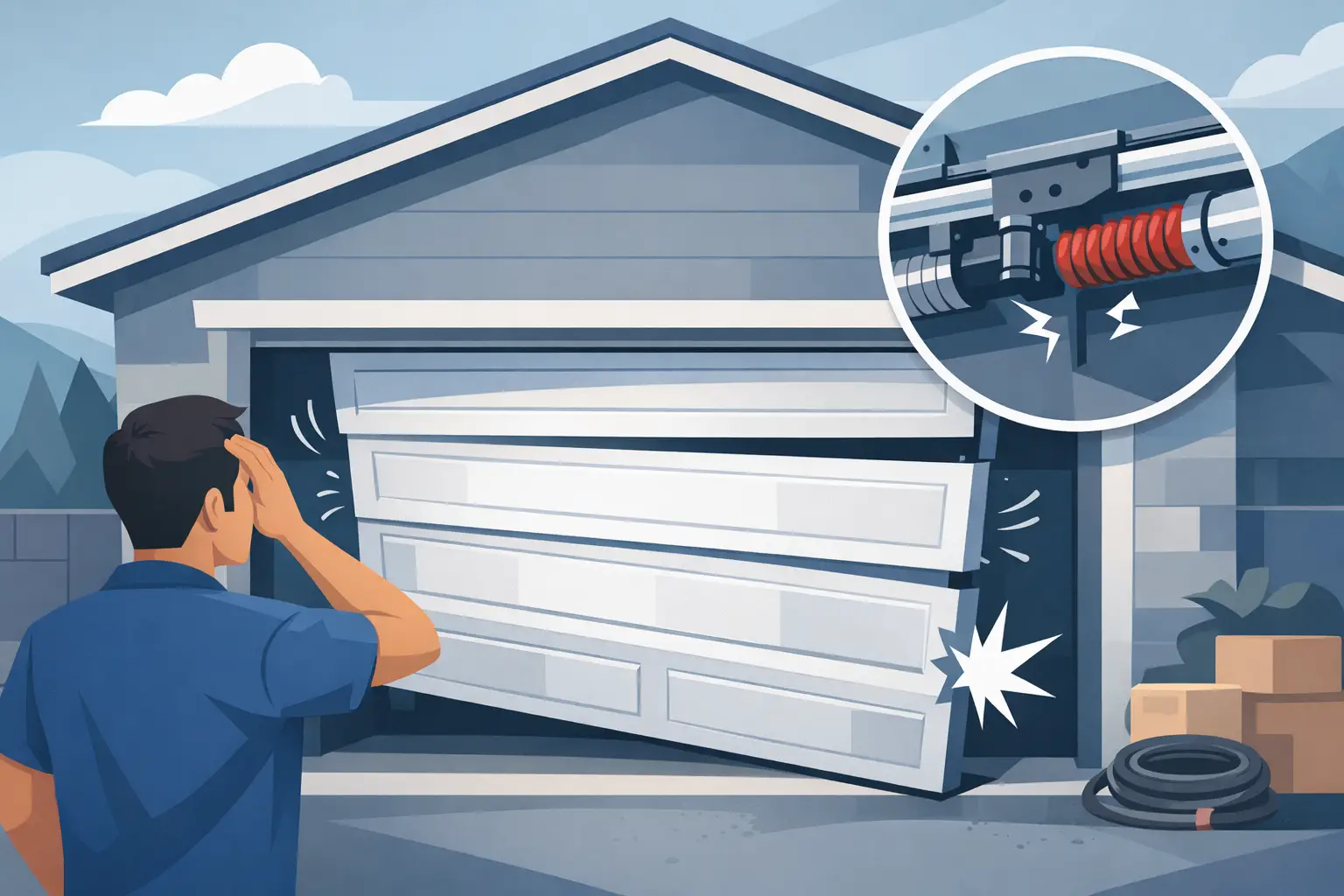
A garage door that starts jerking on the way down is not just annoying. It is usually a sign that one part of the system is struggling, binding, or failing under load. If you have been asking, why is garage door jerking closed, the short answer is that something is throwing the door out of smooth, balanced movement - and the cause can range from a simple track obstruction to a worn spring or opener issue.
In Cheyenne and surrounding areas, this kind of problem tends to show up at the worst time: when you are heading to work, trying to secure a rental, or closing up a commercial space at the end of the day. The good news is that a jerking door often gives warning before a full breakdown. The bad news is that those warnings should not be ignored.
Why is garage door jerking closed? The most common causes
Most garage doors should move down in a steady, controlled path. When the motion becomes choppy, shaky, or uneven, the issue usually comes back to resistance, poor balance, or a failing drive component.
One common cause is worn or damaged rollers. Rollers guide the door through the tracks, and when they wear out, crack, or seize up, the door no longer glides the way it should. Instead, it catches in spots and drops in short, uneven movements. Homeowners often describe this as a stutter or shudder when the door closes.
Another frequent issue is a track problem. Tracks can bend, loosen, or collect debris over time. Even a small obstruction can interrupt the door's path and make it jerk on the way down. If the track is slightly out of alignment, the door may still move, but it will not move smoothly.
Springs are another major suspect. A garage door depends on properly tensioned springs to stay balanced. If a torsion spring is worn or losing strength, the opener has to work harder to control the door. That extra strain can cause jerking, especially during closing when the system should be lowering the door in a controlled way. If a spring is broken, the problem can become dangerous very quickly.
Cables can also be part of the problem. Frayed cables, uneven cable tension, or cables starting to slip on the drum can cause one side of the door to move differently than the other. When that happens, the door may tilt slightly and close in a shaky, uneven pattern.
Then there is the opener itself. A worn gear, failing motor, damaged trolley, or chain or belt issue can create stop-and-go movement. If the opener is not delivering smooth power, the door will not close smoothly either. Sometimes the opener is not the root cause, but it shows the symptoms first because it is trying to compensate for a door that is too heavy or out of balance.
What the jerking motion can tell you
Not every jerking garage door has the same cause. The way it behaves matters.
If the door jerks only at one specific spot, there is a good chance you are dealing with a bent track, damaged roller, or obstruction. If it jerks the whole way down, the issue is more likely tied to balance, spring tension, or opener performance.
If one side seems to drop faster than the other, stop using it. That often points to a cable or spring problem, and those are not safe do-it-yourself repairs. A crooked closing pattern can turn into an off-track door fast.
If the door starts down normally and then suddenly shudders or slams the last foot or two, the opener settings may be off, but it can also mean the spring system is no longer controlling the door's weight correctly. That is where a proper inspection matters. Guessing at the fix can make it worse.
What you can safely check first
There are a few things a homeowner or property manager can look at before calling for service. The key word is safely. Garage doors are heavy, and the spring system is under high tension.
Start with the tracks. Look for dirt buildup, loose hardware, dents, and anything blocking the rollers. Small debris can be enough to interrupt the door's path. If you see grime, you can clean the tracks with a dry cloth. Avoid grease inside the tracks, because that tends to collect more dirt.
Next, look at the rollers. If they appear cracked, chipped, heavily worn, or wobbly, that could be your problem. Listen as the door moves too. Grinding, rattling, or scraping usually points to worn moving parts.
You can also observe whether the door looks level as it closes. If one side is lower than the other, stop there and call a technician. That is not a minor adjustment issue.
If your opener has visible chain slack, belt wear, or unusual vibration, that is worth noting. It does not always mean the opener is the only problem, but it helps narrow down the diagnosis.
One more practical check is the manual balance test, but only if the door is fully closed and appears otherwise stable. Disconnect the opener and lift the door by hand halfway. A properly balanced door should stay near that position. If it drops or feels unusually heavy, the springs may be failing. If you are unsure at any point, do not force it.
When not to try fixing it yourself
A lot of garage door problems look simple from the outside. That is where people get into trouble.
If the door is jerking because of a broken spring, damaged cable, or off-track condition, this is not a DIY job. Springs and cables store serious energy. Trying to adjust or replace them without the right tools and training can lead to injury and property damage.
The same goes for a door that is binding hard, hanging crooked, or dropping too fast. Once the door's balance is compromised, the opener can burn out and the panels can twist. What starts as one repair can turn into several.
For commercial overhead doors, the stakes are even higher. A jerking door can affect security, loading access, daily operations, and employee safety. If a business door is acting up, waiting usually costs more than addressing it right away.
Why fast repair usually saves money
A jerking door rarely fixes itself. More often, one worn part puts stress on the rest of the system.
For example, bad rollers can chew up the track. A weak spring can overload the opener. A cable issue can pull the door out of alignment and damage panels. By the time the door stops working completely, the repair is often more involved than it needed to be.
That is why prompt service matters. A technician can inspect the full system, identify the failed component, and catch related wear before it becomes a bigger problem. For local homeowners and property managers, same-day service is not just about convenience. It is about preventing a minor issue from becoming an emergency.
How a technician diagnoses a jerking garage door
A proper service call should do more than treat the symptom. The goal is to find out why the movement changed in the first place.
A trained garage door technician will usually inspect the rollers, tracks, hinges, cables, springs, drums, and opener. They will check the door's balance, watch how it travels, and listen for binding or strain. In many cases, the jerking motion has more than one cause, especially on older doors that have gone without maintenance.
That is why straightforward pricing and clear recommendations matter. You should know whether the fix is a roller replacement, track adjustment, spring repair, opener service, or a combination. At Mike's Garage Door LLC, that practical approach is what local customers expect - diagnose it correctly, explain it clearly, and get it working right without wasting time.
Can maintenance prevent a garage door from jerking closed?
In many cases, yes. Regular maintenance helps catch the exact issues that cause jerky motion: worn rollers, loose bolts, dry hinges, track alignment problems, and early spring wear.
That does not mean every problem is preventable. Weather, age, usage cycles, and part quality all play a role. A busy household or commercial property will put more wear on the system than a lightly used door. But routine tune-ups do give you a better chance of spotting trouble before the door starts acting up.
If your garage door has become noisy, shaky, slow, or uneven, do not wait for it to stop altogether. A smooth-closing door is a sign that the whole system is working together the way it should. When that motion turns jerky, it is the door's way of telling you something needs attention now, not later.