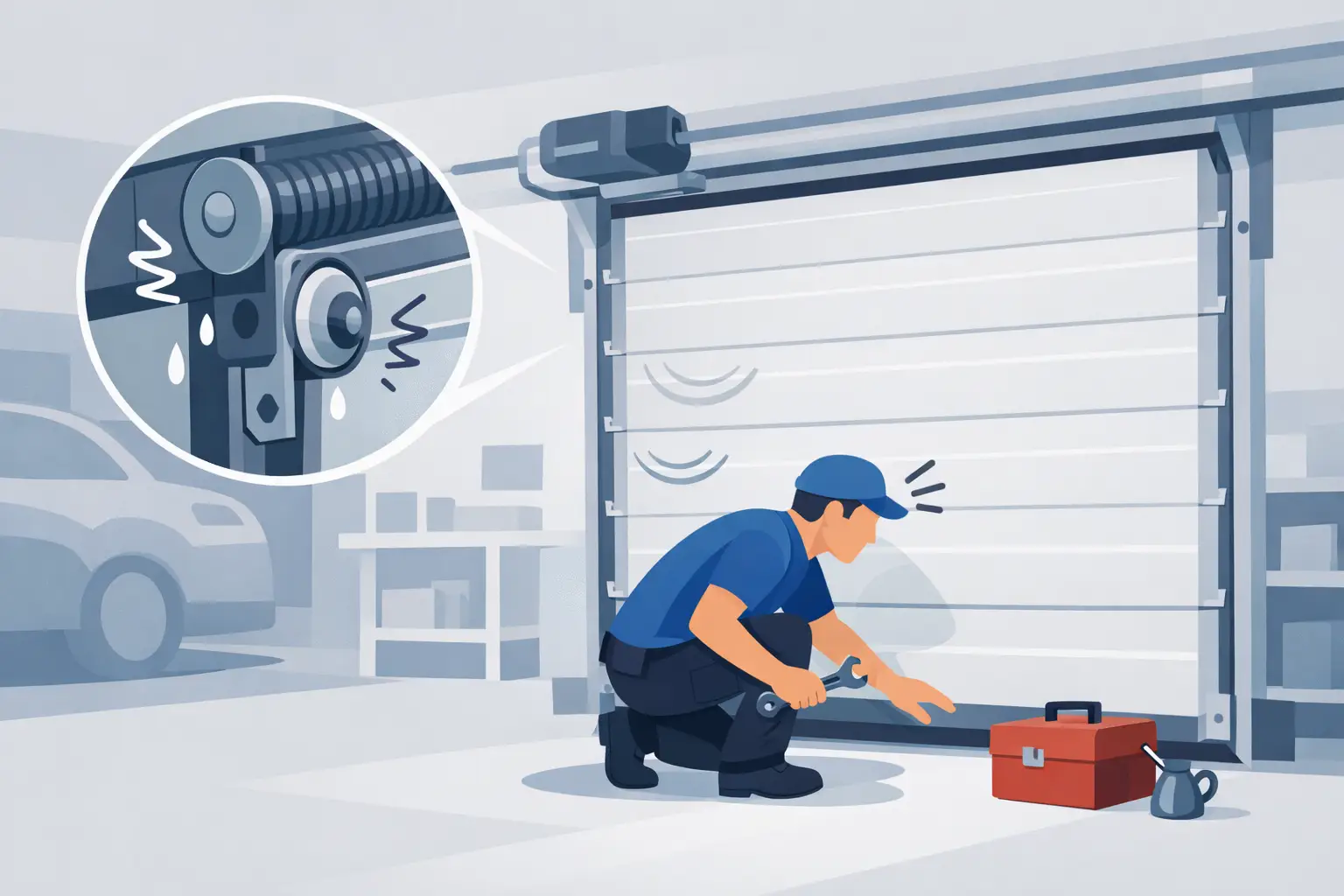
That sharp squeak when your garage door opens may seem like a small annoyance, but it is often the first sign that a moving part needs attention. If you are asking, “why is garage door squeaking,” the answer is usually friction, worn hardware, or a door that is no longer moving as smoothly as it should. Catching the cause early can prevent a louder problem, a stuck door, or unnecessary wear on the opener.
Why Is Your Garage Door Squeaking?
A garage door is the largest moving part of most homes. It operates through a system of rollers, hinges, tracks, springs, cables, brackets, and an opener. When one of those parts dries out, loosens, rusts, or wears down, the door can squeak, scrape, chirp, or groan during operation.
In Cheyenne and throughout Laramie County, changing temperatures, windblown dust, and winter moisture can speed up that process. Metal parts contract in cold weather, lubricants thicken or wash away, and moisture can lead to corrosion. A sound that only happens on a freezing morning may not have the same cause as a squeak that gets worse every day, so when and where you hear it matters.
The most common causes are dry rollers and hinges, dirty or dry tracks, loose hardware, worn bearings, and spring issues. Some are simple maintenance concerns. Others need a trained garage door technician because the door system is under high tension.
Dry Rollers and Hinges Are Often the Problem
Rollers guide the door along its tracks, while hinges allow each door section to bend as it travels. These parts move every time you leave for work, bring the kids home, or open the garage for deliveries. When their lubrication wears off, metal rubs against metal and produces a familiar squeal or squeak.
Steel rollers are particularly noisy as they age. Nylon rollers are generally quieter, but they can still squeak when their bearings wear out or collect dirt. If the noise seems to come from several points across the door rather than one specific location, dry hinges and rollers are a likely explanation.
A garage-door-specific lubricant applied lightly to roller bearings, hinge pivot points, and other moving metal components can help. Do not coat the roller wheels or flood the parts with product. Too much lubricant attracts dust and grit, which can make the problem worse over time.
Avoid using heavy grease, motor oil, or a general-purpose penetrating spray as a long-term fix. These products may quiet the door briefly, but they can collect dirt, drip onto the floor, and leave the system sticky. The right lubricant matters, especially in Wyoming weather.
Tracks Can Be Dirty, Bent, or Misaligned
Garage door tracks need to be clean and properly aligned so rollers can move without binding. Dust, cobwebs, dried mud, leaves, or old grease inside the track can create resistance and noise. A squeak that happens at the same spot every time the door opens or closes often points to an issue in a particular section of track.
Start with a visual check. Look for buildup inside the vertical and horizontal tracks, loose mounting brackets, dents, or a roller that does not sit correctly in the track. Wipe tracks clean with a dry cloth or a mild household cleaner, then dry them thoroughly.
Do not lubricate the tracks themselves. The rollers need to roll, not slide through a greasy channel. If a track is bent, loose, or out of alignment, do not force it back with a hammer. Small alignment errors can cause the door to bind, come off track, or put added strain on the opener.
Loose Hardware Can Create More Than a Squeak
The vibration from daily garage door use can slowly loosen bolts, nuts, and brackets. A loose hinge may squeak as it shifts. Loose track hardware can create rattling, popping, or scraping sounds. If the door shakes noticeably while moving, hardware may be part of the issue.
Homeowners can carefully inspect accessible fasteners on the door sections and track brackets. Tighten visibly loose nuts and bolts with the correct tool, but do not adjust bolts connected to the bottom brackets, cables, or spring system. Those components can be under dangerous tension even when the door is closed.
A noisy door is sometimes a maintenance issue, but it can also be a warning that the system is working harder than it should. Ignoring a loose part can turn an affordable tune-up into a damaged roller, bent track, or failed opener repair.
Worn Rollers, Bearings, and Pulleys Need Replacement
Lubrication helps parts that are in good condition. It will not repair a cracked roller, a seized bearing, or a damaged pulley. If your garage door still squeaks after proper maintenance, inspect the rollers for visible wear. Signs include wobbling, cracks, chipped edges, rust, or rollers that drag rather than turn freely.
Extension-spring garage doors also use pulleys. A worn pulley may produce a high-pitched squeak or squeal, especially when the door is moving upward. Because pulleys work alongside cables and springs, replacement is best left to a professional.
The trade-off is straightforward: replacing a few worn rollers or bearings early costs less than continuing to run a door that strains the tracks, hinges, and opener. New, quality rollers can also make the entire system noticeably quieter.
Is the Garage Door Opener Making the Noise?
Not every squeak comes from the door itself. Sometimes the sound is from the opener rail, chain, belt, or motor unit. Chain-drive openers can be louder by nature, particularly if the chain needs adjustment or lubrication. Belt-drive openers are usually quieter, but a worn belt, loose mounting hardware, or failing internal component can still cause unusual noise.
To narrow it down, listen carefully while the door moves. Noise along the sides of the door usually points to rollers, hinges, or tracks. Noise from the center overhead area may point to the opener rail or drive system. A sound from above the door could involve springs or bearings.
Do not increase the opener’s force settings just because the door is noisy or slow. Force settings are not a fix for mechanical resistance. Raising them can allow the opener to push or pull against a problem that needs repair, increasing the risk of damage or a safety issue.
When a Squeak May Be a Spring Problem
Garage door springs do the heavy lifting. Torsion springs sit above the door, while extension springs run along the sides of the tracks. When springs, center bearings, or related hardware begin to wear, the door may squeak, groan, jerk, or feel unusually heavy.
A spring problem may also show up as a door that opens only partway, slams shut, hangs crooked, or will not lift when you disconnect the opener. If you see a gap in a torsion spring, a loose cable, or a door that has come off track, stop using the door.
Never spray, adjust, remove, or replace garage door springs yourself. These are high-tension components, and improper handling can cause serious injury or property damage. This is a situation where same-day professional service is the safer choice.
A Simple Maintenance Routine for a Quieter Door
A garage door should be inspected and serviced at least once a year, and more often if it gets heavy daily use. Between professional tune-ups, keep an eye on how the door sounds and moves. The goal is not to make it perfectly silent. A modest operating sound is normal. The concern is a new, sharp, persistent, or worsening noise.
A practical homeowner routine includes keeping the tracks clean, checking weatherstripping for debris, lightly lubricating approved moving points, and testing the opener’s reversing safety feature. Watch the door from a safe distance as it runs. It should move evenly without excessive shaking, hesitation, or scraping.
For commercial overhead doors, routine service is even more valuable. A squeaking sectional door at a shop, warehouse, or storage facility may be an early signal of wear that could interrupt deliveries, employee access, or daily operations.
When to Schedule Garage Door Service
Call for professional help if the squeak is paired with grinding, banging, jerking, uneven movement, a heavy door, frayed cables, bent tracks, or an opener that struggles. Those symptoms point beyond basic lubrication. The longer the door operates under strain, the more likely a minor part issue becomes a larger repair.
Mike’s Garage Door LLC provides straightforward diagnosis, honest pricing, and same-day garage door service for homeowners and businesses in Cheyenne and nearby communities. A technician can identify whether the noise comes from a simple dry hinge, worn rollers, opener trouble, or a higher-risk spring and cable issue.
A squeaky garage door does not always mean an emergency, but it should not be ignored. Addressing the sound while the door still operates normally is usually the easiest way to keep your garage secure, your opener protected, and your day moving without interruption.